Hydrogen refueling station technology is revolutionizing clean transportation by delivering faster refueling, lower operational costs, and zero emissions. With advancements in compression, storage, and dispensing systems, these stations are becoming more efficient, reliable, and scalable for widespread adoption.
Key Takeaways
- Advanced compression systems reduce energy loss and improve refueling speed by optimizing hydrogen flow and pressure management.
- On-site hydrogen production using electrolysis cuts transportation costs and supports renewable energy integration.
- Modular station designs allow scalable deployment in urban, suburban, and highway locations.
- Smart monitoring and AI-driven diagnostics enhance uptime and maintenance efficiency through real-time data analysis.
- Pre-cooling technology prevents overheating during fast refueling, ensuring safety and extending vehicle fuel cell life.
- Hybrid stations combining hydrogen and EV charging meet diverse fleet needs and future-proof infrastructure investments.
- Government incentives and private partnerships accelerate station deployment and reduce upfront capital barriers.
📑 Table of Contents
- Introduction: The Rise of Hydrogen as a Clean Fuel
- Why Efficiency Matters in Hydrogen Refueling
- Core Components of Modern Hydrogen Refueling Stations
- Smart Technologies Driving Efficiency
- Design Innovations for Scalability and Flexibility
- Real-World Examples of Efficient Hydrogen Stations
- Overcoming Challenges to Widespread Adoption
- Conclusion: The Future of Hydrogen Refueling
Introduction: The Rise of Hydrogen as a Clean Fuel
Imagine pulling up to a fueling station, connecting a nozzle, and refueling your vehicle in under five minutes—just like gasoline—but with zero tailpipe emissions. That’s not science fiction. It’s the reality being built today with hydrogen refueling station technology. As the world races to cut carbon emissions and transition to sustainable energy, hydrogen is emerging as a powerful solution, especially for heavy-duty transportation, logistics, and industrial applications where batteries fall short.
Unlike electric vehicles that rely on large, heavy batteries, hydrogen fuel cell vehicles (FCEVs) generate electricity on board through a chemical reaction between hydrogen and oxygen, emitting only water vapor. But for hydrogen to truly compete, the infrastructure must keep pace. That’s where hydrogen refueling station technology comes in—transforming how we store, compress, and deliver hydrogen efficiently and safely.
Why Efficiency Matters in Hydrogen Refueling
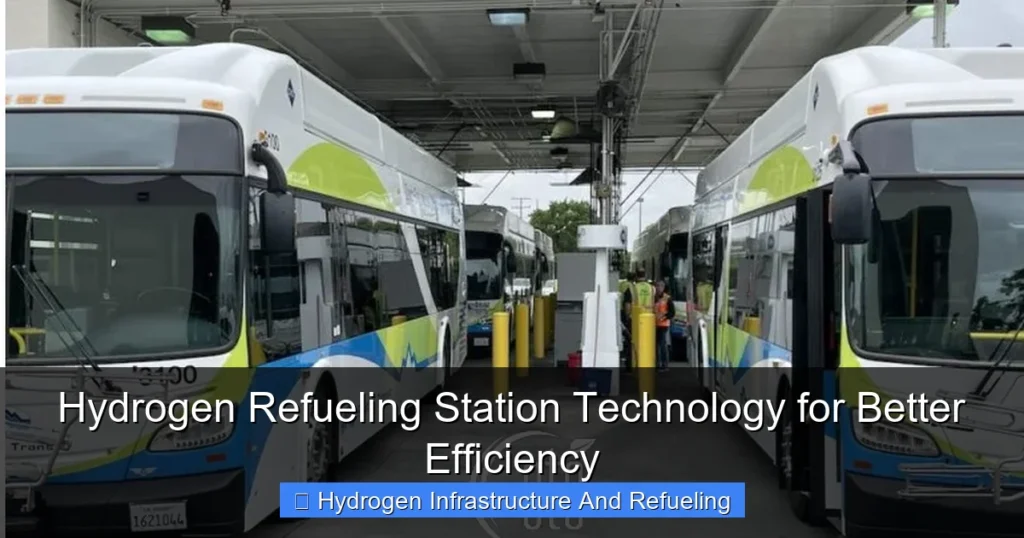
Visual guide about Hydrogen Refueling Station Technology for Better Efficiency
Image source: hydrogenfuelnews.com
Efficiency isn’t just about saving money—it’s about making hydrogen a practical, scalable alternative to fossil fuels. Every step in the hydrogen supply chain, from production to delivery, consumes energy. If refueling stations are inefficient, they add cost, waste resources, and slow adoption. But when stations are optimized, they can deliver hydrogen faster, cheaper, and with less environmental impact.
Consider this: a single hydrogen refueling station can serve dozens of vehicles daily, from passenger cars to buses and trucks. If each refueling cycle wastes just a few seconds or a small amount of energy, those losses multiply across thousands of stations and millions of refuels. That’s why improving efficiency at the station level is critical for the entire hydrogen economy.
Moreover, efficiency directly affects user experience. Drivers expect quick, reliable service—just like at a gas station. If hydrogen refueling takes too long or fails due to technical issues, confidence in the technology drops. Efficient stations build trust and encourage broader adoption.
Core Components of Modern Hydrogen Refueling Stations
Hydrogen Storage Systems
At the heart of every hydrogen refueling station is its storage system. Hydrogen is stored in high-pressure tanks, typically at 350 bar (5,000 psi) or 700 bar (10,000 psi), depending on the vehicle’s requirements. These tanks are made from advanced composite materials—like carbon fiber—that are lightweight yet incredibly strong, capable of withstanding extreme pressures without leaking.
Modern storage systems use cascaded tank arrays, where hydrogen is stored at multiple pressure levels. This allows the station to dispense fuel more efficiently by matching the pressure gradient to the vehicle’s tank. For example, a station might have low, medium, and high-pressure banks. When a vehicle arrives, the system draws from the closest pressure level, reducing the need for additional compression and saving energy.
Some stations also use cryogenic storage, where hydrogen is cooled to liquid form at -253°C. While this method increases energy density, it requires significant energy for liquefaction and insulation. As a result, cryogenic stations are typically used in high-volume applications like bus depots or long-haul trucking routes.
Compression and Pumping Technology
Compressing hydrogen is one of the most energy-intensive parts of the refueling process. Traditional mechanical compressors use pistons or diaphragms to increase pressure, but they generate heat, wear out quickly, and require frequent maintenance.
Newer technologies are changing the game. For instance, ionic liquid compressors use a non-mechanical process where hydrogen is compressed through a liquid medium, reducing friction and heat buildup. These systems are quieter, more reliable, and up to 30% more energy-efficient than conventional compressors.
Another breakthrough is the use of electrochemical hydrogen compressors. These devices use electricity to drive hydrogen ions through a membrane, effectively compressing the gas without moving parts. While still emerging, they promise ultra-high efficiency and minimal maintenance, making them ideal for future station designs.
Dispensing and Nozzle Technology
The dispenser is the customer-facing part of the station—the point where hydrogen flows into the vehicle. Modern dispensers are designed for speed, safety, and compatibility. They use standardized connectors, such as the SAE J2601 protocol, which ensures a secure, leak-free connection across different vehicle models.
One key innovation is pre-cooling. When hydrogen is compressed quickly, it heats up. If hot gas enters the vehicle’s tank, it can cause overheating, reduce fuel capacity, and damage the fuel cell. To prevent this, dispensers now include built-in cooling systems that chill hydrogen to -40°C before delivery. This allows for faster, safer refueling without compromising performance.
Smart dispensers also feature real-time monitoring. Sensors track flow rate, pressure, temperature, and connection integrity. If a problem is detected—like a loose nozzle or pressure spike—the system can pause the refuel and alert the operator. This not only improves safety but also reduces downtime and repair costs.
On-Site Hydrogen Production
Many hydrogen stations rely on delivered hydrogen, transported by truck from centralized production facilities. While this works for early deployments, it adds cost, complexity, and carbon emissions—especially if the hydrogen is produced from natural gas.
A more efficient approach is on-site production using electrolysis. In this process, electricity splits water (H₂O) into hydrogen and oxygen. When powered by renewable energy—like solar or wind—this method produces “green hydrogen” with near-zero emissions.
Electrolyzers are becoming more compact and efficient. Proton exchange membrane (PEM) electrolyzers, for example, can operate at high pressures and respond quickly to variable power inputs, making them ideal for pairing with solar panels or wind turbines. Some stations even use excess renewable energy during off-peak hours to produce hydrogen, turning the station into a form of energy storage.
On-site production eliminates transportation costs and reduces supply chain risks. It also allows stations to scale production based on local demand. For example, a station near a solar farm can produce hydrogen during sunny days and store it for use at night or during cloudy periods.
Smart Technologies Driving Efficiency
AI and Predictive Maintenance
One of the biggest challenges in operating hydrogen stations is preventing unexpected failures. A single leak or compressor breakdown can shut down a station for days, frustrating customers and costing money.
That’s where artificial intelligence (AI) comes in. Modern stations use AI-powered monitoring systems that analyze data from hundreds of sensors in real time. These systems can detect subtle changes—like a slight pressure drop or temperature fluctuation—that might indicate an impending failure.
For example, if a compressor starts drawing more current than usual, the AI might flag it for inspection before it breaks down. This is called predictive maintenance, and it can reduce downtime by up to 50%. Some systems even use machine learning to improve over time, learning from past incidents and adjusting maintenance schedules accordingly.
AI also optimizes energy use. By analyzing weather patterns, electricity prices, and refueling demand, the system can decide when to produce, store, or dispense hydrogen for maximum efficiency. For instance, it might delay compression during peak electricity rates or prioritize refueling during high-demand periods.
Remote Monitoring and Control
Many hydrogen stations are located in remote or hard-to-reach areas, such as highway rest stops or industrial zones. Sending technicians for routine checks is expensive and time-consuming.
Remote monitoring solves this problem. Operators can access station data from a central dashboard, viewing everything from tank levels to dispenser status. If an issue arises, they can often diagnose and fix it remotely—resetting systems, updating software, or adjusting settings.
Some advanced systems even allow remote refueling. For fleet operators, this means vehicles can be refueled automatically during off-hours, reducing labor costs and improving scheduling. It also enables integration with fleet management software, so refueling is coordinated with delivery routes and vehicle usage.
Integration with Renewable Energy Grids
Hydrogen stations are increasingly being designed as part of a larger energy ecosystem. Instead of drawing power from the grid, they can connect directly to solar panels, wind turbines, or battery storage systems.
This integration offers multiple benefits. First, it reduces operating costs by using low-cost or free renewable energy. Second, it supports grid stability by absorbing excess power during periods of low demand. Third, it enhances sustainability by ensuring the hydrogen is truly green.
For example, a station in California might use solar panels to power its electrolyzer during the day. Excess hydrogen is stored and dispensed at night, when electricity demand is lower. This creates a self-sustaining loop that maximizes efficiency and minimizes environmental impact.
Design Innovations for Scalability and Flexibility
Modular Station Architecture
One of the biggest barriers to hydrogen station deployment is cost and complexity. Building a station from scratch requires significant investment in land, equipment, and permitting.
Modular design changes that. Stations are now built using standardized, plug-and-play components that can be assembled on-site like LEGO blocks. A basic module might include storage tanks, a compressor, and a dispenser. Additional modules can be added as demand grows—such as extra storage, on-site production, or EV charging stations.
This approach reduces construction time from months to weeks and lowers upfront costs. It also allows stations to scale with demand. A small station in a rural area can start with one dispenser and expand to five as FCEV adoption increases.
Modular stations are also easier to relocate. If a location underperforms, the entire system can be moved to a busier site, reducing waste and maximizing return on investment.
Hybrid Stations: Hydrogen + EV Charging
Not every vehicle will run on hydrogen. Many fleets and consumers are adopting battery electric vehicles (BEVs) alongside FCEVs. To serve both markets, some stations are being designed as hybrid facilities.
These stations combine hydrogen dispensers with fast EV charging ports. Drivers can choose the fuel that best fits their vehicle and schedule. For example, a delivery truck might use hydrogen for long-range routes, while a passenger car charges its battery during a short stop.
Hybrid stations also share infrastructure. The same solar array can power both the electrolyzer and the EV chargers. The same maintenance team can service both systems. This reduces costs and improves land use efficiency.
As the transportation landscape evolves, hybrid stations offer a flexible, future-proof solution. They can adapt to changing technology trends and customer needs without requiring a complete rebuild.
Compact and Urban-Friendly Designs
Space is at a premium in cities. Traditional hydrogen stations require large footprints for storage tanks, compressors, and safety zones. This makes them difficult to install in urban areas.
New compact designs are changing that. By using vertical storage tanks, underground installations, and integrated equipment, stations can fit into small lots—even on rooftops or in parking garages.
For example, a station in Tokyo uses a vertical stack of high-pressure tanks mounted on a building’s side. The dispenser is built into a kiosk, similar to a gas pump. This design serves urban commuters without taking up valuable street space.
Compact stations also use advanced safety systems, such as hydrogen leak detectors and automatic shutoff valves, to minimize risk in dense environments. With proper planning, they can be safely integrated into neighborhoods, shopping centers, and transit hubs.
Real-World Examples of Efficient Hydrogen Stations
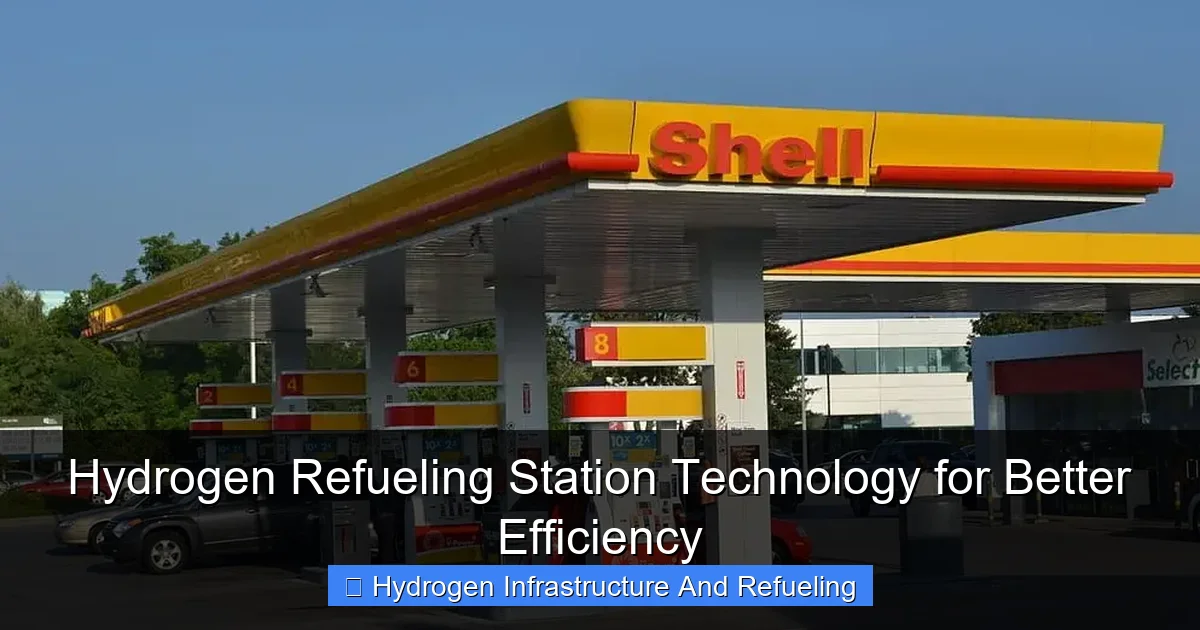
Shell’s H2Station in California
Shell has deployed several hydrogen refueling stations across California, including a flagship site in San Francisco. This station uses on-site electrolysis powered by renewable energy, producing green hydrogen daily. It features a modular design, allowing for future expansion, and includes AI-driven monitoring for predictive maintenance.
The station serves a mix of passenger cars, taxis, and delivery vans. Refueling takes under five minutes, and the system automatically adjusts pressure and temperature for optimal performance. Since opening, it has achieved 98% uptime and reduced energy consumption by 25% compared to older models.
Air Liquide’s HyFill Network in Europe
Air Liquide, a global leader in industrial gases, has built a network of hydrogen stations across Europe under the HyFill brand. These stations use advanced compression and pre-cooling technology to deliver fast, reliable refueling.
One station in Hamburg, Germany, serves a fleet of hydrogen-powered buses. The station includes a large cryogenic storage system and can refuel multiple buses in quick succession. It also integrates with the city’s public transit system, providing real-time data on fuel levels and vehicle locations.
Nikola’s HYLA Stations for Heavy-Duty Trucks
Nikola Corporation, a U.S. manufacturer of hydrogen trucks, is building a network of HYLA refueling stations designed specifically for heavy-duty vehicles. These stations use high-flow dispensers and large storage capacities to meet the demands of long-haul trucking.
Each station is equipped with on-site production and can refuel a truck in under 15 minutes. Nikola also offers mobile refueling units that can travel to remote job sites, providing flexibility for construction and mining operations.
Overcoming Challenges to Widespread Adoption
Despite the progress, hydrogen refueling stations still face hurdles. High capital costs, limited vehicle availability, and regulatory uncertainty can slow deployment. However, technology is helping to overcome these barriers.
For example, government incentives—like tax credits and grants—are reducing the cost of station construction. In the U.S., the Inflation Reduction Act includes funding for clean hydrogen infrastructure. Similar programs exist in Europe, Japan, and South Korea.
Private partnerships are also accelerating growth. Automakers like Toyota, Hyundai, and Honda are investing in station networks to support their FCEV sales. Energy companies are collaborating with utilities to integrate hydrogen into the grid.
As technology improves and costs fall, hydrogen stations will become more common. The key is continued innovation, collaboration, and a focus on efficiency at every level.
Conclusion: The Future of Hydrogen Refueling
Hydrogen refueling station technology is no longer a distant dream—it’s a rapidly evolving reality. With advancements in compression, storage, dispensing, and smart systems, these stations are becoming faster, safer, and more efficient than ever. They’re not just supporting clean transportation; they’re redefining what’s possible in energy infrastructure.
From modular designs that scale with demand to AI-driven maintenance that prevents downtime, every innovation brings us closer to a hydrogen-powered future. As renewable energy grows and vehicle adoption increases, hydrogen stations will play a central role in decarbonizing transportation.
The journey isn’t without challenges, but the momentum is undeniable. With continued investment and innovation, hydrogen refueling stations will soon be as common as gas pumps—delivering clean, efficient, and reliable energy for generations to come.
Frequently Asked Questions
How long does it take to refuel a hydrogen vehicle?
Most hydrogen vehicles can be refueled in 3 to 5 minutes, similar to gasoline-powered cars. This fast refueling time is one of hydrogen’s biggest advantages over battery electric vehicles, especially for long-distance travel.
Is hydrogen refueling safe?
Yes, hydrogen refueling is safe when proper protocols are followed. Stations use multiple safety systems, including leak detectors, automatic shutoff valves, and pre-cooling to prevent overheating. Hydrogen is also lighter than air, so it disperses quickly if released.
Can hydrogen stations be powered by renewable energy?
Absolutely. Many modern stations use on-site electrolysis powered by solar, wind, or grid electricity. When renewable energy is used, the hydrogen produced is considered “green” and has near-zero carbon emissions.
How much does it cost to build a hydrogen refueling station?
Costs vary widely, but a typical station can range from $1 million to $3 million, depending on size and technology. On-site production and advanced features increase the price, but government incentives and modular designs are helping to reduce costs.
Can hydrogen stations serve both cars and trucks?
Yes, many stations are designed to serve a mix of vehicles, including passenger cars, buses, and heavy-duty trucks. High-capacity stations with large storage and fast dispensers are ideal for fleet operations.
What happens if a hydrogen station runs out of fuel?
Stations are equipped with monitoring systems that alert operators when hydrogen levels are low. Most stations have backup supply agreements or on-site production to prevent outages. In rare cases, mobile refueling units can be dispatched to deliver hydrogen.