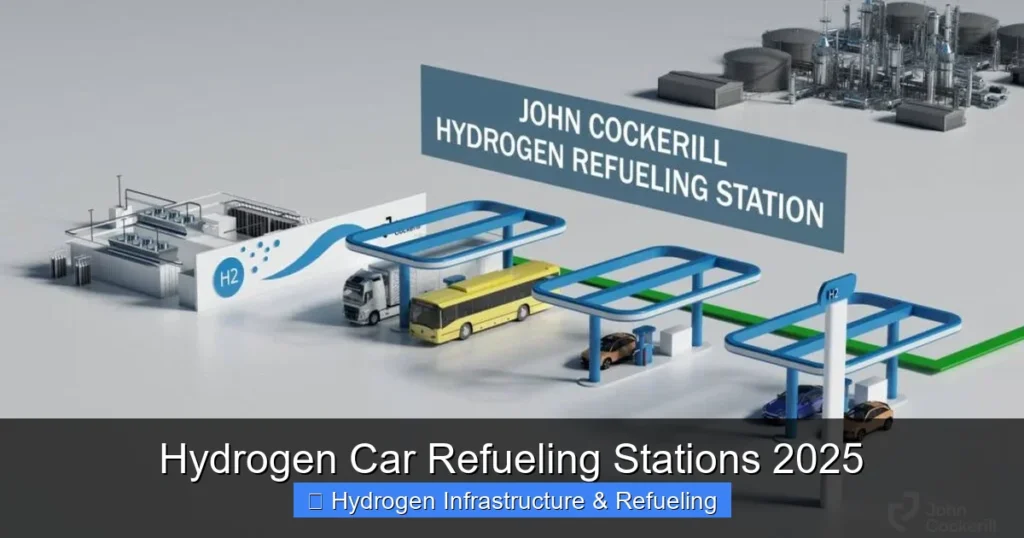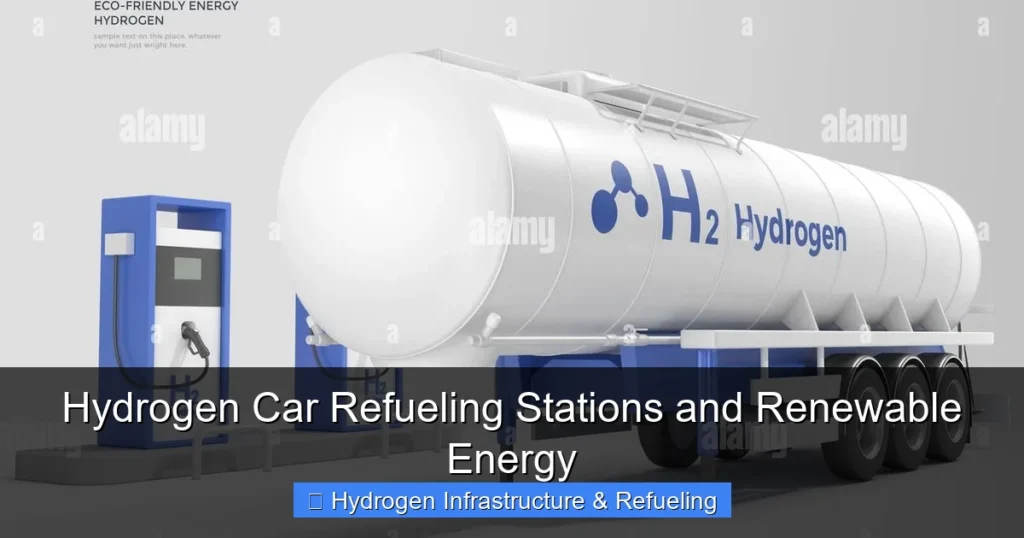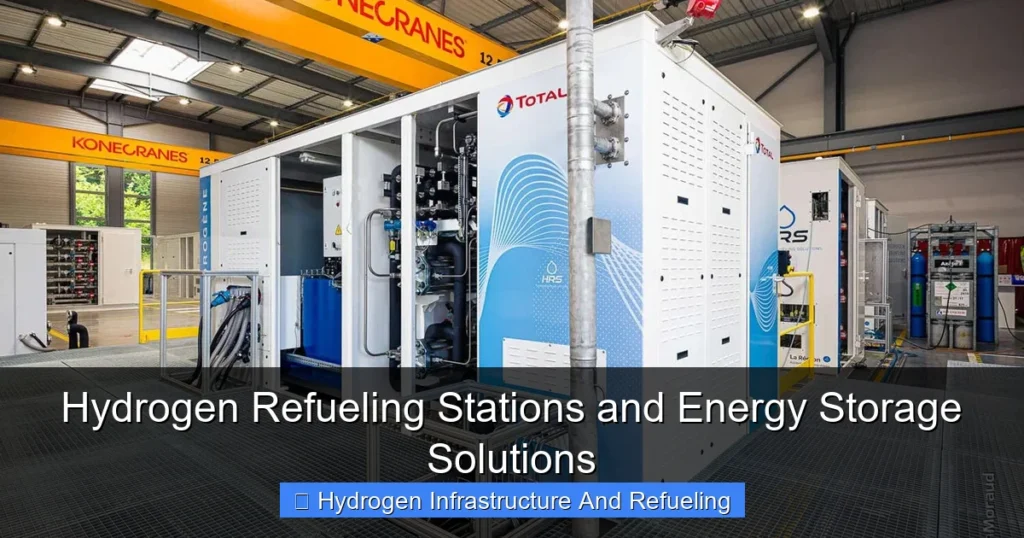
Hydrogen refueling stations and energy storage solutions are paving the way for a cleaner, more sustainable energy future. These technologies support zero-emission vehicles and help balance renewable energy grids, making hydrogen a key player in the global energy transition.
Key Takeaways
- Hydrogen refueling stations enable clean transportation: They provide fast, efficient refueling for fuel cell electric vehicles (FCEVs), offering a zero-emission alternative to gasoline and diesel.
- Green hydrogen is produced using renewable energy: When made with solar, wind, or hydro power, hydrogen becomes a truly sustainable fuel source.
- Hydrogen acts as a long-duration energy storage solution: It can store excess renewable energy for days, weeks, or even months, helping stabilize the grid.
- Refueling infrastructure is expanding globally: Countries like Japan, Germany, and the U.S. are investing heavily in hydrogen networks to support clean mobility.
- On-site production reduces transportation costs: Generating hydrogen at the station via electrolysis cuts down on delivery logistics and emissions.
- Hydrogen supports both transport and industrial applications: Beyond vehicles, it powers buses, trucks, trains, and even backup power systems.
- Challenges remain in cost and scalability: Lowering production costs and building widespread infrastructure are key to mainstream adoption.
📑 Table of Contents
- Introduction: The Rise of Hydrogen as a Clean Energy Solution
- What Are Hydrogen Refueling Stations?
- Hydrogen as an Energy Storage Solution
- Global Expansion of Hydrogen Infrastructure
- Green Hydrogen: The Key to Sustainability
- Future Outlook: What’s Next for Hydrogen?
- Conclusion: A Hydrogen-Powered Future Is Within Reach
Introduction: The Rise of Hydrogen as a Clean Energy Solution
Imagine a world where your car runs on water, emits only clean vapor, and refuels in minutes—just like a gasoline vehicle. That’s not science fiction. It’s the promise of hydrogen-powered transportation, made possible by hydrogen refueling stations and advanced energy storage solutions. As the global community races to cut carbon emissions and combat climate change, hydrogen is emerging as a versatile and powerful tool in the clean energy toolkit.
Unlike batteries, which store electricity directly, hydrogen stores energy in chemical form. When used in fuel cells, it combines with oxygen to produce electricity, emitting only water as a byproduct. This makes it an ideal candidate for decarbonizing sectors that are hard to electrify, such as heavy transport, shipping, and industrial processes. But for hydrogen to truly shine, we need two critical pieces: reliable refueling infrastructure and smart ways to store energy when supply exceeds demand.
What Are Hydrogen Refueling Stations?
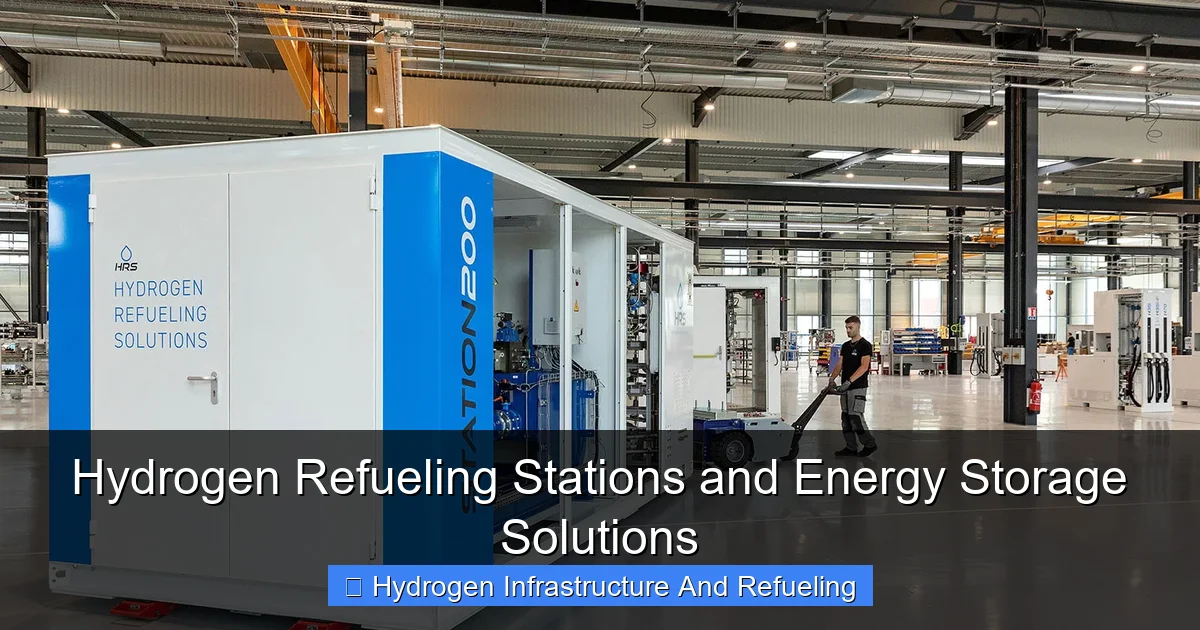
Visual guide about Hydrogen Refueling Stations and Energy Storage Solutions
Image source: hydrogen-refueling-solutions.fr
Hydrogen refueling stations are specialized facilities designed to deliver compressed hydrogen gas to fuel cell electric vehicles (FCEVs). Think of them as the hydrogen equivalent of gas stations—but instead of pumping liquid fuel, they dispense high-pressure gas into vehicle tanks. These stations are essential for making hydrogen-powered transportation practical and convenient.
Most hydrogen refueling stations operate at 350 or 700 bar pressure, allowing vehicles to store enough fuel for long-range travel—often 300 to 400 miles on a single fill. Refueling takes just 3 to 5 minutes, comparable to conventional gasoline vehicles and far faster than charging a battery electric vehicle. This speed and range make hydrogen especially attractive for fleet vehicles like taxis, delivery trucks, and public transit buses.
Types of Hydrogen Refueling Stations
There are three main types of hydrogen refueling stations, each with different methods of hydrogen supply and production:
- Delivered hydrogen stations: These stations receive hydrogen via tube trailers from centralized production facilities. The hydrogen is compressed and stored on-site before being dispensed. This is the most common setup today, especially in early-stage markets.
- On-site production stations: These stations generate hydrogen directly at the location using electrolysis—splitting water into hydrogen and oxygen using electricity. When powered by renewable energy, this method produces “green hydrogen,” making the entire process carbon-free.
- Liquid hydrogen stations: Some stations store hydrogen in liquid form at cryogenic temperatures (-253°C). This allows for higher energy density and longer storage, but requires complex insulation and handling systems.
Each type has its pros and cons. Delivered hydrogen is simpler to implement but relies on transportation logistics. On-site production reduces delivery needs and supports sustainability, but requires reliable power and space. Liquid hydrogen offers efficiency but comes with higher costs and technical challenges.
How Hydrogen Refueling Works
The process of refueling a hydrogen vehicle is surprisingly straightforward. When a driver pulls up to a hydrogen refueling station, they connect a dispenser nozzle to the vehicle’s fuel inlet—similar to a gas pump. The system automatically checks for leaks and ensures a secure connection. Then, compressed hydrogen is transferred from the station’s storage tanks into the vehicle’s high-pressure fuel tank.
Modern stations are equipped with safety sensors, emergency shut-offs, and communication systems that monitor pressure, temperature, and flow rates in real time. The entire process is automated and typically takes just a few minutes. Once complete, the driver disconnects and drives off—no cords, no waiting, no emissions.
One key advantage is that hydrogen refueling doesn’t degrade vehicle components the way frequent fast-charging can affect batteries. This makes hydrogen particularly suitable for high-usage vehicles that need to operate around the clock.
Hydrogen as an Energy Storage Solution
Beyond transportation, hydrogen plays a crucial role in energy storage—especially for renewable power systems. Solar and wind energy are intermittent: the sun doesn’t always shine, and the wind doesn’t always blow. This variability can strain the electrical grid, leading to imbalances between supply and demand.
Hydrogen offers a solution. When renewable energy production exceeds demand, excess electricity can be used to produce hydrogen via electrolysis. This hydrogen can then be stored for later use—either to generate electricity in fuel cells or to power vehicles and industrial processes. This makes hydrogen a form of long-duration energy storage, capable of holding energy for days, weeks, or even seasons.
How Hydrogen Storage Works
Storing hydrogen involves compressing it into high-pressure tanks, liquefying it at extremely low temperatures, or binding it to other materials (like metal hydrides or liquid organic carriers). Each method has trade-offs in terms of cost, efficiency, and scalability.
Compressed gas storage is the most common method used in refueling stations and vehicles. Tanks are typically made of carbon fiber to withstand high pressures while remaining lightweight. For grid-scale storage, large underground salt caverns or depleted oil and gas reservoirs can hold vast amounts of hydrogen safely and cost-effectively.
Liquid hydrogen storage is more energy-intensive due to the cooling requirements, but it allows for greater energy density. This makes it suitable for applications where space is limited, such as in aviation or long-haul shipping.
Benefits of Hydrogen Energy Storage
Hydrogen storage offers several advantages over traditional battery systems:
- Long-duration storage: Unlike lithium-ion batteries, which are best for short-term storage (hours), hydrogen can store energy for weeks or months without significant losses.
- Scalability: Hydrogen storage can be scaled up easily by adding more tanks or underground reservoirs, making it ideal for large-scale grid applications.
- Versatility: Stored hydrogen can be used for multiple purposes—generating electricity, heating buildings, or fueling vehicles—providing flexibility in energy use.
- Seasonal storage: In regions with seasonal variations in renewable output (e.g., low solar in winter), hydrogen can store summer surplus for winter use.
For example, in Germany, the HyStor project is exploring the use of salt caverns to store green hydrogen produced from wind farms. This stored hydrogen can then be used to generate electricity during periods of low wind, helping to stabilize the grid.
Global Expansion of Hydrogen Infrastructure
Around the world, governments and private companies are investing billions in hydrogen infrastructure. The goal is to build a network of refueling stations and storage facilities that can support a growing fleet of hydrogen-powered vehicles and industrial applications.
Leading Countries in Hydrogen Development
- Japan: A global leader in hydrogen technology, Japan has over 160 hydrogen refueling stations and aims to have 900 by 2030. The country is also developing hydrogen-powered trains and ships.
- Germany: With its National Hydrogen Strategy, Germany is building a network of hydrogen refueling stations along major highways and investing in green hydrogen production. The H2 Mobility initiative aims to have 100 stations operational by 2025.
- United States: California leads the U.S. with over 60 hydrogen refueling stations, primarily serving FCEVs like the Toyota Mirai and Hyundai NEXO. The state’s Zero Emission Vehicle (ZEV) mandate is driving demand.
- South Korea: Home to major automakers like Hyundai, South Korea is rapidly expanding its hydrogen infrastructure, with plans for 1,200 refueling stations by 2040.
- China: As the world’s largest vehicle market, China is investing heavily in hydrogen, with over 300 refueling stations already in operation and ambitious targets for fuel cell vehicles.
These efforts are supported by international collaborations, such as the Hydrogen Council and the Clean Energy Ministerial’s Hydrogen Initiative, which promote knowledge sharing and policy alignment.
Challenges in Building Hydrogen Infrastructure
Despite progress, several challenges remain:
- High costs: Building a hydrogen refueling station can cost $1–2 million, compared to $100,000–$300,000 for a fast-charging EV station. Electrolyzers and compressors are still expensive.
- Limited vehicle availability: There are only a few FCEV models on the market, and they are often more expensive than battery electric vehicles.
- Supply chain constraints: Transporting hydrogen requires specialized equipment, and leaks can reduce efficiency and pose safety risks.
- Public awareness: Many consumers are unfamiliar with hydrogen vehicles and may have concerns about safety, despite rigorous standards.
However, costs are expected to fall as technology improves and production scales up. Government incentives, such as tax credits and grants, are also helping to accelerate deployment.
Green Hydrogen: The Key to Sustainability
Not all hydrogen is created equal. Depending on how it’s produced, hydrogen can be classified by color:
- Grey hydrogen: Made from natural gas via steam methane reforming (SMR), this is the most common method today but emits CO₂.
- Blue hydrogen: Also produced from natural gas, but with carbon capture and storage (CCS) to reduce emissions.
- Green hydrogen: Produced using renewable electricity to power electrolysis, resulting in zero emissions.
For hydrogen to be a truly clean energy solution, the focus must shift to green hydrogen. This requires abundant renewable energy and cost-effective electrolyzers.
Advances in Electrolysis Technology
Electrolyzers are the heart of green hydrogen production. There are three main types:
- Alkaline electrolyzers: Mature and cost-effective, but less efficient with variable power inputs.
- Proton Exchange Membrane (PEM) electrolyzers: More responsive to fluctuating renewable energy and compact in size, but more expensive.
- Solid oxide electrolyzers (SOEC): Highly efficient and capable of using waste heat, but still in development.
Companies like ITM Power, Nel Hydrogen, and Plug Power are driving innovation in electrolyzer technology, aiming to reduce costs and improve performance. As renewable energy becomes cheaper, green hydrogen is becoming increasingly competitive.
Real-World Examples of Green Hydrogen Projects
- HyDeal Ambition (Europe): A consortium aims to produce green hydrogen at €1.5/kg by 2030 using solar-powered electrolysis across Spain, France, and Portugal.
- NEOM Green Hydrogen Project (Saudi Arabia): One of the world’s largest green hydrogen plants, powered by wind and solar, will produce 650 tons of hydrogen per day by 2026.
- Hydrogen City (Australia): The city of Gladstone is developing a hydrogen hub with refueling stations, storage, and export facilities, powered by renewable energy.
These projects demonstrate the potential of green hydrogen to decarbonize not just transportation, but also industry and power generation.
Future Outlook: What’s Next for Hydrogen?
The future of hydrogen refueling stations and energy storage solutions looks promising. As technology advances and costs decline, hydrogen is expected to play a growing role in the global energy mix.
Emerging Trends
- Hydrogen-powered aviation and shipping: Companies like Airbus and Maersk are exploring hydrogen fuel cells and liquid hydrogen for zero-emission flights and cargo ships.
- Hydrogen microgrids: Remote communities and industrial sites are using hydrogen to store renewable energy and provide backup power.
- Hydrogen blending in natural gas pipelines: Some countries are testing the injection of hydrogen into existing gas networks to reduce carbon emissions.
- AI and smart grid integration: Advanced software is optimizing hydrogen production and storage based on real-time energy demand and weather forecasts.
Policy and Investment Driving Growth
Governments are introducing supportive policies to accelerate hydrogen adoption. The U.S. Inflation Reduction Act includes tax credits for clean hydrogen production. The European Union’s REPowerEU plan aims to produce 10 million tons of green hydrogen domestically by 2030. China’s Five-Year Plans prioritize hydrogen as a strategic industry.
Private investment is also surging. Major energy companies like Shell, BP, and TotalEnergies are launching hydrogen divisions. Automakers such as Toyota, Hyundai, and BMW are expanding their FCEV lineups.
Conclusion: A Hydrogen-Powered Future Is Within Reach
Hydrogen refueling stations and energy storage solutions are more than just futuristic concepts—they are active components of today’s clean energy transition. From powering zero-emission vehicles to storing renewable energy for the grid, hydrogen offers a flexible, scalable, and sustainable path forward.
While challenges remain in cost, infrastructure, and public awareness, the momentum is undeniable. With continued innovation, investment, and collaboration, hydrogen can help us build a cleaner, more resilient energy system. Whether you’re driving a fuel cell car, riding a hydrogen bus, or powering a home with stored green energy, the hydrogen revolution is already underway.
The journey to a hydrogen-powered future won’t happen overnight. But with every new refueling station, every kilogram of green hydrogen produced, and every watt of stored energy, we’re getting closer. The future is not just electric—it’s also hydrogen.
Frequently Asked Questions
How safe are hydrogen refueling stations?
Hydrogen refueling stations are designed with multiple safety features, including leak detection, emergency shut-offs, and pressure monitoring. Hydrogen is lighter than air and disperses quickly, reducing fire risk. Strict international standards ensure safe operation.
Can hydrogen be used to power homes?
Yes, hydrogen can power homes through fuel cells that generate electricity and heat. It can also be stored and used during power outages or when renewable energy is unavailable, providing reliable backup power.
Is hydrogen more efficient than batteries?
Hydrogen is less efficient than batteries for short-term energy storage due to energy losses in production and conversion. However, it excels in long-duration and large-scale storage, making it complementary to battery systems.
How much does it cost to refuel a hydrogen car?
Currently, hydrogen fuel costs around $12–$16 per kilogram in the U.S., with most vehicles achieving 60–70 miles per kg. This makes refueling comparable to gasoline on a per-mile basis, though prices are expected to fall as production scales up.
Can existing gas stations be converted to hydrogen refueling stations?
Yes, some gas stations are being retrofitted with hydrogen dispensers, especially in regions with growing FCEV adoption. However, full conversion requires significant infrastructure upgrades, including storage tanks and safety systems.
What happens to hydrogen if it leaks?
Hydrogen leaks are generally not dangerous because the gas is non-toxic and rises quickly into the atmosphere. However, in confined spaces, it can pose a fire risk if ignited. Proper ventilation and detection systems minimize this risk.