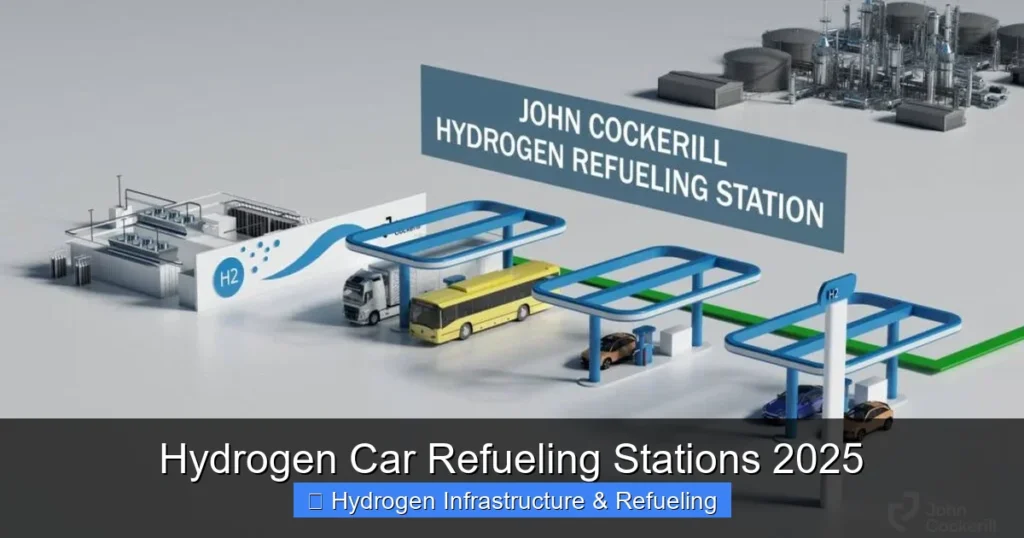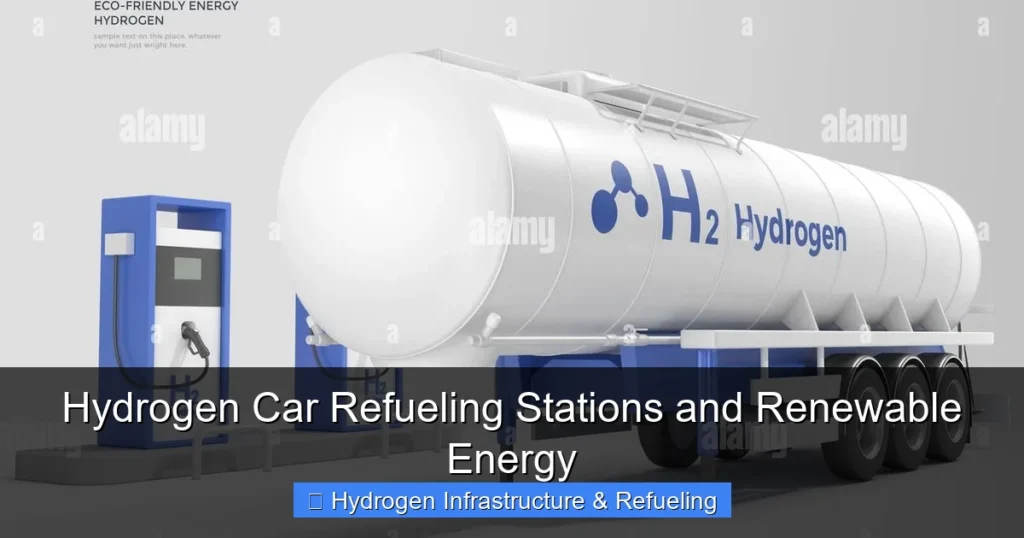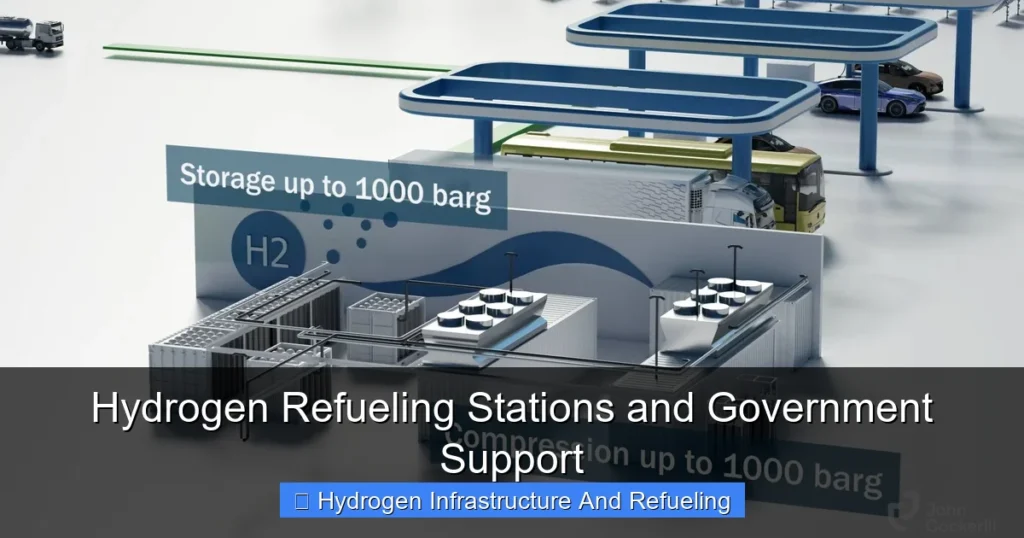
Hydrogen refueling stations are key to unlocking zero-emission transportation, and government support is accelerating their growth worldwide. From funding programs to policy incentives, public investment is making hydrogen fuel cell vehicles more accessible and practical for everyday use.
Key Takeaways
- Hydrogen refueling stations are essential infrastructure for fuel cell electric vehicles (FCEVs), enabling long-range, fast refueling with zero emissions. Without a reliable network, FCEVs cannot compete with battery electric or traditional vehicles.
- Government support is critical for building hydrogen infrastructure, especially in early stages where costs are high and demand is low. Subsidies, grants, and tax incentives help bridge the funding gap.
- Countries like Japan, Germany, and South Korea are leading in hydrogen station deployment due to strong national strategies and public-private partnerships. Their success offers models for other nations.
- Federal and state-level programs in the U.S., such as the Bipartisan Infrastructure Law, are injecting billions into hydrogen infrastructure development. This includes funding for refueling stations and clean hydrogen production.
- Hydrogen stations can be built using on-site production, pipeline delivery, or trucked-in liquid hydrogen, each with different cost and scalability trade-offs. Location and demand determine the best approach.
- Challenges remain, including high capital costs, safety regulations, and the need for standardized equipment. Ongoing innovation and policy alignment are needed to overcome these barriers.
- Public awareness and consumer confidence grow as more stations open and real-world use cases prove hydrogen’s viability. Education and transparency are key to long-term adoption.
📑 Table of Contents
- The Rise of Hydrogen Refueling Stations: A Clean Energy Revolution
- Why Hydrogen Refueling Stations Matter for a Sustainable Future
- How Hydrogen Refueling Stations Work: Technology and Design
- Government Support: The Engine Behind Hydrogen Infrastructure Growth
- Global Leaders in Hydrogen Infrastructure
- Challenges and the Path Forward
- Conclusion: A Future Fueled by Hydrogen
The Rise of Hydrogen Refueling Stations: A Clean Energy Revolution
Imagine pulling up to a fueling station, connecting a nozzle, and filling your car in under five minutes—just like gasoline. But instead of emitting harmful fumes, your vehicle releases only water vapor. This isn’t science fiction. It’s the promise of hydrogen refueling stations and fuel cell electric vehicles (FCEVs), and it’s becoming a reality thanks to growing government support and technological advances.
Hydrogen has long been hailed as a clean energy carrier. When used in a fuel cell, it combines with oxygen to produce electricity, powering an electric motor—without any greenhouse gas emissions. The only byproduct? Pure water. This makes hydrogen an attractive alternative to fossil fuels, especially for heavy-duty transportation like trucks, buses, and even trains and ships, where battery weight and charging times are limiting factors.
But for hydrogen-powered vehicles to succeed, drivers need access to refueling infrastructure—just like gas stations for conventional cars or charging points for battery electric vehicles. That’s where hydrogen refueling stations come in. These stations store and dispense compressed hydrogen gas (or sometimes liquid hydrogen) safely and efficiently. Yet, despite their potential, the number of hydrogen stations worldwide is still relatively small. As of 2024, there are fewer than 1,000 operational hydrogen refueling stations globally, with the majority concentrated in a handful of countries.
This is where government support becomes a game-changer. Building hydrogen infrastructure is expensive and risky for private companies alone. High upfront costs, uncertain demand, and regulatory hurdles make it difficult to justify investment without public backing. That’s why governments around the world are stepping in with funding, policy incentives, and strategic planning to kickstart the hydrogen economy.
From Japan’s “Basic Hydrogen Strategy” to the European Union’s “Hydrogen Strategy for a Climate-Neutral Europe,” national initiatives are laying the groundwork for a hydrogen-powered future. In the United States, federal legislation like the Bipartisan Infrastructure Law and the Inflation Reduction Act are pouring billions into clean energy, including hydrogen production and refueling infrastructure. These efforts are not just about reducing emissions—they’re about energy independence, job creation, and technological leadership.
Why Hydrogen Refueling Stations Matter for a Sustainable Future
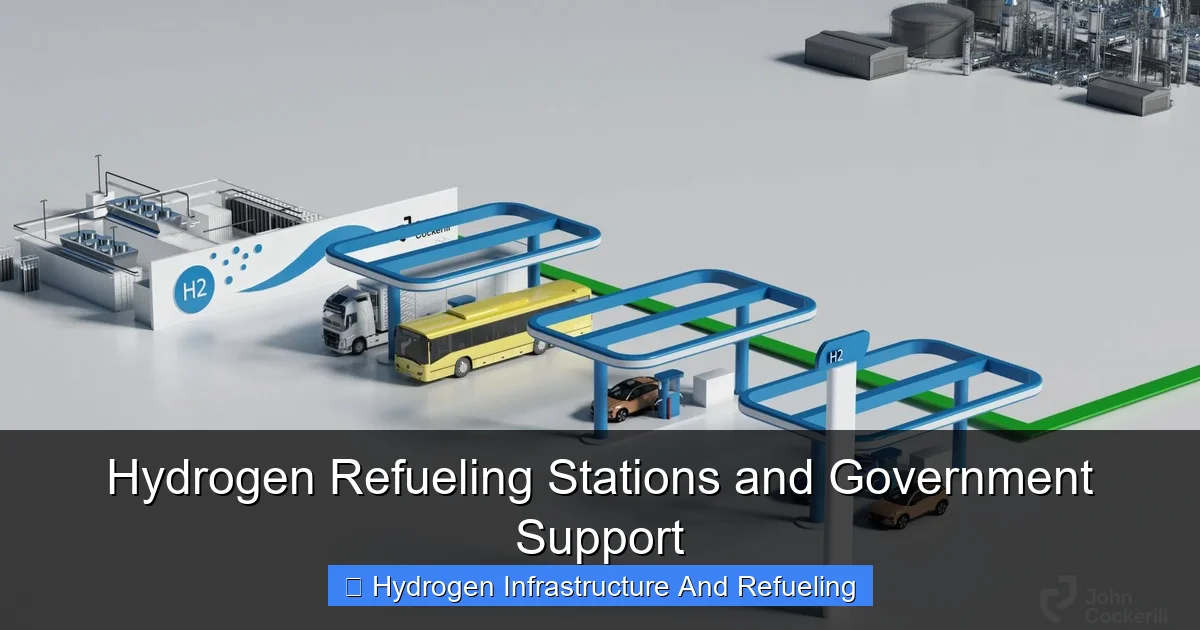
Visual guide about Hydrogen Refueling Stations and Government Support
Image source: hydrogen.johncockerill.com
To understand the importance of hydrogen refueling stations, it helps to compare them to other clean transportation options. Battery electric vehicles (BEVs) have made tremendous progress in recent years, with longer ranges, faster charging, and falling battery costs. But they’re not a one-size-fits-all solution.
For example, long-haul trucking, aviation, and maritime shipping require high energy density and quick refueling—something batteries struggle with due to weight and charging time. Hydrogen, on the other hand, offers energy density similar to gasoline and can be refueled in minutes. A hydrogen-powered truck can travel over 500 miles on a single fill-up, making it ideal for cross-country freight.
Similarly, buses and delivery vans in urban areas can benefit from hydrogen’s fast refueling and zero emissions. Cities like London, Tokyo, and Los Angeles are already testing hydrogen buses to reduce air pollution and noise. These vehicles can operate all day without needing to recharge, which is a major advantage over battery-powered models that require lengthy downtime.
Hydrogen also plays a crucial role in energy storage and grid balancing. Excess renewable energy from wind and solar can be used to produce hydrogen through electrolysis—splitting water into hydrogen and oxygen. This “green hydrogen” can then be stored and used later to generate electricity or fuel vehicles, helping to stabilize the grid and make better use of renewable resources.
But none of this is possible without a network of hydrogen refueling stations. Just as electric vehicles need charging stations, FCEVs need places to refuel. Without infrastructure, even the most advanced hydrogen vehicles remain impractical for everyday use. That’s why building out a reliable, accessible network of hydrogen stations is a top priority for governments and industry leaders alike.
How Hydrogen Refueling Stations Work: Technology and Design
So, how exactly do hydrogen refueling stations function? While the basic idea is similar to gasoline stations—dispensing fuel into a vehicle—the technology behind hydrogen is more complex due to the unique properties of the gas.
Hydrogen is the lightest and most abundant element in the universe, but it’s also highly flammable and requires careful handling. At room temperature, it’s a gas, but to store enough of it for vehicle use, it must be compressed to very high pressures—typically 350 or 700 bar (around 5,000 to 10,000 psi). Some stations also use liquid hydrogen, which is cooled to -253°C (-423°F), allowing for higher energy density but requiring specialized cryogenic equipment.
There are three main ways hydrogen can be supplied to a refueling station:
On-Site Production
Some stations produce hydrogen right where it’s dispensed. This is often done using electrolysis, where electricity splits water into hydrogen and oxygen. If the electricity comes from renewable sources like solar or wind, the resulting hydrogen is called “green hydrogen” and is completely carbon-free. On-site production reduces the need for transportation but requires space and reliable power.
Pipeline Delivery
In regions with existing hydrogen pipelines—such as parts of the U.S. Gulf Coast or industrial zones in Europe—stations can receive hydrogen directly through pipelines. This method is efficient and cost-effective for high-demand areas but is limited by the availability of pipeline infrastructure.
Trucked-In Hydrogen
The most common method today is delivering hydrogen by truck, either as compressed gas in tube trailers or as liquid hydrogen in insulated tankers. This allows stations to be built in locations without pipelines, but it adds transportation costs and emissions unless the hydrogen is produced cleanly.
Once hydrogen arrives at the station, it’s stored in high-pressure tanks. When a vehicle pulls up, the dispenser connects to the car’s fuel inlet, and hydrogen is transferred under controlled conditions. Modern stations use advanced safety systems, including leak detectors, automatic shut-off valves, and ventilation, to ensure safe operation.
One challenge is compatibility. Different vehicles may require different pressures or connector types. However, international standards, such as those from SAE International, are helping to harmonize equipment and make refueling seamless for drivers.
Government Support: The Engine Behind Hydrogen Infrastructure Growth
Building a nationwide network of hydrogen refueling stations is a massive undertaking. The costs are high—each station can cost between $1 million and $3 million to build, depending on size and technology. At the same time, demand is still limited, with only tens of thousands of FCEVs on the road globally. This creates a classic “chicken-and-egg” problem: without stations, people won’t buy hydrogen cars; without cars, companies won’t build stations.
This is where government support becomes essential. By providing financial incentives, setting clear policies, and investing in research and development, governments can de-risk investment and accelerate deployment.
Funding and Grants
One of the most direct forms of support is funding. Governments offer grants, low-interest loans, and subsidies to help cover the capital costs of building hydrogen stations. For example, the U.S. Department of Energy’s Hydrogen and Fuel Cell Technologies Office provides millions in funding for infrastructure projects. Similarly, the European Union’s Innovation Fund supports large-scale clean energy projects, including hydrogen refueling networks.
In California—the U.S. leader in hydrogen vehicles—the state has committed over $100 million to build hydrogen stations through the California Energy Commission’s Alternative and Renewable Fuel and Vehicle Technology Program. As a result, California now has more than 60 operational hydrogen stations, the most of any state.
Tax Incentives and Rebates
Tax policies can also drive investment. In the U.S., the Inflation Reduction Act (IRA) of 2022 introduced a clean hydrogen production tax credit of up to $3 per kilogram for hydrogen produced with near-zero emissions. This makes green hydrogen more competitive with fossil-based hydrogen and encourages investment in production facilities that can supply refueling stations.
Additionally, some states offer rebates or tax credits for purchasing FCEVs or installing hydrogen infrastructure. These incentives lower the barrier to entry for both consumers and businesses.
Regulatory Support and Streamlined Permitting
Governments can also help by creating clear regulations and streamlining the permitting process. Building a hydrogen station involves navigating safety codes, zoning laws, and environmental reviews. When these processes are slow or inconsistent, they delay deployment and increase costs.
Countries like Japan and Germany have established national hydrogen strategies that include standardized safety guidelines and fast-track permitting for infrastructure projects. This predictability encourages private investment and reduces uncertainty.
Public-Private Partnerships
Many successful hydrogen projects are the result of collaboration between government agencies, automakers, energy companies, and technology providers. For example, in South Korea, the government partnered with Hyundai, SK Group, and other firms to build a nationwide hydrogen network. The goal is to have 1,200 hydrogen stations by 2040, supporting over 6.2 million FCEVs.
Similarly, in Europe, the H2ME (Hydrogen Mobility Europe) project brought together 40 partners from 10 countries to deploy hydrogen vehicles and refueling stations across the continent. Funded partly by the EU, the project has helped establish hydrogen corridors connecting major cities.
Global Leaders in Hydrogen Infrastructure
While hydrogen refueling stations are still in the early stages of deployment, several countries are leading the way with ambitious plans and real-world progress.
Japan: A Pioneer in Hydrogen Mobility
Japan has been a global leader in hydrogen technology for decades. The country’s “Basic Hydrogen Strategy,” launched in 2017, aims to create a “hydrogen society” where hydrogen is used for transportation, power generation, and industrial processes. As part of this effort, Japan has built over 160 hydrogen refueling stations—the most of any country—and plans to reach 900 by 2030.
Toyota, the maker of the Mirai FCEV, has been a key driver, working with government agencies and energy companies to expand infrastructure. Japan’s focus on hydrogen is also tied to its energy security goals, as the country imports nearly all of its fossil fuels.
Germany: Building a Hydrogen Backbone
Germany is investing heavily in hydrogen as part of its Energiewende (energy transition) policy. The government’s National Hydrogen Strategy includes €9 billion in funding for hydrogen production, infrastructure, and research. A key focus is building a “hydrogen backbone” of pipelines to connect industrial hubs and refueling stations.
By 2030, Germany aims to have 400 hydrogen refueling stations, with support from automakers like BMW and Daimler. The country is also developing hydrogen-powered trains and trucks, with pilot projects already in operation.
South Korea: Fast-Tracking Hydrogen Adoption
South Korea has set aggressive targets for hydrogen vehicles and infrastructure. The government’s Hydrogen Economy Roadmap calls for 1,200 refueling stations and 6.2 million FCEVs by 2040. Hyundai’s NEXO SUV is one of the most popular hydrogen cars globally, and the company is investing in hydrogen production and fueling technology.
The city of Ulsan has become a hydrogen hub, with multiple production facilities, refueling stations, and public transit using hydrogen buses.
United States: A Patchwork of Progress
In the U.S., progress has been more uneven, with most hydrogen activity centered in California. However, federal support is growing. The Bipartisan Infrastructure Law allocates $8 billion for regional clean hydrogen hubs, which will include refueling infrastructure. The Department of Energy is also funding research into lower-cost hydrogen production and storage.
States like New York, Connecticut, and Hawaii are beginning to invest in hydrogen stations, often as part of broader clean transportation plans.
Challenges and the Path Forward
Despite the progress, significant challenges remain. The high cost of building and operating hydrogen stations is a major barrier. Even with government support, the return on investment is uncertain in the short term. Additionally, hydrogen production is still largely dependent on natural gas (“gray hydrogen”), which emits CO2. For hydrogen to be truly sustainable, the shift to green hydrogen—produced with renewable energy—must accelerate.
Safety is another concern. While hydrogen is safe when handled properly, its flammability requires strict protocols and public education. Misconceptions about hydrogen safety can slow adoption, so transparency and outreach are essential.
There’s also the issue of scalability. To support millions of FCEVs, thousands of stations will be needed. This requires not just funding, but coordination across industries, regions, and governments.
But the momentum is building. As battery electric vehicles reach their limits in certain applications, hydrogen is emerging as a complementary solution. With continued government support, technological innovation, and public-private collaboration, hydrogen refueling stations can become as common as gas stations—ushering in a cleaner, more resilient energy future.
Conclusion: A Future Fueled by Hydrogen
Hydrogen refueling stations are more than just fueling points—they’re symbols of a broader shift toward sustainable transportation and energy independence. While the road ahead is challenging, the combination of advancing technology and strong government support is making hydrogen a viable part of the clean energy mix.
From Japan to Germany to California, real-world examples show that with the right policies and investments, hydrogen infrastructure can grow rapidly. As more stations open and more vehicles hit the road, public confidence will grow, creating a positive feedback loop that drives further adoption.
The future of transportation isn’t just electric—it’s diversified. Battery electric vehicles will dominate passenger cars, but hydrogen will play a crucial role in heavy transport, aviation, and energy storage. And at the heart of this hydrogen economy will be the refueling stations that keep it moving.
For governments, the message is clear: continued support for hydrogen infrastructure is not just an environmental imperative—it’s an economic and strategic opportunity. By investing in hydrogen today, nations can position themselves as leaders in the next energy revolution.
Frequently Asked Questions
How many hydrogen refueling stations are there worldwide?
As of 2024, there are fewer than 1,000 operational hydrogen refueling stations globally, with the majority located in Japan, Germany, South Korea, and California. The number is growing rapidly due to government support and increasing demand for fuel cell vehicles.
Are hydrogen refueling stations safe?
Yes, hydrogen refueling stations are designed with multiple safety features, including leak detection, automatic shut-off systems, and ventilation. Hydrogen is flammable, but when handled properly, it is as safe as conventional fuels like gasoline.
How long does it take to refuel a hydrogen car?
Refueling a hydrogen vehicle takes about 3 to 5 minutes, similar to gasoline. This is much faster than charging a battery electric vehicle, making hydrogen ideal for long-distance and commercial use.
What types of vehicles use hydrogen refueling stations?
Hydrogen refueling stations primarily serve fuel cell electric vehicles (FCEVs), including passenger cars like the Toyota Mirai and Hyundai NEXO, as well as buses, trucks, and forklifts. Some trains and ships are also beginning to use hydrogen.
Is hydrogen fuel expensive?
Currently, hydrogen fuel is more expensive than gasoline or electricity per mile, but costs are expected to fall as production scales up and green hydrogen becomes more common. Government incentives can also help reduce the cost for consumers.
Can I build a hydrogen refueling station in my city?
Building a hydrogen station requires significant investment, regulatory approvals, and access to hydrogen supply. However, government grants and public-private partnerships are making it easier for communities and companies to develop stations, especially in regions with supportive policies.