Hydrogen refueling stations are emerging as a key solution in the fight against climate change, enabling zero-emission transportation powered by clean hydrogen. By supporting fuel cell electric vehicles (FCEVs), these stations help reduce greenhouse gas emissions, especially in heavy-duty transport and industrial sectors where battery-electric options face limitations.
Key Takeaways
- Hydrogen refueling stations enable zero-emission travel: They power fuel cell electric vehicles (FCEVs) that emit only water vapor, making them a clean alternative to gasoline and diesel.
- Critical for decarbonizing hard-to-electrify sectors: Trucks, buses, trains, and ships benefit greatly from hydrogen due to its high energy density and fast refueling.
- Green hydrogen is key to real emissions reduction: When produced using renewable energy, hydrogen becomes a truly sustainable fuel with minimal carbon footprint.
- Infrastructure growth is accelerating globally: Countries like Germany, Japan, and the U.S. are investing heavily in hydrogen networks to meet climate goals.
- Challenges remain in cost and scalability: High production and distribution costs, along with limited station availability, are barriers being addressed through innovation and policy.
- Hydrogen complements, not replaces, battery-electric vehicles: Both technologies play vital roles in a diversified clean transportation future.
- Public and private collaboration is essential: Governments, automakers, and energy companies must work together to build a reliable hydrogen ecosystem.
📑 Table of Contents
- Introduction: The Rise of Hydrogen as a Clean Fuel
- What Are Hydrogen Refueling Stations?
- The Role of Hydrogen Refueling Stations in Reducing Emissions
- Global Progress and Real-World Examples
- Challenges and Barriers to Widespread Adoption
- The Future of Hydrogen Refueling Stations
- Conclusion: A Cleaner Future Powered by Hydrogen
Introduction: The Rise of Hydrogen as a Clean Fuel
Imagine a world where your car, truck, or bus runs on fuel that leaves behind nothing but water. No smog, no tailpipe emissions, no contribution to climate change. This isn’t science fiction—it’s the promise of hydrogen-powered transportation, and it’s getting closer every day. At the heart of this revolution are hydrogen refueling stations, the invisible backbone enabling vehicles to run on clean energy.
Hydrogen has long been hailed as a potential game-changer in the quest to reduce greenhouse gas emissions. Unlike fossil fuels, when hydrogen is used in a fuel cell, it produces only electricity, heat, and water. This makes it an attractive option for decarbonizing transportation, especially in sectors where battery-electric vehicles (BEVs) struggle—like long-haul trucking, aviation, and maritime shipping. But for hydrogen to fulfill its potential, we need a robust network of refueling infrastructure. That’s where hydrogen refueling stations come in.
What Are Hydrogen Refueling Stations?
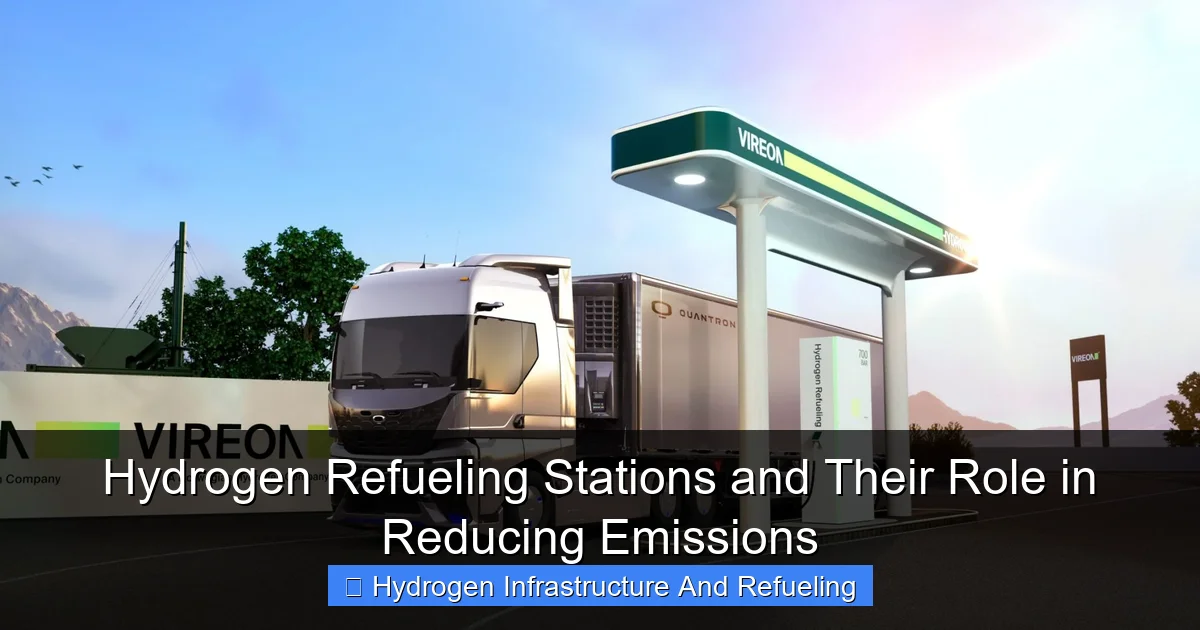
Visual guide about Hydrogen Refueling Stations and Their Role in Reducing Emissions
Image source: sustainabletruckvan.com
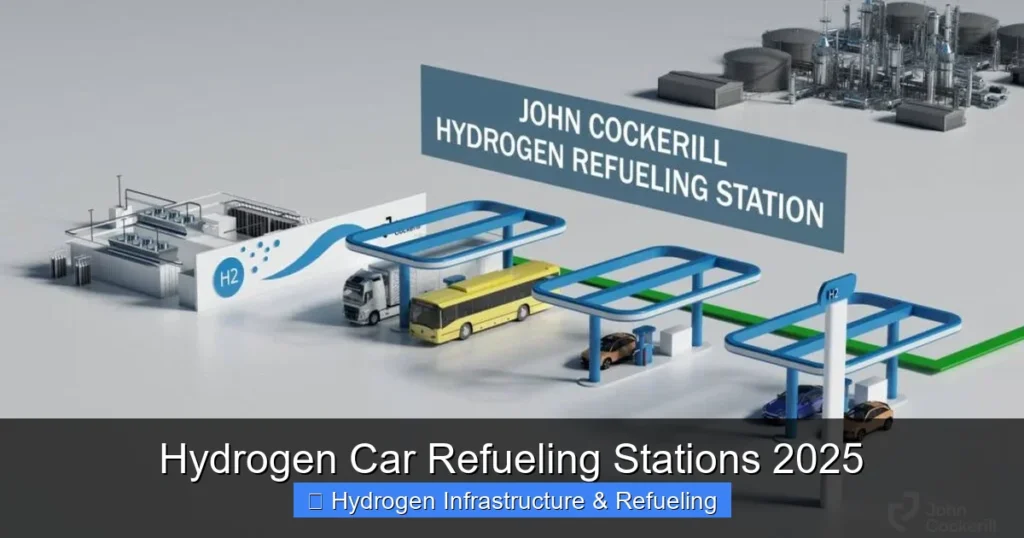
Hydrogen refueling stations are specialized facilities designed to store, compress, and dispense hydrogen gas to fuel cell electric vehicles (FCEVs). Think of them as the hydrogen equivalent of gas stations—but instead of pumping gasoline, they deliver high-pressure hydrogen to vehicles equipped with fuel cells.
These stations come in various sizes and configurations. Some are small, serving a few vehicles a day, while others are large-scale hubs capable of refueling dozens of trucks or buses. The process is surprisingly quick: most FCEVs can be refueled in under 10 minutes, similar to filling up a conventional car. This speed is a major advantage over battery-electric vehicles, which can take 30 minutes to several hours to recharge, depending on the charger type.
How Do They Work?
At a basic level, hydrogen refueling stations receive hydrogen—either delivered by truck or produced on-site—and store it in high-pressure tanks. When a vehicle arrives, the hydrogen is transferred through a dispenser into the vehicle’s onboard storage tanks. The hydrogen then flows into the fuel cell, where it reacts with oxygen from the air to generate electricity, powering the vehicle’s motor.
There are two main types of hydrogen refueling stations:
- On-site production stations: These generate hydrogen directly at the station using electrolysis (splitting water into hydrogen and oxygen using electricity) or steam methane reforming (SMR). On-site production reduces transportation needs but requires significant space and energy.
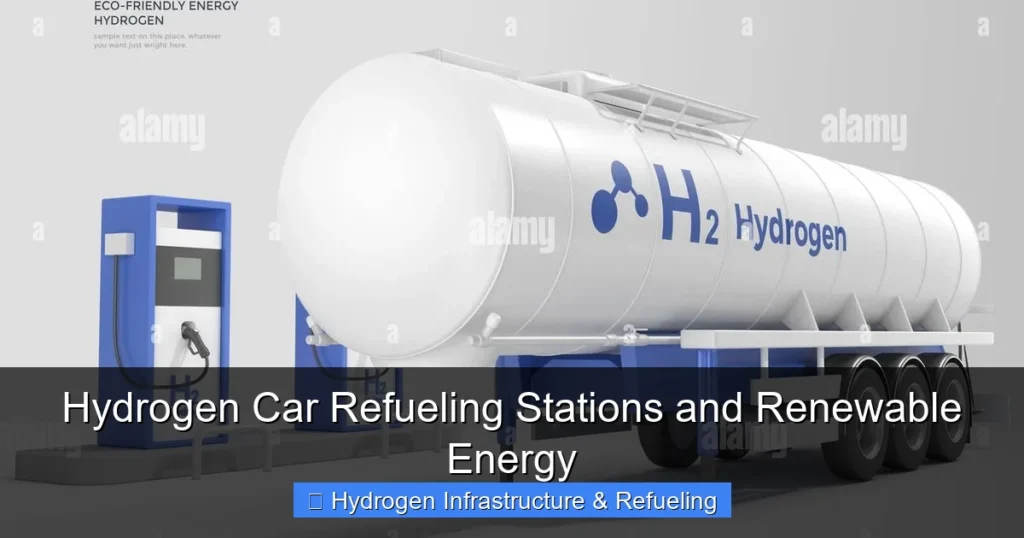
- Delivered hydrogen stations: These receive hydrogen via tube trailers from centralized production facilities. This model is more common today, especially in regions with limited space or energy infrastructure.
Safety is a top priority. Hydrogen is highly flammable, but modern stations are equipped with advanced leak detection, ventilation systems, and emergency shut-offs. In fact, hydrogen disperses quickly into the air, reducing the risk of accumulation compared to gasoline vapors.
Types of Hydrogen: Gray, Blue, and Green
Not all hydrogen is created equal. The environmental impact of hydrogen depends heavily on how it’s produced. That’s why experts classify hydrogen by color:
- Gray hydrogen: Made from natural gas through steam methane reforming (SMR). This is the most common method today but releases carbon dioxide, making it less sustainable.
- Blue hydrogen: Also produced from natural gas, but the CO₂ emissions are captured and stored (carbon capture and storage, or CCS). This reduces emissions significantly but isn’t zero-carbon.
- Green hydrogen: Produced using renewable energy (like wind or solar) to power electrolysis. This method emits no greenhouse gases and is the gold standard for clean hydrogen.
For hydrogen refueling stations to truly reduce emissions, they must prioritize green hydrogen. While gray and blue hydrogen can serve as transitional fuels, long-term sustainability depends on scaling up renewable-powered production.
The Role of Hydrogen Refueling Stations in Reducing Emissions
Transportation is one of the largest sources of global greenhouse gas emissions, accounting for nearly a quarter of energy-related CO₂ output. While electric vehicles (EVs) are making strides in passenger cars, they face limitations in heavy-duty and long-range applications. This is where hydrogen refueling stations shine.
Decarbonizing Heavy-Duty Transportation
Trucks, buses, and delivery vehicles are major polluters. A single diesel truck can emit as much CO₂ in a year as 10 average cars. Battery-electric trucks are improving, but their heavy batteries reduce payload capacity and require long charging times—making them less practical for long-haul routes.
Hydrogen-powered trucks, on the other hand, offer a compelling alternative. They have similar range and refueling times to diesel trucks, making them ideal for freight and logistics. Companies like Toyota, Hyundai, and Nikola are already testing hydrogen trucks on real-world routes. For example, in California, the Port of Los Angeles has deployed hydrogen fuel cell trucks to reduce emissions from cargo transport.
Hydrogen refueling stations enable this shift by providing the necessary infrastructure. Without them, even the most advanced hydrogen vehicles can’t operate. As more stations are built along major freight corridors, the feasibility of hydrogen trucking increases.
Supporting Public Transit and Fleet Vehicles
Cities around the world are turning to hydrogen buses to clean up public transit. These buses emit no pollutants, run quietly, and can travel 300–400 miles on a single fill—ideal for daily routes. In London, over 20 hydrogen buses operate on key routes, supported by dedicated refueling stations. Similarly, in Japan, hydrogen buses are a common sight in cities like Tokyo and Kyoto.
Fleet vehicles—such as taxis, delivery vans, and municipal trucks—also benefit. Because they return to a central depot daily, they can be refueled at a single station, simplifying infrastructure needs. This makes hydrogen an attractive option for cities aiming to meet clean air standards.
Enabling Zero-Emission Shipping and Aviation
While still in early stages, hydrogen is being explored for maritime and aviation applications. Ships powered by hydrogen fuel cells or hydrogen-derived fuels (like ammonia) could drastically cut emissions from global shipping, which currently accounts for nearly 3% of global CO₂.
In aviation, companies like Airbus are developing hydrogen-powered aircraft for regional flights. These planes would rely on hydrogen refueling infrastructure at airports. Though challenges remain—such as storage and energy density—hydrogen offers a path to zero-emission air travel that batteries alone cannot achieve.
Global Progress and Real-World Examples
Hydrogen refueling infrastructure is growing rapidly, driven by government policies, corporate investment, and technological advances. Several countries are leading the charge.
Europe: A Continental Push for Hydrogen
The European Union has made hydrogen a cornerstone of its Green Deal, aiming for 40 gigawatts of electrolyzer capacity by 2030. Germany is a standout, with over 100 hydrogen refueling stations and plans to expand to 1,000 by 2030. The H2 Mobility initiative, a public-private partnership, is building a nationwide network to support FCEVs.
France, the Netherlands, and Scandinavia are also investing heavily. In Norway, hydrogen ferries are being tested, while the Netherlands is developing hydrogen corridors for trucks along major highways.
Asia: Japan and South Korea Lead the Way
Japan has long been a pioneer in hydrogen technology. The country aims to become a “hydrogen society,” with over 160 refueling stations and a goal of 900 by 2030. Toyota’s Mirai and Honda’s Clarity are popular FCEVs, and the government subsidizes both vehicles and infrastructure.
South Korea is equally ambitious. With over 200 stations, it has the highest density of hydrogen refueling infrastructure per capita. The government supports hydrogen through tax incentives, R&D funding, and mandates for hydrogen buses in major cities.
North America: The U.S. and Canada Build Momentum
In the United States, California is the epicenter of hydrogen development. The state has over 60 operational stations, with plans to reach 200 by 2026. The California Fuel Cell Partnership brings together automakers, energy companies, and regulators to accelerate adoption.
The U.S. Department of Energy’s H2@Scale initiative supports research and deployment across the country. Meanwhile, Canada is investing in hydrogen for remote communities and heavy industry, with pilot projects in British Columbia and Quebec.
Emerging Markets and Global Collaboration
Countries like Australia, Chile, and Saudi Arabia are leveraging their abundant renewable resources to produce green hydrogen for export. Australia’s Hydrogen Energy Supply Chain (HESC) project aims to ship liquid hydrogen to Japan, showcasing the global potential of hydrogen trade.
International cooperation is also growing. The Hydrogen Council, a global CEO-led initiative, unites over 100 companies to scale hydrogen solutions. The International Energy Agency (IEA) and the Clean Energy Ministerial promote knowledge sharing and best practices.
Challenges and Barriers to Widespread Adoption
Despite the promise, hydrogen refueling stations face several hurdles. Overcoming these is essential for hydrogen to play a major role in emissions reduction.
High Costs of Production and Infrastructure
Green hydrogen is still expensive to produce—currently two to three times more than gray hydrogen. Electrolyzers, the machines that split water into hydrogen, are costly and require large amounts of renewable electricity. Building refueling stations is also capital-intensive, with costs ranging from $1 million to $3 million per station.
However, costs are falling. Advances in electrolyzer technology, economies of scale, and falling renewable energy prices are driving down expenses. The U.S. Inflation Reduction Act, for example, offers tax credits of up to $3 per kilogram of clean hydrogen, making green hydrogen more competitive.
Limited Station Availability and “Chicken-and-Egg” Problem
One of the biggest challenges is the lack of stations. Without enough refueling options, consumers and fleets are hesitant to adopt FCEVs. Conversely, without enough vehicles, companies are reluctant to invest in stations. This “chicken-and-egg” problem slows progress.
Solutions include targeted deployment in high-demand areas (like ports, highways, and urban centers), government incentives, and partnerships between automakers and energy providers. For example, Toyota and Shell have collaborated to build hydrogen stations in California, supporting both vehicle sales and infrastructure growth.
Energy Efficiency and Infrastructure Compatibility
Hydrogen is less energy-efficient than batteries. Producing, compressing, transporting, and converting hydrogen to electricity in a fuel cell loses about 60–70% of the original energy. In contrast, battery-electric vehicles use about 75–90% of the energy from the grid.
This means hydrogen is best suited for applications where batteries fall short—like long-range transport or heavy loads. For passenger cars in urban areas, EVs may remain more efficient.
Additionally, hydrogen requires specialized infrastructure. Existing gas stations can’t easily be converted, and new stations need safety certifications, zoning approvals, and utility connections. Streamlining regulations and permitting processes can accelerate deployment.
Public Awareness and Perception
Many people still associate hydrogen with the Hindenburg disaster, despite modern safety standards. Educating the public about the benefits and safety of hydrogen is crucial. Transparent communication, community engagement, and visible success stories can build trust.
The Future of Hydrogen Refueling Stations
The future looks bright for hydrogen refueling stations. As technology improves and costs decline, we can expect a rapid expansion of infrastructure. Here’s what’s on the horizon:
Scaling Up Green Hydrogen Production
The key to sustainable hydrogen is scaling green production. Countries with abundant solar and wind resources—like Australia, Chile, and Morocco—are positioning themselves as future hydrogen exporters. Large-scale electrolyzer projects are underway, with some facilities capable of producing hundreds of tons of hydrogen per day.
In the U.S., the Department of Energy’s Hydrogen Shot initiative aims to reduce the cost of clean hydrogen to $1 per kilogram by 2031—a tenfold reduction from current levels.
Integration with Renewable Energy Grids
Hydrogen can act as a form of energy storage. Excess electricity from solar or wind can power electrolyzers during off-peak hours, storing energy as hydrogen. This hydrogen can then be used to generate electricity during peak demand or fuel vehicles. This “power-to-gas” model enhances grid stability and maximizes renewable use.
Some refueling stations are already integrating solar panels or wind turbines to produce hydrogen on-site, creating self-sustaining energy hubs.
Smart Stations and Digital Integration
Future hydrogen stations will be smarter and more connected. Digital platforms will allow real-time monitoring of hydrogen levels, predictive maintenance, and mobile app-based payments. Integration with vehicle telematics could enable automated refueling and route planning based on station availability.
Autonomous refueling systems, where vehicles dock and refuel without human intervention, are also being tested for fleet operations.
Policy and Investment Driving Growth
Government policies will continue to play a critical role. Subsidies, tax credits, emissions regulations, and public procurement (like mandating hydrogen buses) create demand and reduce risk for private investors.
The European Union’s REPowerEU plan, Japan’s Basic Hydrogen Strategy, and the U.S. National Clean Hydrogen Strategy and Roadmap are examples of comprehensive approaches that combine funding, research, and infrastructure development.
Conclusion: A Cleaner Future Powered by Hydrogen
Hydrogen refueling stations are more than just fuel stops—they are vital components of a cleaner, more sustainable transportation system. By enabling zero-emission travel for vehicles that are difficult to electrify with batteries, they play a unique and essential role in reducing emissions.
From bustling city buses to long-haul freight trucks, hydrogen offers a practical path to decarbonization. While challenges remain—especially in cost, infrastructure, and public awareness—the momentum is undeniable. With continued innovation, investment, and collaboration, hydrogen refueling stations will help pave the way to a low-carbon future.
The journey won’t be easy, but the destination is worth it: cleaner air, healthier communities, and a planet protected for generations to come.
Frequently Asked Questions
How do hydrogen refueling stations reduce emissions?
Hydrogen refueling stations enable fuel cell electric vehicles (FCEVs) to operate with zero tailpipe emissions—only water vapor is released. When powered by green hydrogen (produced with renewable energy), the entire lifecycle emissions are drastically reduced compared to fossil fuels.
Are hydrogen refueling stations safe?
Yes, modern hydrogen stations are designed with multiple safety features, including leak detection, ventilation, and automatic shut-offs. Hydrogen disperses quickly into the air, reducing fire risks, and strict regulations ensure safe operation.
How long does it take to refuel a hydrogen vehicle?
Most hydrogen vehicles can be refueled in 3 to 10 minutes, similar to gasoline or diesel vehicles. This is much faster than charging most battery-electric vehicles, making hydrogen ideal for fleet and long-distance use.
Where are hydrogen refueling stations located?
They are currently concentrated in regions with strong government support, such as California, Germany, Japan, and South Korea. Networks are expanding along major highways, ports, and urban centers to support growing FCEV adoption.
Can hydrogen stations use renewable energy?
Yes, many new stations are integrating solar or wind power to produce green hydrogen on-site. This reduces reliance on the grid and ensures the hydrogen is truly sustainable.
Will hydrogen replace electric vehicles?
No, hydrogen and battery-electric vehicles serve different needs. EVs are ideal for short-range, light-duty transport, while hydrogen excels in heavy-duty, long-range applications. Both are essential for a diversified clean transportation future.