Hydrogen fuel cell technology offers a clean, efficient, and scalable energy solution with zero tailpipe emissions. It powers everything from cars to buses and backup systems, delivering fast refueling and long-range performance—making it a game-changer for a sustainable future.
Imagine a world where your car runs on clean energy, refuels in minutes, and leaves behind nothing but water vapor. No smog, no long charging times, and no range anxiety. That world isn’t science fiction—it’s being built today with hydrogen fuel cell technology. As the global push for decarbonization gains momentum, hydrogen is emerging as a powerful ally in the fight against climate change. Unlike fossil fuels, hydrogen fuel cells generate electricity through a clean chemical reaction, producing only water and heat as byproducts. This makes them a zero-emission energy source with the potential to revolutionize transportation, industry, and energy storage.
But hydrogen isn’t just about being green. It’s also about performance. While battery-electric vehicles (EVs) have made great strides, they still face challenges like long charging times and limited range—especially for heavy-duty applications. Hydrogen fuel cells, on the other hand, offer a compelling alternative. They’re efficient, scalable, and capable of powering everything from compact cars to massive freight trucks and even entire buildings. With countries like Japan, Germany, and South Korea investing heavily in hydrogen infrastructure, and companies like Toyota, Hyundai, and Nikola leading the charge, the hydrogen economy is no longer a distant dream—it’s a growing reality.
Key Takeaways
- Zero Emissions: Hydrogen fuel cells produce only water and heat as byproducts, making them one of the cleanest energy sources available today.
- High Energy Efficiency: Fuel cells convert chemical energy directly into electricity with up to 60% efficiency—far surpassing traditional combustion engines.
- Fast Refueling: Unlike battery-electric vehicles, hydrogen-powered vehicles can be refueled in under 5 minutes, matching the convenience of gasoline.
- Long Driving Range: Hydrogen vehicles can travel 300–400 miles on a single tank, ideal for long-haul transport and heavy-duty applications.
- Versatile Applications: From passenger cars and buses to forklifts, ships, and backup power systems, hydrogen fuel cells serve diverse industries.
- Energy Storage Potential: Excess renewable energy can be stored as hydrogen, helping balance the grid and support renewable integration.
- Reduced Noise Pollution: Fuel cells operate quietly, making them ideal for urban environments and noise-sensitive areas.
📑 Table of Contents
What Is Hydrogen Fuel Cell Technology?
At its core, a hydrogen fuel cell is an electrochemical device that converts hydrogen and oxygen into electricity, water, and heat. Think of it as a battery that never runs out—as long as it has a steady supply of hydrogen. Unlike batteries that store energy, fuel cells generate it on demand through a chemical reaction. This process happens inside a stack of individual cells, each containing an anode, a cathode, and an electrolyte membrane.
When hydrogen gas (H₂) is fed into the anode, it splits into protons and electrons thanks to a catalyst—usually platinum. The protons pass through the electrolyte membrane to the cathode, while the electrons are forced to travel through an external circuit, creating an electric current. At the cathode, oxygen from the air combines with the protons and electrons to form water (H₂O). This entire reaction produces no harmful emissions—just clean electricity and pure water.
How It Differs from Batteries and Combustion Engines
One of the biggest advantages of hydrogen fuel cells is how they differ from traditional energy systems. Unlike internal combustion engines, which burn fuel and release pollutants like carbon dioxide (CO₂), nitrogen oxides (NOx), and particulate matter, fuel cells produce zero tailpipe emissions. This makes them ideal for reducing urban air pollution and meeting strict environmental regulations.
Compared to battery-electric systems, fuel cells offer several key benefits. First, they don’t rely on heavy, resource-intensive lithium-ion batteries. This reduces the demand for rare earth metals and lowers the environmental impact of mining and disposal. Second, fuel cells can be refueled in minutes—just like gasoline or diesel—whereas even the fastest EV chargers take at least 20–30 minutes for an 80% charge. This makes hydrogen especially attractive for commercial fleets, public transit, and long-haul trucking, where downtime is costly.
Types of Hydrogen Fuel Cells
Not all fuel cells are the same. Several types exist, each suited to different applications based on operating temperature, efficiency, and fuel flexibility. The most common types include:
– **Proton Exchange Membrane Fuel Cells (PEMFC):** These are the most widely used in vehicles due to their quick start-up time, high power density, and low operating temperature (around 80°C). They’re ideal for cars, buses, and drones.
– **Solid Oxide Fuel Cells (SOFC):** Operating at high temperatures (700–1,000°C), SOFCs are more efficient and can use a variety of fuels, including natural gas and biogas. They’re commonly used in stationary power generation and industrial applications.
– **Alkaline Fuel Cells (AFC):** Known for their high efficiency, AFCs were used in NASA’s Apollo missions. However, they’re sensitive to carbon dioxide, which limits their use in modern applications.
– **Phosphoric Acid Fuel Cells (PAFC):** These are used in larger stationary systems, such as hospitals and data centers, due to their durability and ability to handle impurities in hydrogen.
Each type has its strengths, but PEMFCs dominate the transportation sector because of their compact size and responsiveness.
Environmental Benefits of Hydrogen Fuel Cells
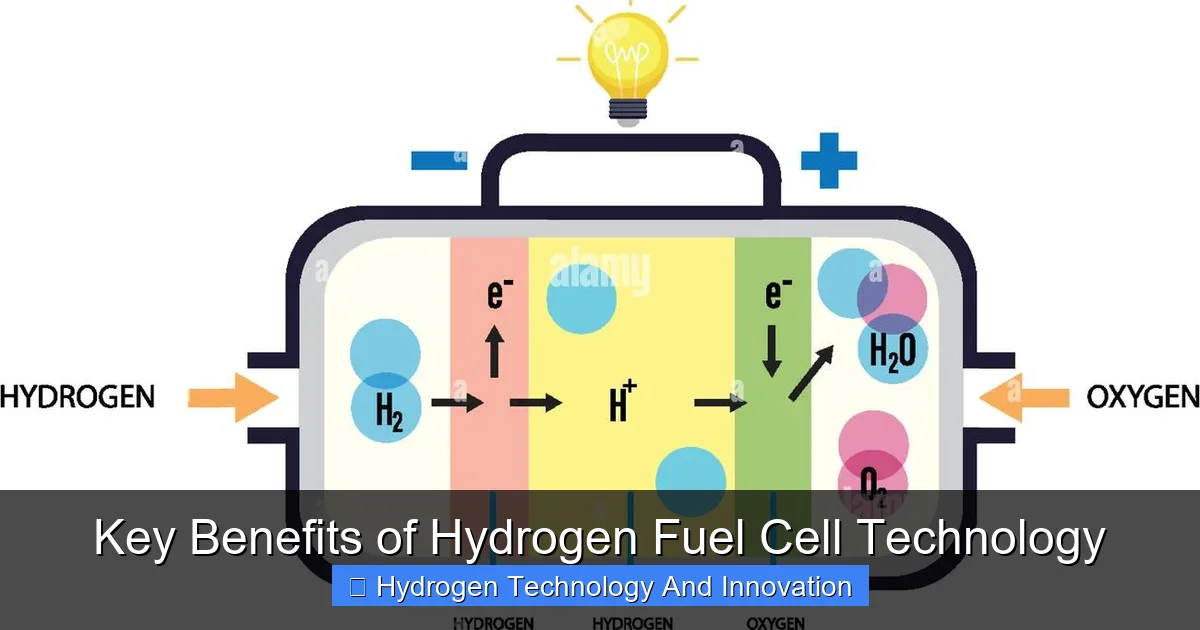
Visual guide about Key Benefits of Hydrogen Fuel Cell Technology
Image source: c8.alamy.com
One of the most compelling reasons to adopt hydrogen fuel cell technology is its environmental impact—or lack thereof. As the world grapples with climate change, reducing greenhouse gas emissions is no longer optional—it’s essential. Hydrogen fuel cells offer a pathway to decarbonize sectors that are hard to electrify, such as heavy transport, aviation, and industrial heating.
Zero Tailpipe Emissions
The most obvious environmental benefit is zero tailpipe emissions. When a hydrogen-powered vehicle operates, the only thing it emits is water vapor. This is a game-changer for cities plagued by air pollution. In places like Los Angeles, Beijing, or Delhi, where smog and respiratory illnesses are major concerns, switching to hydrogen buses and taxis could dramatically improve public health.
For example, the city of Aberdeen in Scotland has deployed a fleet of hydrogen-powered buses that have reduced CO₂ emissions by over 1,000 tons annually. Similarly, in California, the Alameda-Contra Costa Transit District (AC Transit) operates hydrogen buses that have logged millions of miles with zero emissions.
Reduction in Greenhouse Gases
While hydrogen fuel cells themselves are clean, the environmental benefit depends on how the hydrogen is produced. Currently, about 95% of hydrogen is made from natural gas through a process called steam methane reforming (SMR), which does release CO₂. However, this is changing rapidly.
The future lies in “green hydrogen”—hydrogen produced using renewable energy sources like wind, solar, or hydropower to split water molecules via electrolysis. This process emits no carbon and is becoming more cost-effective as renewable energy prices drop. Countries like Australia, Iceland, and Chile are investing heavily in green hydrogen projects, aiming to export it globally.
Even “blue hydrogen”—produced from natural gas but with carbon capture and storage (CCS)—can reduce emissions by up to 90% compared to traditional methods. As green and blue hydrogen scale up, the carbon footprint of fuel cell vehicles will continue to shrink.
Improved Air Quality and Public Health
Beyond climate benefits, hydrogen fuel cells can significantly improve urban air quality. Traditional vehicles emit not only CO₂ but also nitrogen oxides (NOx), sulfur dioxide (SO₂), and fine particulate matter (PM2.5)—all of which contribute to smog, asthma, and cardiovascular diseases.
By replacing diesel buses, delivery trucks, and garbage trucks with hydrogen-powered alternatives, cities can reduce these harmful pollutants. For instance, the Port of Los Angeles has introduced hydrogen fuel cell drayage trucks to cut emissions from freight transport. These trucks not only run cleaner but also operate more quietly, reducing noise pollution in residential areas.
Energy Efficiency and Performance Advantages
When it comes to energy conversion, hydrogen fuel cells are among the most efficient technologies available. Unlike internal combustion engines, which waste over 60% of fuel energy as heat, fuel cells convert chemical energy directly into electricity with minimal losses.
Higher Efficiency Than Combustion Engines
Most gasoline engines operate at around 20–30% efficiency, meaning only a small fraction of the fuel’s energy actually powers the vehicle. Diesel engines are slightly better at 30–40%, but still far from optimal. In contrast, hydrogen fuel cells can achieve efficiencies of 40–60%, and up to 85% when waste heat is captured for heating or industrial processes (known as combined heat and power, or CHP).
This high efficiency translates to better fuel economy and lower operating costs. For example, a hydrogen fuel cell bus can travel up to 300 miles on a single tank, using less energy per mile than a diesel counterpart. Over time, this reduces fuel consumption and maintenance needs, making hydrogen a cost-effective solution for fleet operators.
Fast Refueling and Long Range
One of the biggest pain points for electric vehicles is charging time. Even with fast chargers, EVs need 20–40 minutes to reach 80% capacity—and that’s under ideal conditions. In contrast, refueling a hydrogen vehicle takes just 3–5 minutes, similar to filling up a gasoline car. This is a massive advantage for commercial vehicles that operate on tight schedules.
Take long-haul trucking, for instance. A diesel truck can refuel in minutes and travel 1,000+ miles. Battery-electric trucks, while improving, still struggle with range and charging infrastructure. Hydrogen fuel cell trucks, like those being developed by Hyundai and Nikola, offer a middle ground: long range, fast refueling, and zero emissions. Hyundai’s XCIENT Fuel Cell trucks are already in operation in Switzerland and California, proving the technology’s viability.
Quiet Operation and Smooth Performance
Another often-overlooked benefit is the quiet, smooth operation of hydrogen fuel cell vehicles. Unlike internal combustion engines, which produce noise and vibrations, fuel cells run silently. This makes them ideal for urban delivery vehicles, ambulances, and school buses—where noise reduction improves quality of life.
Additionally, fuel cell vehicles offer instant torque and smooth acceleration, similar to electric motors. Drivers report a more comfortable and responsive driving experience, with no gear shifts or engine noise. This enhances both safety and comfort, especially in stop-and-go traffic.
Versatility Across Industries
Hydrogen fuel cell technology isn’t limited to passenger cars. Its versatility makes it suitable for a wide range of applications across multiple sectors.
Transportation: Cars, Buses, Trucks, and Trains
The transportation sector is the most visible application of hydrogen fuel cells. Automakers like Toyota (Mirai), Hyundai (NEXO), and Honda (Clarity) have launched hydrogen-powered passenger vehicles. While adoption is still growing, these cars offer a clean alternative for drivers who need long range and quick refueling.
Public transit is another major area. Cities around the world are testing hydrogen buses. In Europe, over 200 hydrogen buses are in service across countries like Germany, the UK, and France. In the U.S., transit agencies in California and Ohio are piloting hydrogen fleets. These buses reduce emissions in densely populated areas and help cities meet climate goals.
Heavy-duty transport is where hydrogen truly shines. Trains, ships, and freight trucks require high energy density and long range—something batteries struggle to provide. Alstom’s Coradia iLint, a hydrogen-powered train, is already running in Germany, emitting only steam and condensed water. Similarly, companies like Ballard and Cummins are developing fuel cells for maritime and aviation use.
Industrial and Material Handling
Inside warehouses and factories, hydrogen fuel cells are powering forklifts and other material handling equipment. Companies like Amazon and Walmart use hydrogen-powered forklifts in their distribution centers because they can operate 24/7 with quick refueling—unlike battery-powered models that need hours to recharge.
Fuel cells also provide reliable backup power for data centers, hospitals, and telecommunications towers. In Japan, Panasonic has installed hydrogen fuel cell systems in homes and offices to provide electricity and hot water, reducing reliance on the grid.
Stationary Power and Grid Support
Beyond transportation, hydrogen can play a key role in energy storage and grid stability. Excess electricity from solar or wind farms can be used to produce hydrogen via electrolysis. This hydrogen can then be stored and used later to generate electricity when demand is high or renewable supply is low.
This “power-to-gas” approach helps balance the grid and supports the integration of renewables. In Germany, the HyDeploy project is testing hydrogen injection into natural gas pipelines to reduce carbon emissions. In the U.S., utilities are exploring hydrogen blending to decarbonize gas networks.
Economic and Strategic Advantages
Beyond environmental and performance benefits, hydrogen fuel cell technology offers significant economic and strategic advantages.
Energy Independence and Security
Many countries rely heavily on imported oil and gas, making them vulnerable to price shocks and geopolitical tensions. Hydrogen can be produced domestically using local renewable resources, reducing dependence on foreign energy. For example, Australia is investing in hydrogen exports, while the U.S. and EU are developing national hydrogen strategies to enhance energy security.
Job Creation and Industrial Growth
The hydrogen economy is creating new jobs in manufacturing, engineering, infrastructure, and research. According to the Hydrogen Council, the sector could support 30 million jobs globally by 2050. Countries that lead in hydrogen innovation—like Japan, South Korea, and Germany—are positioning themselves as exporters of technology and expertise.
Long-Term Cost Savings
While hydrogen vehicles and infrastructure currently have higher upfront costs, prices are falling rapidly. As production scales up and technology improves, the cost of fuel cells and hydrogen is expected to drop. The U.S. Department of Energy aims to reduce the cost of hydrogen to $1 per kilogram by 2031—making it competitive with gasoline on a cost-per-mile basis.
Maintenance costs are also lower. Fuel cell vehicles have fewer moving parts than internal combustion engines, reducing wear and tear. With no oil changes, spark plugs, or exhaust systems, owners save on routine maintenance.
Challenges and the Road Ahead
Despite its many benefits, hydrogen fuel cell technology still faces challenges. The biggest hurdles are infrastructure, cost, and hydrogen production methods.
Infrastructure Development
Currently, there are fewer than 200 hydrogen refueling stations in the U.S., mostly in California. Building a nationwide network requires massive investment. However, governments and private companies are stepping up. The U.S. Bipartisan Infrastructure Law includes $8 billion for hydrogen hubs, while Europe plans to build 1,000 hydrogen stations by 2030.
Cost and Scalability
Fuel cells and hydrogen production remain expensive due to limited scale and reliance on rare materials like platinum. Research is underway to reduce or replace these materials. For example, scientists are developing non-precious metal catalysts and more efficient electrolyzers.
Public Awareness and Adoption
Many consumers are still unfamiliar with hydrogen vehicles. Education and pilot programs are essential to build trust and demonstrate real-world benefits. Test drives, public transit demos, and community outreach can help shift perceptions.
Conclusion
Hydrogen fuel cell technology is more than just a clean energy alternative—it’s a transformative force with the potential to reshape how we power our world. From zero-emission transportation to grid-scale energy storage, its benefits are wide-ranging and impactful. While challenges remain, rapid advancements in technology, policy support, and growing investment are accelerating adoption.
As we strive for a sustainable future, hydrogen offers a practical, efficient, and scalable solution. Whether you’re a policymaker, business leader, or everyday consumer, understanding the key benefits of hydrogen fuel cell technology is essential. The road ahead is bright—and it’s powered by hydrogen.
Frequently Asked Questions
Is hydrogen fuel cell technology safe?
Yes, hydrogen fuel cell technology is safe when handled properly. Hydrogen is lighter than air and disperses quickly if leaked, reducing fire risk. Modern fuel cell vehicles include multiple safety features, such as leak detectors and automatic shut-off valves, to ensure safe operation.
How is hydrogen produced for fuel cells?
Hydrogen can be produced in several ways. The most common method is steam methane reforming (from natural gas), but green hydrogen—made using renewable energy to split water—is the cleanest and fastest-growing method. Blue hydrogen, which captures and stores CO₂ emissions, is also gaining traction.
Can hydrogen fuel cells power homes?
Yes, hydrogen fuel cells can provide electricity and heat for homes and buildings. Systems like Panasonic’s Ene-Farm in Japan use fuel cells to generate power and hot water, reducing household energy bills and carbon footprints.
How long do hydrogen fuel cells last?
Most hydrogen fuel cells are designed to last 5,000 to 10,000 hours of operation—equivalent to 100,000 to 200,000 miles in a vehicle. With proper maintenance, they can even exceed these lifespans, making them durable and reliable.
Are hydrogen vehicles more expensive than electric cars?
Currently, hydrogen vehicles have a higher upfront cost due to limited production and infrastructure. However, as technology scales and costs drop, prices are expected to become more competitive with battery-electric vehicles.
What happens to the water produced by fuel cells?
The water vapor emitted by hydrogen fuel cells is pure and clean. It simply evaporates into the atmosphere or can be collected and used for non-potable purposes, such as irrigation or cleaning, depending on the application.