Hydrogen vehicle technology is experiencing a renaissance, with breakthroughs in fuel cells, storage, and infrastructure driving real-world adoption. From longer ranges to faster refueling, these innovations are positioning hydrogen as a key player in the clean transportation future.
Key Takeaways
- Advanced fuel cell efficiency: New proton-exchange membrane (PEM) designs are boosting efficiency by up to 60%, making hydrogen vehicles more competitive with electric counterparts.
- Lighter, safer hydrogen storage: Carbon nanotube and metal-organic framework (MOF) tanks allow compact, high-pressure storage without compromising safety.
- Faster refueling times: Innovations in nozzle design and thermal management enable refueling in under 5 minutes—comparable to gasoline vehicles.
- Expanding refueling networks: Countries like Japan, Germany, and the U.S. are rapidly building hydrogen stations, with over 1,000 globally and growing.
- Cost reductions through scale: Mass production and government incentives are driving down the cost of fuel cells and hydrogen production.
- Green hydrogen integration: Renewable-powered electrolysis is making hydrogen truly sustainable, reducing lifecycle emissions to near zero.
- Real-world adoption growing: Automakers like Toyota, Hyundai, and BMW are launching new hydrogen models, signaling industry confidence.
📑 Table of Contents
- Introduction: The Hydrogen Revolution Is Here
- Breakthroughs in Fuel Cell Technology
- Revolutionary Hydrogen Storage Solutions
- Refueling Infrastructure: From Niche to Network
- Green Hydrogen: The Sustainable Fuel of the Future
- Real-World Applications and Market Growth
- Challenges and the Road Ahead
- Conclusion: A Hydrogen-Powered Future Is Closer Than You Think
Introduction: The Hydrogen Revolution Is Here
Imagine pulling up to a fueling station, filling your car in under five minutes, and driving 400 miles on a single tank—all while emitting nothing but water vapor. That’s not science fiction. It’s the reality being shaped by the latest hydrogen vehicle technology breakthroughs.
For years, hydrogen-powered cars were seen as a distant dream—promising but impractical due to high costs, limited range, and lack of infrastructure. But recent innovations are changing the game. From smarter fuel cells to safer storage systems, engineers and scientists are solving the biggest challenges that once held hydrogen back. Today, hydrogen vehicles are not just viable—they’re becoming a serious contender in the race toward zero-emission transportation.
What makes hydrogen so exciting is its versatility. Unlike battery-electric vehicles (BEVs), which rely on heavy lithium-ion batteries, hydrogen fuel cell vehicles (FCEVs) generate electricity on board through a chemical reaction between hydrogen and oxygen. This means lighter vehicles, longer ranges, and faster refueling—ideal for long-haul trucks, buses, and even passenger cars. And with the rise of green hydrogen—produced using renewable energy—the environmental benefits are clearer than ever.
Breakthroughs in Fuel Cell Technology
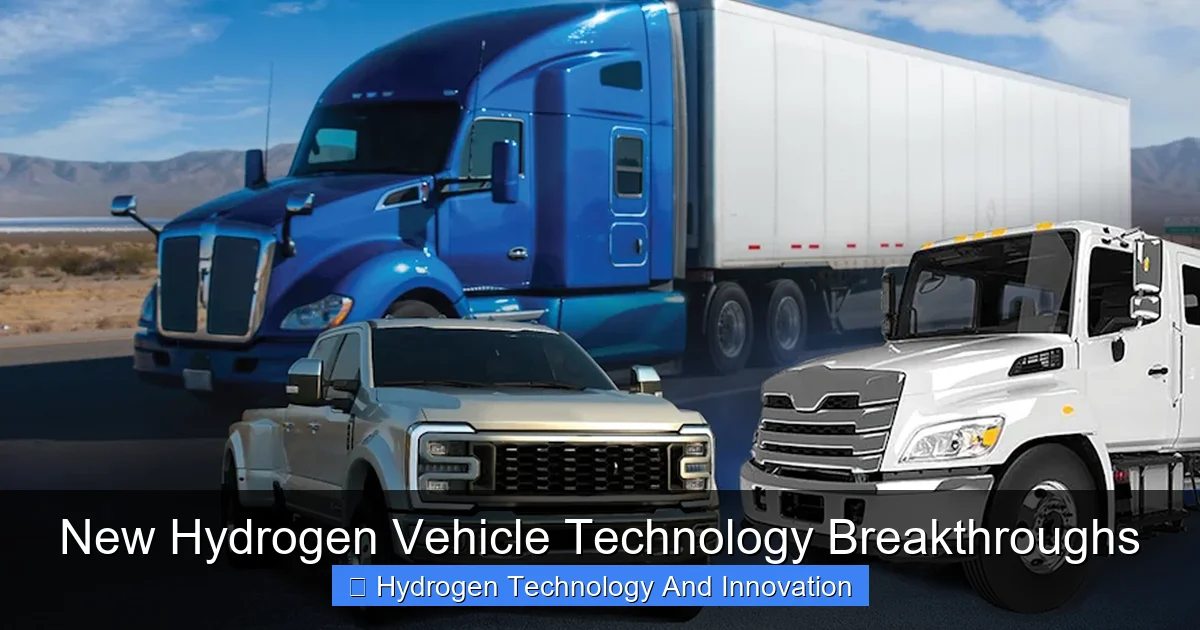
Visual guide about New Hydrogen Vehicle Technology Breakthroughs
Image source: img.fleetowner.com
One of the most significant advancements in hydrogen vehicle technology is the evolution of fuel cells. These devices are the heart of any hydrogen car, converting hydrogen into electricity to power the motor. For decades, fuel cells were expensive, inefficient, and prone to degradation. But recent innovations are turning that around.
Next-Generation Proton-Exchange Membranes
At the core of modern fuel cells is the proton-exchange membrane (PEM). This thin, polymer-based layer allows hydrogen protons to pass through while blocking electrons, forcing them to travel through an external circuit—generating electricity. New PEM designs are now more durable, more efficient, and less reliant on expensive materials like platinum.
Researchers at the University of Delaware recently developed a PEM that operates efficiently at lower humidity levels, reducing the need for complex water management systems. This not only cuts costs but also improves cold-weather performance—a major hurdle for early FCEVs. Similarly, companies like Ballard Power Systems have introduced ultra-thin membranes that boost power density by 30%, allowing smaller, lighter fuel cell stacks without sacrificing output.
Platinum Reduction and Alternative Catalysts
Platinum has long been a bottleneck in fuel cell production—it’s rare, expensive, and accounts for nearly 40% of the total cost. But breakthroughs in catalyst technology are changing that. Scientists are now using platinum alloys, nanostructured surfaces, and even non-precious metal catalysts to reduce or eliminate reliance on platinum.
For example, a team at the U.S. Department of Energy’s Los Alamos National Laboratory created a platinum-cobalt alloy catalyst that lasts 10 times longer than traditional versions while using 80% less platinum. Meanwhile, companies like Nisshinbo Holdings are testing iron- and nitrogen-based catalysts that perform nearly as well as platinum—without the price tag.
These advances are making fuel cells more affordable and scalable. As production ramps up, the cost per kilowatt is dropping rapidly. In 2010, fuel cells cost around $1,000 per kW. Today, that number is below $200—and experts predict it could fall below $50 by 2030.
Improved Durability and Lifespan
Early fuel cells degraded quickly, especially under frequent start-stop conditions or extreme temperatures. But new designs are addressing these issues. Advanced thermal management systems, better sealing materials, and optimized operating conditions are extending fuel cell lifespans to over 25,000 hours—enough for 500,000 miles of driving.
Toyota’s latest Mirai, for instance, uses a redesigned fuel cell stack that’s 20% smaller and 30% lighter than its predecessor, while delivering more power and lasting longer. Hyundai’s NEXO also features a robust fuel cell system with improved cold-start capability, allowing it to operate in temperatures as low as -30°C.
Revolutionary Hydrogen Storage Solutions
Storing hydrogen safely and efficiently has always been a challenge. Hydrogen is the lightest element, which means it takes up a lot of space unless compressed or cooled. But new storage technologies are making it easier to pack more hydrogen into smaller, safer tanks.
High-Pressure Composite Tanks
Most hydrogen vehicles today use Type IV carbon fiber-reinforced polymer tanks that can withstand pressures up to 700 bar (10,000 psi). These tanks are lightweight, durable, and designed to prevent leaks or ruptures—even in a crash.
Recent improvements in carbon fiber manufacturing have reduced tank weight by 15% while increasing strength. Companies like Hexagon Purus and Quantum Fuel Systems are producing tanks that are not only safer but also more compact, allowing for better vehicle design and more cabin space.
One breakthrough comes from researchers at Lawrence Livermore National Laboratory, who developed a new carbon fiber weaving technique that increases tank integrity by 40%. This means fewer layers are needed, reducing weight and cost.
Solid-State and Adsorbent Storage
Beyond high-pressure tanks, scientists are exploring solid-state storage methods that absorb hydrogen into materials like metal-organic frameworks (MOFs) or complex hydrides. These systems store hydrogen at lower pressures, reducing the risk of explosion and making refueling safer.
MOFs, for example, are porous crystalline materials that can trap hydrogen molecules like a sponge. A team at the University of California, Berkeley, created a MOF that can store hydrogen at room temperature and moderate pressure—potentially eliminating the need for heavy, high-pressure tanks.
While still in the lab phase, solid-state storage could revolutionize hydrogen vehicles by enabling smaller, lighter tanks that are easier to integrate into car designs. BMW is already investing in this technology, with plans to test MOF-based storage in prototype vehicles by 2026.
Liquid Organic Hydrogen Carriers (LOHCs)
Another promising approach is using liquid organic hydrogen carriers—chemicals that can absorb and release hydrogen through catalytic reactions. These liquids are stable at room temperature and can be transported using existing fuel infrastructure, like pipelines and tankers.
One example is dibenzyltoluene, a compound used in heat transfer fluids. When hydrogen is bonded to it, the liquid can be stored and transported safely. At the point of use, a catalyst releases the hydrogen for use in fuel cells.
This method could be a game-changer for long-distance transport and industrial applications. Companies like Hydrogenious LOHC Technologies are already building pilot plants in Germany and the U.S., demonstrating the feasibility of LOHC-based hydrogen distribution.
Refueling Infrastructure: From Niche to Network
One of the biggest barriers to hydrogen vehicle adoption has been the lack of refueling stations. But that’s changing fast. Governments and private companies are investing billions in building hydrogen refueling networks around the world.
Global Expansion of Hydrogen Stations
As of 2024, there are over 1,000 hydrogen refueling stations worldwide, with the majority in Japan, South Korea, Germany, and California. Japan leads the way with more than 160 stations, thanks to strong government support and partnerships with automakers like Toyota and Honda.
Germany’s H2 Mobility initiative aims to have 100 operational stations by 2025, with plans to expand to 400 by 2030. In the U.S., the Department of Energy’s H2@Scale program is funding new stations across California, the Northeast, and the Midwest.
California alone has over 60 stations, making it the most hydrogen-ready state in the country. Drivers of FCEVs like the Toyota Mirai and Hyundai NEXO can travel from San Diego to Sacramento with multiple refueling options along the way.
Innovations in Refueling Speed and Safety
Early hydrogen refueling was slow and required careful handling. But new nozzle designs and thermal management systems are enabling refueling in under 5 minutes—on par with gasoline vehicles.
Companies like Linde and Air Liquide have developed smart dispensers that monitor temperature, pressure, and flow rate in real time, ensuring a safe and efficient fill. These systems also prevent overfilling and automatically shut off when the tank is full.
Safety is a top priority. Hydrogen is flammable, but it’s also lighter than air, so it disperses quickly in the event of a leak. Modern stations are equipped with multiple sensors, ventilation systems, and emergency shutoffs to minimize risks.
Mobile and Modular Refueling Solutions
For areas without permanent stations, mobile hydrogen refuelers are filling the gap. These truck-mounted units can deliver hydrogen to remote locations, construction sites, or fleet depots.
Plug Power, a leading hydrogen company, offers GenFuel trailers that can transport and dispense hydrogen at up to 350 bar. These units are being used to support hydrogen forklifts in warehouses and delivery trucks in urban areas.
Modular stations are also gaining traction. These prefabricated units can be installed quickly and scaled as demand grows. They’re ideal for cities, airports, and industrial parks looking to adopt hydrogen without major infrastructure overhauls.
Green Hydrogen: The Sustainable Fuel of the Future
Not all hydrogen is created equal. Most hydrogen today is “gray” hydrogen, produced from natural gas through steam methane reforming—a process that emits CO₂. But the real promise of hydrogen vehicles lies in “green” hydrogen, made using renewable energy.
Electrolysis Powered by Renewables
Green hydrogen is produced through electrolysis—splitting water into hydrogen and oxygen using electricity. When that electricity comes from solar, wind, or hydropower, the process emits no greenhouse gases.
Recent advances in electrolyzer technology are making green hydrogen more efficient and affordable. Proton-exchange membrane (PEM) electrolyzers, similar to those used in fuel cells, can now operate at 80% efficiency, up from 60% a decade ago.
Countries like Australia, Chile, and Saudi Arabia are investing heavily in green hydrogen production. Australia’s Asian Renewable Energy Hub, for example, plans to generate 26 gigawatts of wind and solar power to produce hydrogen for export.
Cost Reductions and Economies of Scale
The cost of green hydrogen has fallen by 60% since 2015, thanks to cheaper renewables and better electrolyzers. The International Energy Agency (IEA) predicts that green hydrogen could cost as little as $1.50 per kilogram by 2030—down from $5–$7 today.
Government incentives are accelerating adoption. The U.S. Inflation Reduction Act offers tax credits of up to $3 per kilogram for clean hydrogen production. The European Union’s Green Deal includes €3 billion in funding for hydrogen projects.
As production scales up, green hydrogen is becoming competitive with fossil fuels. In some regions, it’s already cheaper than diesel for heavy transport.
Integration with the Grid and Energy Storage
Hydrogen isn’t just for vehicles—it’s also a powerful tool for energy storage. Excess renewable energy can be used to produce hydrogen during off-peak hours, which can then be stored and used to generate electricity when demand is high.
This “power-to-gas” approach helps stabilize the grid and reduce curtailment of wind and solar power. Projects like the HyDeploy trial in the UK are testing hydrogen injection into natural gas pipelines, paving the way for a hydrogen-ready energy system.
Real-World Applications and Market Growth
Hydrogen vehicle technology isn’t just theoretical—it’s being deployed in real-world applications across transportation sectors.
Passenger Vehicles: Mirai, NEXO, and Beyond
Toyota’s Mirai and Hyundai’s NEXO are leading the charge in hydrogen passenger cars. The 2024 Mirai offers a range of 402 miles and refuels in 5 minutes. Hyundai’s NEXO boasts similar performance, with advanced driver-assistance features and a sleek design.
BMW is also entering the market with its iX5 Hydrogen, a luxury SUV based on the X5 platform. The company plans to produce a limited run in 2024, targeting fleets and government agencies.
While sales are still modest—around 15,000 FCEVs sold globally in 2023—demand is growing, especially in regions with strong hydrogen infrastructure.
Commercial and Heavy-Duty Transport
Hydrogen shines in heavy-duty applications where battery weight and charging time are limiting factors. Trucks, buses, and trains are ideal candidates for fuel cell technology.
Nikola Motor Company is developing hydrogen-powered semi-trucks like the Tre FCEV, with a range of up to 500 miles. The company has partnered with major logistics firms to deploy these vehicles in the U.S. and Europe.
In Europe, Alstom’s hydrogen-powered trains are already in service in Germany and France. These trains emit zero emissions and can travel up to 600 miles on a single tank—perfect for regional rail networks.
Maritime and Aviation Applications
Even ships and planes are exploring hydrogen. The world’s first hydrogen-powered ferry, the MF Hydra, began operating in Norway in 2023. Airbus is developing hydrogen-fueled aircraft with a target of commercial service by 2035.
These applications highlight hydrogen’s versatility. While batteries work well for short-range vehicles, hydrogen offers a cleaner alternative for long-haul, high-energy transport.
Challenges and the Road Ahead
Despite the progress, hydrogen vehicles still face hurdles. Cost, infrastructure, and public awareness remain key challenges.
Cost Competitiveness
While fuel cell costs are falling, hydrogen vehicles are still more expensive than battery-electric or gasoline cars. The Toyota Mirai starts at around $50,000, compared to $40,000 for a Tesla Model 3.
However, total cost of ownership is improving. Hydrogen vehicles have lower maintenance costs and longer lifespans, which can offset the higher upfront price over time.
Infrastructure Gaps
Outside of a few regions, hydrogen refueling is still limited. Building a nationwide network requires billions in investment and coordination between governments, automakers, and energy companies.
But momentum is building. The U.S. Bipartisan Infrastructure Law includes $8 billion for hydrogen hubs—regional clusters that produce, store, and distribute hydrogen. Similar initiatives are underway in Europe and Asia.
Public Perception and Education
Many consumers still associate hydrogen with the Hindenburg disaster. But modern hydrogen systems are far safer, with multiple layers of protection and rigorous testing.
Education and outreach are essential. Automakers and governments are launching campaigns to highlight the safety, benefits, and real-world performance of hydrogen vehicles.
Conclusion: A Hydrogen-Powered Future Is Closer Than You Think
The era of hydrogen vehicles is no longer a distant dream—it’s unfolding before our eyes. Thanks to breakthroughs in fuel cell efficiency, storage safety, refueling speed, and green hydrogen production, hydrogen is emerging as a clean, practical alternative to fossil fuels.
From sleek sedans to long-haul trucks, hydrogen technology is proving its worth across transportation sectors. And with governments and industries investing heavily in infrastructure and innovation, the barriers to adoption are steadily falling.
While challenges remain, the trajectory is clear: hydrogen is not just a niche solution—it’s a key part of the clean transportation puzzle. As costs drop and networks expand, we can expect to see more hydrogen vehicles on the road, delivering zero-emission mobility without compromise.
The future of transportation isn’t just electric—it’s electric, hydrogen, and everything in between. And with each new breakthrough, we’re one step closer to a cleaner, greener world.
Frequently Asked Questions
How do hydrogen vehicles work?
Hydrogen vehicles use fuel cells to convert hydrogen gas into electricity, which powers an electric motor. The only byproduct is water vapor, making them zero-emission vehicles.
Are hydrogen vehicles safe?
Yes, modern hydrogen vehicles are designed with multiple safety features, including leak detection, pressure relief devices, and crash-resistant tanks. Hydrogen disperses quickly in air, reducing fire risk.
How long does it take to refuel a hydrogen car?
Refueling a hydrogen vehicle takes about 3 to 5 minutes—similar to filling a gasoline car—thanks to advanced dispensers and thermal management systems.
Where can I refuel a hydrogen vehicle?
Hydrogen refueling stations are available in select regions, including California, Japan, Germany, and South Korea. Over 1,000 stations are operational worldwide, with more being built.
Is hydrogen production environmentally friendly?
It depends. Green hydrogen, made using renewable energy, is clean and sustainable. Gray hydrogen, produced from natural gas, emits CO₂. The industry is shifting toward green hydrogen.
Will hydrogen cars replace electric cars?
Not necessarily. Hydrogen and battery-electric vehicles serve different needs. Hydrogen excels in long-range and heavy-duty applications, while batteries are better for short-range, urban driving. Both will play roles in the clean transportation future.