Refueling a hydrogen car is faster than charging an EV and nearly as simple as pumping gas. This guide walks you through every step—from safety checks to nozzle connection—so you can confidently fill up at a hydrogen station.
Key Takeaways
- Hydrogen refueling takes 3–5 minutes, comparable to gasoline vehicles and much faster than most EV charging.
- Safety is built into the system—hydrogen stations use multiple sensors, automatic shutoffs, and ventilation to prevent leaks or accidents.
- Always follow the station’s posted instructions—each dispenser may have slight variations, but the core process remains consistent.
- Wear safety glasses and avoid loose clothing during refueling to minimize risk from high-pressure components.
- Your car must be turned off and parked correctly—most stations require the vehicle to be in park with the parking brake engaged.
- Use only certified hydrogen fueling nozzles—they’re designed specifically for H2 and won’t fit other fuel types.
- Keep your fuel card or app ready—many hydrogen stations operate on a pay-before-you-pump model similar to diesel trucks.
📑 Table of Contents
Why Hydrogen Cars Are Gaining Momentum
As the world shifts toward cleaner transportation, hydrogen fuel cell electric vehicles (FCEVs) are emerging as a compelling alternative to both battery-electric vehicles (BEVs) and traditional internal combustion engines. Unlike BEVs, which can take 30 minutes to several hours to recharge depending on the charger type, hydrogen cars refuel in just 3 to 5 minutes—offering the convenience of gasoline without the tailpipe emissions. The only byproduct? Water vapor.
Countries like Japan, South Korea, Germany, and the United States (especially California) are investing heavily in hydrogen infrastructure. Major automakers including Toyota, Hyundai, and Honda now offer production FCEVs like the Mirai, NEXO, and Clarity Fuel Cell. With more stations opening annually and government incentives supporting adoption, understanding how to refuel a hydrogen car is becoming essential for eco-conscious drivers and fleet operators alike.
Understanding Hydrogen Fuel Basics
Before you pull up to a hydrogen pump, it helps to know what you’re working with. Hydrogen (H₂) is the lightest and most abundant element in the universe. When used in a fuel cell, it reacts with oxygen from the air to produce electricity, which powers the vehicle’s motor. This process emits zero greenhouse gases—only heat and clean water.
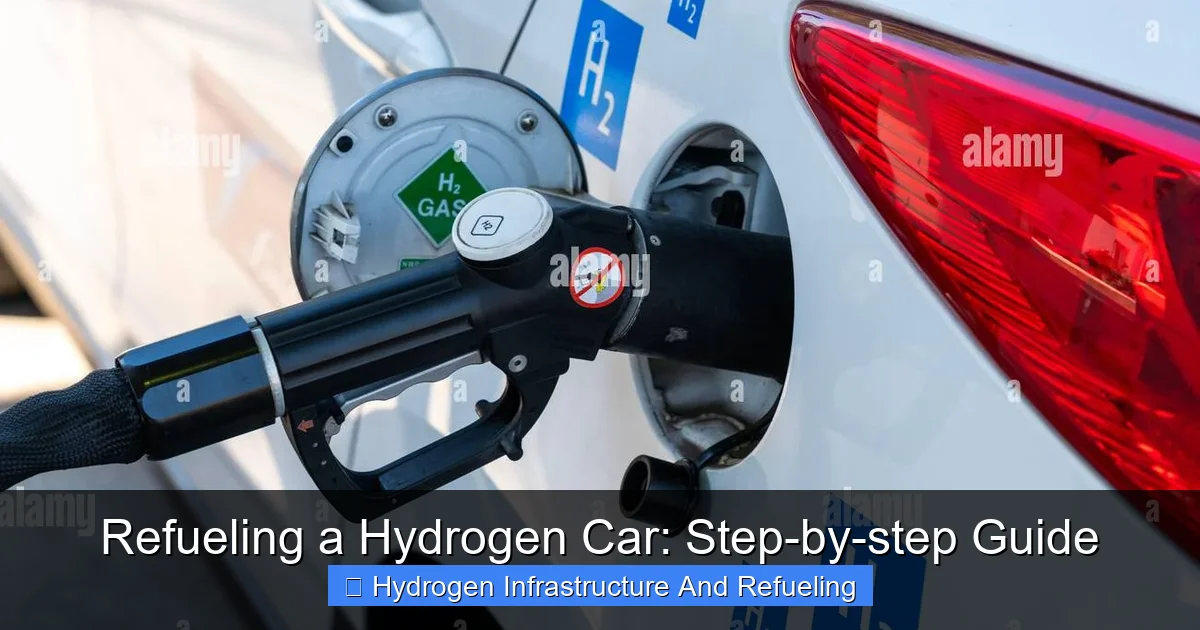
Visual guide about Refueling a Hydrogen Car: Step-by-step Guide
Image source: c8.alamy.com
How Hydrogen Is Stored in Your Car
Hydrogen is stored onboard in high-strength carbon-fiber tanks at pressures up to 700 bar (about 10,000 psi)—roughly 3,000 times atmospheric pressure. These tanks are rigorously tested for safety and designed to withstand extreme conditions, including crashes and fires. Modern FCEVs typically carry between 4–6 kg of hydrogen, providing a range of 300–400 miles per fill-up.
Types of Hydrogen Fuel
Not all hydrogen is created equal. The most common types include:
- Grey hydrogen: Produced from natural gas via steam methane reforming—currently the most common but not carbon-neutral.
- Blue hydrogen: Same production method as grey, but with carbon capture and storage to reduce emissions.
- Green hydrogen: Made using renewable electricity (like wind or solar) to split water into hydrogen and oxygen—truly zero-emission from well to wheel.
Most public hydrogen stations today supply green or blue hydrogen, especially in regions with strong climate policies. Always check your local station’s fuel source if sustainability is a priority.
Preparing to Refuel: What You Need to Know
Refueling a hydrogen car isn’t complicated, but it does require attention to detail. Unlike gasoline, hydrogen is invisible, odorless, and highly flammable—so safety protocols are non-negotiable. Fortunately, modern stations and vehicles are engineered with multiple layers of protection.
Check Your Vehicle’s Status
Before heading to the station, ensure your FCEV is ready:
- The ignition must be turned off—no idling or accessory mode.
- The vehicle should be in Park with the parking brake engaged.
- All windows and doors should be closed to prevent accidental contact with the fueling nozzle.
- Remove any items that could interfere with the fuel door or dispenser hose.
Most hydrogen cars have a dashboard indicator showing tank level and estimated range. Plan your trip so you arrive with at least 10–15% fuel remaining—this gives you a buffer in case the station is busy or temporarily offline.
Locate a Certified Hydrogen Station
Hydrogen refueling stations are still relatively rare compared to gas stations or EV chargers, but they’re growing. In the U.S., nearly all public stations are in California, with smaller networks in Hawaii and the Northeast. Use apps like Hydrogen Station Finder, PlugShare, or your car’s built-in navigation system to locate the nearest station.
Tip: Call ahead or check the station’s status online—some stations may be offline for maintenance or experiencing supply delays.
Gather Your Payment Method
Most hydrogen stations operate on a prepaid or account-based system. You’ll typically need:
- A fuel card issued by the station operator (e.g., Shell, Air Liquide, or Toyota’s Mirai program).
- Or a mobile app linked to your payment method (Apple Pay, Google Pay, or credit card).
Some automakers include complimentary hydrogen fuel for the first few years (e.g., Toyota offers $15,000 worth of free fuel with a new Mirai). Confirm your eligibility before your first fill-up.
Step-by-Step: How to Refuel a Hydrogen Car
Now for the main event—the actual refueling process. While designs vary slightly between manufacturers, the core steps are standardized for safety and compatibility. Here’s what to expect:
Step 1: Park Correctly and Secure the Vehicle
Approach the hydrogen dispenser and park so the fuel door aligns with the nozzle. Most stations have marked parking spots with clear signage. Once parked:
- Turn off the engine completely.
- Engage the parking brake.
- Exit the vehicle only if necessary—many drivers stay inside during refueling, though it’s not required.
Never leave the vehicle unattended with the nozzle connected. If you must exit, ensure no one touches the dispenser or hose.
Step 2: Open the Fuel Door and Ground the Nozzle
Locate the fuel door—usually on the driver’s side rear quarter panel. Press the release button (inside the car or via key fob) to open it. Inside, you’ll see the fuel receptacle, which looks similar to a gasoline cap but has a threaded collar and a protective cover.
Next, remove the dispenser nozzle from its holster. Most nozzles have a built-in grounding clip or wire. Attach this to a designated grounding point on your car (often near the fuel door). This prevents static electricity buildup, which could ignite hydrogen vapor.
Step 3: Connect the Nozzle and Start the Fill
Carefully thread the nozzle onto the fuel receptacle by hand—do not force it. It should screw on smoothly in a clockwise direction. Once fully seated, the dispenser will automatically lock the nozzle in place.
At this point, the station’s computer system communicates with your car’s fuel management system to verify compatibility and tank status. You’ll hear a soft click or see a green light indicating a secure connection.
Now, initiate the fill by pressing the “Start” button on the dispenser or scanning your payment method. The pump will begin transferring hydrogen at high pressure. You may hear a low humming sound—this is normal.
Step 4: Monitor the Fill Process
During refueling, the dispenser displays real-time data: pressure, temperature, mass of hydrogen delivered, and estimated time remaining. Most fills take 3–5 minutes, depending on your starting fuel level and ambient temperature (cold weather slows the process slightly).
Do not disconnect the nozzle during this time. The system includes automatic shutoff valves that stop the flow when the tank reaches 80–90% capacity—this prevents over-pressurization and allows for thermal expansion.
If an error occurs (e.g., leak detected, pressure anomaly), the dispenser will halt immediately and display an alert. Remain calm, stay near your vehicle, and follow on-screen instructions or contact station support.
Step 5: Disconnect and Secure Everything
When the fill is complete, the dispenser will beep or flash a completion signal. Wait for the system to depressurize—this takes 10–15 seconds. Then, press the “Stop” or “Release” button to unlock the nozzle.
Unscrew the nozzle counterclockwise and return it to its holster. Remove the grounding clip. Close the fuel door securely—you should hear a firm click. Finally, stow any loose items and prepare to drive away.
Tip: Some stations provide a printed receipt or email confirmation. Keep this for your records, especially if you’re tracking fuel costs for business or tax purposes.
Safety First: Best Practices and Common Mistakes
Hydrogen is safe when handled properly, but like any fuel, it demands respect. Fortunately, accidents at hydrogen stations are extremely rare—thanks to redundant safety systems and strict regulations.
Essential Safety Tips
- Wear safety glasses—not because hydrogen is corrosive, but to protect your eyes from dust or debris near the nozzle.
- Avoid synthetic fabrics that generate static electricity. Cotton or natural fibers are safer.
- Never smoke or use open flames within 25 feet of the dispenser.
- Keep children and pets away from the fueling area.
- Report any unusual smells, sounds, or leaks immediately—even though pure hydrogen is odorless, stations add a harmless odorant (like mercaptan) for detection.
What Not to Do
Common mistakes include:
- Trying to force the nozzle onto the receptacle—if it doesn’t thread easily, realign it.
- Leaving the vehicle running—this can interfere with communication between the car and dispenser.
- Ignoring error messages—always address alerts instead of overriding them.
- Using non-certified nozzles or adapters—only OEM or station-approved equipment should be used.
Remember: hydrogen disperses upward rapidly due to its low density. Unlike gasoline vapors that pool near the ground, hydrogen rises and dissipates in open air—making outdoor stations inherently safer.
Real-World Example: Refueling a Toyota Mirai
Let’s walk through a practical scenario. Imagine you’re driving a 2023 Toyota Mirai in Los Angeles with 20% fuel remaining. You pull into a Shell Hydrogen station in Torrance.
After parking, you turn off the engine and engage the parking brake. You open the fuel door using the interior button. The dispenser nozzle has a bright yellow handle with a grounding wire. You attach the clip to the metal bracket beside the fuel port.
Threading the nozzle by hand, you feel it seat firmly. The screen shows “Connecting…” then “Ready to Fill.” You tap your Toyota Fuel Card on the reader, and the pump starts. Over the next four minutes, the display shows the tank filling from 2.1 kg to 5.8 kg of hydrogen—enough for another 380 miles.
When done, you wait for the depressurization tone, release the nozzle, and close the door. Total time from arrival to departure: under six minutes. That’s faster than most coffee stops!
The Future of Hydrogen Refueling
As hydrogen infrastructure expands, refueling will become even more seamless. Innovations like automated robotic dispensers, mobile refuelers for fleets, and integration with renewable microgrids are already in development. In Europe, projects like H2Haul aim to deploy hydrogen trucks with standardized refueling protocols across borders.
Meanwhile, advancements in tank materials and compression technology may soon allow for higher-capacity storage or lower-pressure systems, reducing complexity and cost. And as green hydrogen production scales up, the environmental benefits will only grow.
For now, refueling a hydrogen car remains a straightforward, safe, and quick process—one that bridges the gap between today’s EVs and tomorrow’s zero-emission future.
Conclusion
Refueling a hydrogen car might seem futuristic, but in practice, it’s remarkably simple. With just a few steps—park, connect, fill, disconnect—you can top off your FCEV in minutes and hit the road with a full tank and a clear conscience. The technology is mature, the safety record is strong, and the infrastructure is steadily improving.
Whether you’re an early adopter, a fleet manager, or simply curious about clean transportation, knowing how to refuel a hydrogen car empowers you to be part of the energy transition. So next time you see a hydrogen station, don’t drive past—pull in, follow the steps, and experience the quiet, rapid refuel that defines the hydrogen era.
Frequently Asked Questions
How long does it take to refuel a hydrogen car?
Most hydrogen cars refuel in 3 to 5 minutes, similar to gasoline vehicles and much faster than Level 2 EV charging. Cold weather or very low starting fuel levels may add a minute or two.
Is it safe to refuel a hydrogen car?
Yes—hydrogen stations use multiple safety systems including leak detectors, automatic shutoffs, ventilation, and grounding. Incidents are extremely rare, and hydrogen disperses quickly into the air if released.
Can I refuel a hydrogen car in the rain?
Absolutely. Hydrogen dispensers are designed for outdoor use and operate safely in all weather conditions, including rain, snow, and high winds.
Do I need special training to refuel a hydrogen car?
No formal training is required. Stations provide clear instructions, and the process is intuitive. First-time users may want to watch a brief demo video or ask staff for guidance.
What happens if the hydrogen tank overfills?
The dispenser automatically stops at 80–90% capacity to allow for thermal expansion. Overfilling is prevented by pressure sensors and vehicle communication protocols.
Can I use any hydrogen nozzle on my car?
No—only certified nozzles compatible with SAE J2601 standards should be used. These are standardized across FCEVs and won’t fit gasoline or diesel tanks.