Refueling infrastructure for hydrogen fuel cell SUVs is growing rapidly, offering drivers a clean, fast, and convenient alternative to traditional gas-powered vehicles. With advancements in station technology, government support, and automaker investment, hydrogen-powered SUVs are becoming a viable option for eco-conscious drivers seeking long-range, quick-fill capability without compromising on space or performance.
Key Takeaways
- Hydrogen refueling is fast: Fill up a hydrogen fuel cell SUV in under 10 minutes—comparable to gasoline vehicles.
- Infrastructure is expanding: Countries like Japan, South Korea, Germany, and the U.S. are investing heavily in hydrogen stations.
- Zero tailpipe emissions: The only byproduct of hydrogen fuel cell vehicles is water vapor, making them truly clean.
- Long driving range: Most hydrogen SUVs offer 300–400 miles per fill, ideal for road trips and daily commutes.
- Government incentives available: Tax credits, rebates, and grants are helping lower the cost of both vehicles and infrastructure.
- Challenges remain: High production costs and limited station coverage in rural areas still need improvement.
- Future is bright: With automakers like Toyota, Hyundai, and Honda leading the charge, hydrogen SUVs are set to grow in popularity.
📑 Table of Contents
- Why Hydrogen Fuel Cell SUVs Are Gaining Traction
- The Current State of Hydrogen Refueling Infrastructure
- Government and Industry Support Driving Growth
- Top Hydrogen Fuel Cell SUVs on the Market
- The Environmental and Economic Benefits of Hydrogen SUVs
- The Road Ahead: What’s Next for Hydrogen Infrastructure?
- Conclusion
Why Hydrogen Fuel Cell SUVs Are Gaining Traction
The automotive world is in the middle of a quiet revolution. While electric vehicles (EVs) have dominated headlines, another clean transportation option is quietly gaining momentum: hydrogen fuel cell vehicles (FCEVs), especially SUVs. These vehicles combine the spaciousness, power, and versatility of traditional SUVs with the environmental benefits of zero-emission driving. But for hydrogen SUVs to truly take off, one critical piece must fall into place—refueling infrastructure.
Unlike battery-electric vehicles that rely on charging stations, hydrogen fuel cell SUVs refuel with compressed hydrogen gas, much like filling up a gas tank. This process takes just 5 to 10 minutes, making it far more convenient for long-distance travel and busy lifestyles. No more waiting hours to recharge. Just pull up, connect the nozzle, and you’re back on the road in no time.
But here’s the catch: for hydrogen SUVs to become mainstream, drivers need reliable access to hydrogen refueling stations. That’s where refueling infrastructure comes in. It’s the backbone of the hydrogen economy, enabling drivers to travel confidently without worrying about running out of fuel. And the good news? That infrastructure is growing—fast.
The Current State of Hydrogen Refueling Infrastructure
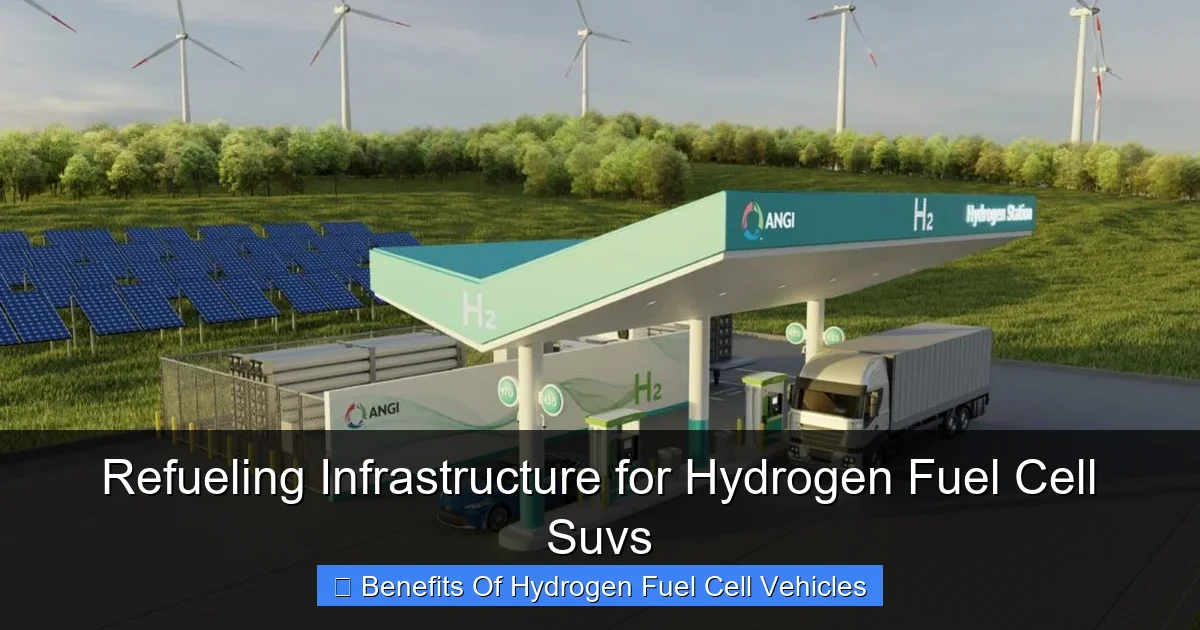
Visual guide about Refueling Infrastructure for Hydrogen Fuel Cell Suvs
Image source: alternativeenergyhq.com
As of 2024, hydrogen refueling infrastructure is still in its early stages compared to gasoline or EV charging networks. However, significant progress has been made in key regions around the world. Countries like Japan, South Korea, Germany, and the United States are leading the charge, investing billions into building hydrogen stations and supporting FCEV adoption.
In California, for example, the state has committed to building over 1,000 hydrogen refueling stations by 2030. As of now, more than 60 stations are operational, primarily in urban areas like Los Angeles, San Francisco, and San Diego. These stations serve not only passenger vehicles but also buses, trucks, and even forklifts in industrial settings.
Japan is another global leader. With strong government backing and partnerships between automakers and energy companies, Japan has over 160 hydrogen stations nationwide. The country’s “Hydrogen Society” vision aims to make hydrogen a cornerstone of its clean energy future, with fuel cell vehicles playing a central role.
South Korea is not far behind. The government has set a target of 1,200 hydrogen stations by 2040 and currently operates more than 140. Hyundai, the country’s largest automaker, has been a major driver of this growth, producing the NEXO—a hydrogen-powered SUV that’s already on the road in significant numbers.
Germany, meanwhile, is building its H2 Mobility network, with plans to expand to 100 stations by 2025. These stations are strategically located along major highways and in urban centers, ensuring that drivers can travel across the country with ease.
While these numbers may seem small compared to the millions of gas stations worldwide, they represent a strong foundation. And with continued investment, the network is expected to grow exponentially in the coming decade.
How Hydrogen Refueling Stations Work
So, what exactly happens when you pull up to a hydrogen refueling station? The process is surprisingly similar to filling up a gas tank, but with a few key differences.
First, the vehicle’s fuel door opens to reveal a receptacle designed specifically for hydrogen. The driver then connects a high-pressure nozzle from the dispenser to the vehicle. Once connected, the system performs a series of safety checks to ensure a secure seal and proper pressure levels.
Next, compressed hydrogen gas—typically stored at 700 bar (about 10,000 psi)—is pumped into the vehicle’s onboard fuel tanks. These tanks are made of advanced composite materials designed to safely store hydrogen under extreme pressure. The entire process takes between 3 and 10 minutes, depending on the vehicle and station capacity.
After refueling, the nozzle automatically disconnects, and the driver is free to go. No charging cables, no waiting, no range anxiety. Just a quick stop and you’re back on the road with a full tank—capable of traveling 300 to 400 miles before needing to refuel again.
One of the biggest advantages of hydrogen refueling is consistency. Unlike EV charging, which can vary in speed depending on the charger type and battery state, hydrogen refueling is always fast. Whether you’re at a busy station or a quiet one, the fill time remains roughly the same.
Challenges Facing Hydrogen Infrastructure Growth
Despite the promise, hydrogen refueling infrastructure faces several challenges that must be addressed for widespread adoption.
One of the biggest hurdles is cost. Building a hydrogen station is expensive—often costing between $1 million and $3 million per station. This includes not only the dispenser and storage tanks but also safety systems, compressors, and land acquisition. In comparison, a Level 2 EV charger can be installed for under $10,000.
Another challenge is hydrogen production. Currently, most hydrogen is produced using natural gas in a process called steam methane reforming, which emits carbon dioxide. While this “gray hydrogen” is cheaper, it undermines the environmental benefits of FCEVs. To be truly sustainable, the hydrogen must be produced using renewable energy—a process known as “green hydrogen.” This involves electrolysis, where water is split into hydrogen and oxygen using electricity from wind, solar, or hydro power. Green hydrogen is cleaner but significantly more expensive, making it less attractive for widespread use.
Distribution is another issue. Unlike electricity, which can be transmitted over power lines, hydrogen must be transported via pipelines, trucks, or ships. Building a national pipeline network is costly and complex, and trucking hydrogen over long distances reduces efficiency and increases emissions.
Finally, there’s the issue of public awareness. Many consumers are unfamiliar with hydrogen vehicles and how they work. Misconceptions about safety—fueled by outdated ideas about hydrogen being explosive—still persist. In reality, hydrogen is no more dangerous than gasoline when handled properly, and modern FCEVs are equipped with multiple safety features, including leak detection, automatic shutoffs, and reinforced tanks.
Government and Industry Support Driving Growth
Despite these challenges, momentum is building. Governments and private companies are stepping up to support the development of hydrogen refueling infrastructure.
In the United States, the Bipartisan Infrastructure Law allocates $8 billion for hydrogen hubs—regional networks that will produce, process, and distribute hydrogen. These hubs aim to bring together energy companies, automakers, and researchers to accelerate innovation and reduce costs. California’s Clean Transportation Program also provides grants and rebates for station development, helping to offset the high upfront costs.
The European Union has launched its Hydrogen Strategy, aiming to install at least 1,000 hydrogen refueling stations by 2030. Funding comes from both public sources and private investment, with companies like Shell, TotalEnergies, and Linde playing key roles in station deployment.
Japan’s government offers generous subsidies for both vehicle purchases and infrastructure development. Automakers like Toyota and Honda are also investing heavily in hydrogen technology, with Toyota’s Mirai sedan and Honda’s Clarity Fuel Cell leading the way.
South Korea’s government has gone even further, offering up to 80% subsidies for hydrogen station construction and tax breaks for FCEV buyers. This aggressive support has helped the country become a global leader in hydrogen adoption.
Private companies are also stepping in. Air Liquide, a French industrial gas company, operates hydrogen stations across Europe and North America. In California, FirstElement Fuel has built a network of stations specifically for FCEVs, with plans to expand further.
These combined efforts are creating a snowball effect. As more stations come online, more consumers feel confident buying hydrogen SUVs. As more vehicles hit the road, demand for stations increases, encouraging further investment. It’s a positive feedback loop that’s essential for long-term success.
Top Hydrogen Fuel Cell SUVs on the Market
So, which hydrogen-powered SUVs are available today? While the selection is still limited compared to gas or electric models, a few standout vehicles are paving the way.
The Hyundai NEXO is one of the most advanced hydrogen SUVs on the road. With a sleek design, spacious interior, and a range of up to 380 miles, it’s a practical choice for families and commuters alike. It features advanced driver-assistance systems, a premium infotainment setup, and zero tailpipe emissions. Hyundai has sold thousands of NEXOs globally, with strong adoption in South Korea and California.
Toyota’s hydrogen offerings include the Mirai sedan, but the company is also developing a hydrogen-powered SUV based on the Highlander platform. While not yet available in the U.S., prototypes have been tested in Japan and Europe, signaling Toyota’s commitment to expanding its FCEV lineup.
Honda previously offered the Clarity Fuel Cell SUV, which combined hydrogen power with a stylish design and comfortable ride. Though production has paused, Honda continues to support existing owners and invest in hydrogen technology for future models.
In Europe, manufacturers like BMW and Mercedes-Benz are exploring hydrogen variants of their popular SUVs. BMW’s iX5 Hydrogen, for example, is a prototype based on the X5 SUV, showcasing the potential for luxury hydrogen vehicles.
These vehicles demonstrate that hydrogen SUVs aren’t just eco-friendly—they’re also practical, powerful, and packed with modern features. As infrastructure improves, more automakers are likely to enter the space, offering consumers greater choice and competition.
What to Expect When Refueling a Hydrogen SUV
If you’ve never refueled a hydrogen vehicle, you might be wondering what to expect. The good news is, it’s simple—and designed to be as familiar as possible.
Start by pulling up to a hydrogen station. Look for the dispenser labeled “H2” or “Hydrogen.” Most stations are self-serve, so you’ll handle the process yourself.
Open the fuel door—usually located on the side of the vehicle—and remove the protective cap. The receptacle will have a distinctive shape to prevent incorrect connections.
Next, take the nozzle from the dispenser and insert it into the vehicle’s port. You’ll hear a click when it’s securely attached. The system will then perform a brief safety check, ensuring there are no leaks and that pressure levels are correct.
Once approved, the dispenser will begin pumping hydrogen into your vehicle. You’ll see a digital display showing the fill level and estimated time remaining. Most fills take 5 to 7 minutes for a full tank.
When complete, the nozzle will automatically release. Replace the cap, close the fuel door, and you’re ready to go.
It’s worth noting that hydrogen stations are often located at existing gas stations or standalone facilities. Some are open 24/7, while others have limited hours. Apps like H2 Tools or PlugShare can help you find nearby stations and check their status in real time.
The Environmental and Economic Benefits of Hydrogen SUVs
One of the strongest arguments for hydrogen fuel cell SUVs is their environmental impact. Unlike gasoline vehicles, which emit carbon dioxide, nitrogen oxides, and particulate matter, hydrogen SUVs produce only water vapor as a byproduct. That means cleaner air, especially in densely populated urban areas.
But the benefits go beyond tailpipe emissions. When hydrogen is produced using renewable energy, the entire lifecycle of the vehicle becomes nearly carbon-neutral. Green hydrogen, made from wind or solar power, has a much lower carbon footprint than gasoline or even grid-charged EVs in regions where electricity comes from coal or natural gas.
Hydrogen SUVs also offer energy independence. Countries that rely heavily on imported oil can reduce their dependence by producing hydrogen domestically from local renewable sources. This enhances energy security and supports local economies.
Economically, hydrogen vehicles can create new jobs in manufacturing, infrastructure development, and maintenance. The hydrogen economy is expected to generate millions of jobs globally by 2050, according to the International Energy Agency.
For consumers, the long-term savings can be significant. While hydrogen fuel is currently more expensive than gasoline on a per-mile basis, prices are expected to drop as production scales up and technology improves. Additionally, hydrogen SUVs require less maintenance than internal combustion engines—no oil changes, no spark plugs, no exhaust systems to replace.
The Road Ahead: What’s Next for Hydrogen Infrastructure?
The future of refueling infrastructure for hydrogen fuel cell SUVs looks promising. With continued investment, technological advancements, and growing consumer interest, the network is poised for rapid expansion.
One key trend is the integration of hydrogen stations with renewable energy sources. Some new stations are being built alongside solar farms or wind turbines, allowing them to produce green hydrogen on-site. This reduces transportation costs and increases sustainability.
Another development is the rise of mobile refueling units. These truck-mounted dispensers can deliver hydrogen to remote locations or events, providing flexibility where fixed stations aren’t available. They’re especially useful for fleet operators and emergency services.
Automakers are also working on dual-fuel vehicles that can run on both hydrogen and battery power. These plug-in FCEVs could offer the best of both worlds—long range with quick refueling and the ability to charge at home for shorter trips.
Finally, international collaboration is increasing. Countries are sharing best practices, standardizing equipment, and harmonizing regulations to make cross-border travel easier for hydrogen vehicle owners.
As these efforts continue, the dream of a hydrogen-powered future becomes more attainable. For drivers who want the space and capability of an SUV without the environmental cost, hydrogen offers a compelling solution.
Conclusion
Refueling infrastructure for hydrogen fuel cell SUVs is no longer a distant dream—it’s a growing reality. While challenges remain, the progress made in recent years is undeniable. From fast fill times to zero emissions, hydrogen SUVs offer a clean, convenient alternative to traditional vehicles.
With strong support from governments, automakers, and energy companies, the network of hydrogen stations is expanding rapidly. As production costs fall and green hydrogen becomes more accessible, these vehicles will become even more attractive to consumers.
If you’re considering a switch to clean transportation but don’t want to compromise on range or refueling speed, a hydrogen fuel cell SUV might be the perfect fit. The infrastructure is here, and it’s only getting better.
Frequently Asked Questions
How long does it take to refuel a hydrogen fuel cell SUV?
Refueling a hydrogen fuel cell SUV typically takes between 3 and 10 minutes, depending on the station and vehicle. This is similar to filling up a gasoline-powered SUV, making it much faster than charging most electric vehicles.
Are hydrogen refueling stations safe?
Yes, hydrogen refueling stations are designed with multiple safety features, including leak detection, automatic shutoffs, and high-strength storage tanks. Hydrogen is lighter than air and disperses quickly, reducing explosion risks when handled properly.
Where can I find hydrogen refueling stations?
Hydrogen stations are currently concentrated in regions like California, Japan, South Korea, and parts of Europe. Apps like PlugShare and H2 Tools can help you locate nearby stations and check their availability in real time.
Is hydrogen fuel expensive?
Currently, hydrogen fuel is more expensive than gasoline on a per-mile basis, but prices are expected to decrease as production scales up and green hydrogen becomes more common. Government incentives can also help offset costs.
Can hydrogen SUVs be used for long road trips?
Yes, most hydrogen SUVs offer a range of 300 to 400 miles per fill, making them suitable for long-distance travel. With expanding infrastructure, drivers can plan cross-country trips with confidence.
What happens if I run out of hydrogen?
Running out of hydrogen is rare, but if it happens, roadside assistance can deliver a small amount of fuel to get you to the nearest station. Some automakers also offer emergency hydrogen delivery services for FCEV owners.