Hydrogen fuel cells promise zero-emission energy, but widespread adoption faces major hurdles. From high production costs to limited refueling infrastructure, the road to hydrogen-powered transportation and industry is far from smooth. Understanding these challenges is key to unlocking hydrogen’s true potential.
Key Takeaways
- High production costs: Most hydrogen today is made from natural gas, which is cheap but emits CO₂—undermining environmental benefits.
- Lack of infrastructure: Hydrogen refueling stations are scarce, especially outside select regions like California or Japan.
- Energy inefficiency: Converting electricity to hydrogen and back to power loses up to 70% of the original energy.
- Storage and transport difficulties: Hydrogen is lightweight and volatile, requiring high-pressure tanks or cryogenic temperatures.
- Safety concerns: Public perception and technical risks around leaks and flammability slow adoption.
- Competition from batteries: Electric vehicles with lithium-ion batteries are advancing faster and are more energy-efficient for most uses.
- Policy and investment gaps: Without strong government support and private funding, scaling hydrogen tech remains a challenge.
📑 Table of Contents
- Introduction: The Promise of Hydrogen—and the Reality Check
- The High Cost of Green Hydrogen Production
- Infrastructure: The Missing Link in the Hydrogen Economy
- Energy Efficiency: The Hidden Cost of Hydrogen
- Safety and Public Perception: Overcoming Fear
- Competition from Battery-Electric Technology
- The Path Forward: Collaboration and Innovation
- Conclusion: A Long Road, But a Necessary One
Introduction: The Promise of Hydrogen—and the Reality Check
Imagine a world where cars run on hydrogen, emit only water vapor, and refuel in minutes—just like gasoline vehicles. That’s the dream behind hydrogen fuel cell technology. It sounds almost too good to be true, and in many ways, it is. While hydrogen has long been hailed as a clean energy savior, especially for heavy transport and industrial applications, the path to widespread adoption is riddled with obstacles.
Hydrogen fuel cells generate electricity through a chemical reaction between hydrogen and oxygen, producing only water and heat as byproducts. This makes them incredibly attractive in the fight against climate change. Unlike fossil fuels, they don’t release carbon dioxide during operation. And unlike battery-electric vehicles, they can refuel quickly and travel long distances—ideal for trucks, ships, and even airplanes. But despite these advantages, hydrogen fuel cell adoption remains limited. Why? Because the challenges are not just technical—they’re economic, logistical, and systemic.
The High Cost of Green Hydrogen Production
Visual guide about The Challenges of Hydrogen Fuel Cell Adoption
Image source: img.fuelcellsworks.com
One of the biggest barriers to hydrogen fuel cell adoption is the cost of producing truly clean hydrogen. Not all hydrogen is created equal. The industry uses color codes to describe how it’s made: gray, blue, and green.
Gray hydrogen, which accounts for about 95% of global production, is made by reforming natural gas. It’s cheap—around $1–2 per kilogram—but it releases significant amounts of CO₂. Blue hydrogen is similar but includes carbon capture and storage (CCS) to reduce emissions. While better, it’s still not zero-emission and adds complexity and cost.
Green hydrogen, produced by splitting water using renewable electricity (a process called electrolysis), is the only truly clean option. But it’s expensive—currently $4–6 per kilogram, and sometimes more. That’s three to six times the cost of gray hydrogen. Why? Because electrolyzers are costly, and renewable energy isn’t always available at the scale or price needed.
Scaling Electrolysis: A Technological Hurdle
Electrolyzers are the machines that turn water into hydrogen and oxygen using electricity. They’re essential for green hydrogen, but they’re not yet produced at the scale or efficiency required for mass adoption. Most electrolyzers today are small, custom-built units. Mass production could lower costs, but manufacturers are hesitant to invest without guaranteed demand.
Moreover, electrolysis is energy-intensive. It takes about 50–55 kilowatt-hours (kWh) of electricity to produce one kilogram of hydrogen. If that electricity comes from fossil fuels, the environmental benefit disappears. Even with renewables, the round-trip efficiency—electricity to hydrogen and back to electricity—is only about 30–40%. That means for every 100 kWh of renewable energy used, you get back just 30–40 kWh of usable power. In contrast, charging a battery and discharging it retains about 80–90% of the energy.
The Role of Government and Private Investment
To bring down costs, governments and companies must invest heavily in research, infrastructure, and incentives. Countries like Germany, Japan, and South Korea have launched national hydrogen strategies. The U.S. has introduced tax credits under the Inflation Reduction Act, offering up to $3 per kilogram for green hydrogen production.
But investment alone isn’t enough. Policies must also support demand. For example, mandates for zero-emission trucks or subsidies for hydrogen-powered buses can create markets. Without buyers, producers won’t scale up. And without scale, costs won’t fall. It’s a classic chicken-and-egg problem.
Infrastructure: The Missing Link in the Hydrogen Economy
Even if we could produce cheap, green hydrogen today, we couldn’t use it widely—because the infrastructure to deliver it doesn’t exist. Unlike gasoline or electricity, hydrogen isn’t piped into homes or gas stations. Building a hydrogen refueling network is expensive, complex, and slow.
As of 2024, there are fewer than 200 hydrogen refueling stations in the United States, with most concentrated in California. Europe has a few hundred more, and Japan leads globally with over 160 stations. But compared to the millions of gas stations and EV chargers worldwide, hydrogen infrastructure is negligible.
Challenges in Building Refueling Stations
Each hydrogen station costs between $1 million and $3 million to build—far more than a typical gas station or EV fast charger. Why? Because hydrogen requires specialized equipment: high-pressure compressors, storage tanks, dispensers, and safety systems. The gas must be stored at 350–700 bar (5,000–10,000 psi), which demands robust, leak-proof materials.
Safety is a major concern. Hydrogen is the smallest molecule, so it can escape through tiny gaps. It’s also flammable—igniting at concentrations as low as 4% in air. While modern stations include multiple safety features (like leak detectors, ventilation, and automatic shutoffs), public perception remains wary. High-profile incidents, like the 2019 explosion at a hydrogen station in Norway, don’t help.
Transporting Hydrogen: A Logistical Nightmare
Getting hydrogen from production sites to refueling stations is another hurdle. Unlike electricity, which flows through wires, hydrogen must be physically moved. But it’s not easy to transport.
One option is pipelines. Some exist—mainly in industrial zones like the Gulf Coast—but they’re limited and expensive to expand. New pipelines require regulatory approval, land rights, and billions in investment. Plus, hydrogen can embrittle steel pipes over time, leading to cracks and leaks.
Another option is trucking hydrogen in compressed gas or liquid form. But both have drawbacks. Compressed hydrogen takes up a lot of space, so trucks can carry only small amounts. Liquid hydrogen is more dense but must be cooled to -253°C (-423°F), requiring energy-intensive cryogenic tanks. The cooling process itself consumes about 30% of the hydrogen’s energy content.
A third option is converting hydrogen into ammonia or other carriers for transport, then converting it back at the destination. This adds complexity and cost but may be necessary for long-distance shipping, especially for international trade.
Energy Efficiency: The Hidden Cost of Hydrogen
One of the most overlooked challenges of hydrogen fuel cell adoption is energy efficiency. While hydrogen sounds clean, the full lifecycle—from production to use—is far less efficient than alternatives like batteries.
Let’s break it down. To power a hydrogen fuel cell vehicle (FCEV), you start with electricity (ideally from renewables). That electricity powers an electrolyzer to produce hydrogen. The hydrogen is then compressed, transported, stored, and finally used in a fuel cell to generate electricity to power the car.
Each step loses energy:
– Electrolysis: 20–30% loss
– Compression and transport: 10–15% loss
– Fuel cell conversion: 40–60% loss
Add it up, and you lose 60–70% of the original energy. In contrast, a battery-electric vehicle (BEV) uses about 80–90% of the electricity it draws from the grid. That means for the same amount of renewable energy, a BEV can travel 2–3 times farther than an FCEV.
When Hydrogen Makes Sense—and When It Doesn’t
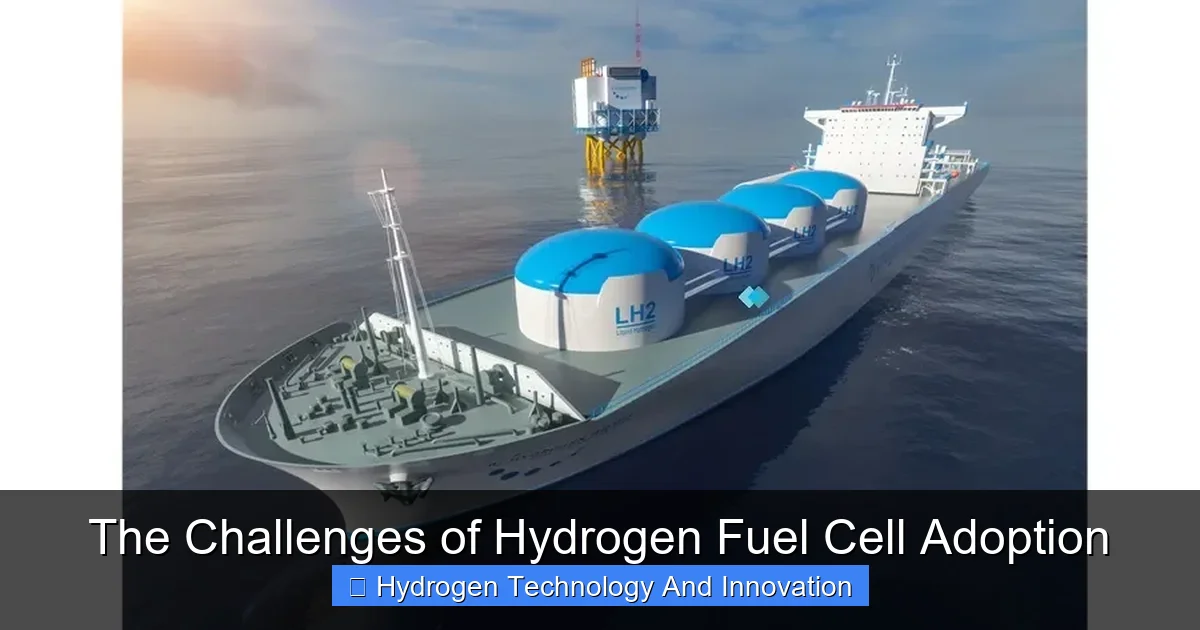
This doesn’t mean hydrogen is useless. It excels in applications where batteries fall short: long-haul trucking, aviation, shipping, and heavy industry. For example, a battery big enough to power a cargo ship across the Pacific would be too heavy and take too long to charge. Hydrogen, especially in liquid or ammonia form, offers higher energy density by weight.
But for passenger cars, city buses, or short-range delivery vehicles, batteries are simply more efficient and cost-effective. The Toyota Mirai and Hyundai NEXO are impressive FCEVs, but they’re niche products. In 2023, global FCEV sales were under 20,000 units—compared to over 10 million EVs.
The Grid Factor
Another efficiency concern is grid impact. If hydrogen production scales up, it will require massive amounts of electricity. In regions where the grid is still powered by coal or natural gas, producing hydrogen could increase emissions—not reduce them. Even with renewables, diverting clean electricity to hydrogen production means less available for direct use in homes, businesses, or EVs.
Some experts argue that hydrogen should be reserved for “hard-to-electrify” sectors, not competing with batteries for light-duty transport. This “use it where it’s needed most” approach could maximize climate benefits.
Safety and Public Perception: Overcoming Fear
Hydrogen has a reputation problem. Thanks to the Hindenburg disaster in 1937, many people associate hydrogen with explosions and danger. While modern hydrogen systems are far safer than early airships, public fear persists.
The reality? Hydrogen is not inherently more dangerous than gasoline or natural gas. In fact, it’s lighter than air, so it disperses quickly if leaked—unlike gasoline vapors, which pool near the ground. It also has a high ignition energy, meaning it’s harder to ignite than gasoline.
But risks do exist. Hydrogen flames are nearly invisible, which can make fires hard to detect. And at high pressures, leaks can cause rapid combustion. That’s why strict safety standards are essential. The Society of Automotive Engineers (SAE) and ISO have developed rigorous guidelines for hydrogen storage, handling, and vehicle design.
Building Trust Through Transparency
To overcome skepticism, companies and governments must prioritize transparency. Open data on safety records, third-party testing, and public education campaigns can help. Japan, for example, has launched community outreach programs to explain hydrogen safety to residents near refueling stations.
Automakers also play a role. Toyota and Hyundai have invested heavily in safety features, such as multiple hydrogen sensors, automatic shutoff valves, and reinforced tanks that can withstand crashes. These efforts are paying off—FCEVs have an excellent safety record in real-world use.
Still, high-profile incidents can set back progress. The 2019 Norway explosion, caused by a faulty valve, led to temporary shutdowns across Europe. While no one was injured, it highlighted the need for better maintenance and oversight.
Competition from Battery-Electric Technology
Perhaps the biggest challenge to hydrogen fuel cell adoption is the rapid advancement of battery-electric vehicles (BEVs). Over the past decade, EV batteries have gotten cheaper, more efficient, and longer-range. Tesla, BYD, and other manufacturers are pushing the limits of what’s possible.
In 2010, lithium-ion batteries cost over $1,000 per kWh. By 2023, that had dropped to under $100 per kWh. At the same time, charging infrastructure has exploded. There are now over 2 million public EV chargers worldwide, with fast chargers enabling 80% charges in under 30 minutes.
For most consumers, BEVs offer a simpler, more convenient solution. They plug into existing electrical grids, require no new fueling infrastructure, and are highly efficient. Even in cold weather, modern heat pumps and battery preconditioning minimize range loss.
The Niche for Hydrogen
So where does hydrogen fit? In heavy transport and industrial processes. For example:
– **Trucking:** Companies like Nikola and Hyundai are developing hydrogen-powered semis for long-haul routes.
– **Shipping:** Maersk and other shipping giants are testing ammonia-fueled ships, which can be made from green hydrogen.
– **Aviation:** Airbus aims to launch a hydrogen-powered passenger plane by 2035.
– **Steel and chemicals:** Hydrogen can replace coal in high-temperature industrial processes.
In these areas, batteries are impractical due to weight, charging time, or energy density. Hydrogen offers a viable path to decarbonization.
The Role of Policy in Shaping the Race
Government policies will determine whether hydrogen or batteries dominate. The European Union’s “Fit for 55” plan supports both technologies but leans toward hydrogen for industry. The U.S. Inflation Reduction Act offers generous credits for both EVs and green hydrogen, creating a level playing field.
But without clear direction, the market may favor the path of least resistance: batteries. To compete, hydrogen needs targeted support—like grants for refueling networks, R&D funding, and mandates for zero-emission freight.
The Path Forward: Collaboration and Innovation
Hydrogen fuel cell adoption won’t happen overnight. It will require coordinated effort across governments, industries, and communities. But the potential rewards—clean air, energy security, and climate progress—are worth the investment.
Innovation on the Horizon
Researchers are working on breakthroughs that could change the game:
– **Cheaper electrolyzers:** New materials like anion exchange membranes (AEM) could reduce costs and improve efficiency.
– **Solid-state hydrogen storage:** Advanced materials that absorb hydrogen like a sponge could eliminate the need for high-pressure tanks.
– **Nuclear-powered hydrogen:** Some countries are exploring using excess nuclear energy to produce hydrogen overnight, when electricity demand is low.
Public-Private Partnerships
Collaboration is key. Initiatives like the Hydrogen Council—a global CEO-led group—bring together automakers, energy firms, and tech companies to share knowledge and scale solutions. Regional “hydrogen hubs” in the U.S. and Europe are testing integrated production, storage, and use in real-world settings.
Consumer Education and Engagement
Finally, the public must be part of the conversation. People need to understand how hydrogen works, why it’s safe, and where it fits in the clean energy mix. Schools, media, and community programs can help demystify the technology.
Conclusion: A Long Road, But a Necessary One
The challenges of hydrogen fuel cell adoption are real and multifaceted. From high costs and infrastructure gaps to efficiency losses and public skepticism, the road ahead is steep. But hydrogen isn’t a fantasy—it’s a critical tool for decarbonizing sectors that batteries can’t reach.
Success will depend on smart policies, sustained investment, and technological innovation. It won’t replace batteries, but it can complement them. In the race to net zero, we need every clean energy solution we can get. Hydrogen may not be the silver bullet, but it could be a vital part of the puzzle.
As the world transitions to a low-carbon future, the question isn’t whether hydrogen will play a role—it’s how big that role will be. With the right support, hydrogen fuel cells could power the next generation of clean transport and industry. But without action, they risk becoming a footnote in energy history.
Frequently Asked Questions
Why is hydrogen fuel cell adoption so slow?
Hydrogen fuel cell adoption is slow due to high production costs, lack of refueling infrastructure, and energy inefficiency. Most hydrogen today is made from fossil fuels, and building a clean, scalable supply chain takes time and investment.
Is hydrogen safer than gasoline?
Yes, in many ways. Hydrogen disperses quickly when leaked and has a high ignition energy. However, it requires strict safety measures due to its flammability and invisible flame. Modern systems are designed with multiple safeguards.
Can hydrogen compete with electric batteries?
For passenger cars and short-range vehicles, batteries are more efficient and cost-effective. But hydrogen has advantages in long-haul transport, aviation, and heavy industry, where batteries are too heavy or slow to charge.
How much does it cost to produce green hydrogen?
Green hydrogen currently costs $4–6 per kilogram, compared to $1–2 for gray hydrogen. Costs are expected to fall as electrolyzer production scales up and renewable energy becomes cheaper.
Where are hydrogen refueling stations available?
Most stations are in California, Japan, South Korea, and parts of Europe. The U.S. has fewer than 200, with plans to expand through government-funded hydrogen hubs.
Will hydrogen replace fossil fuels?
Not entirely. Hydrogen is best suited for specific applications like heavy transport and industry. For most uses, direct electrification with renewables and batteries will be more efficient and practical.