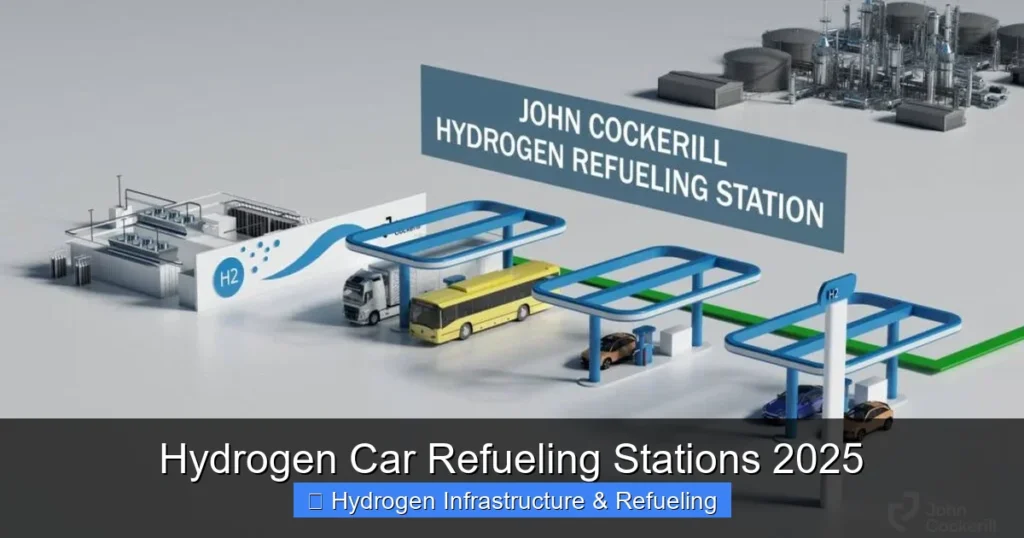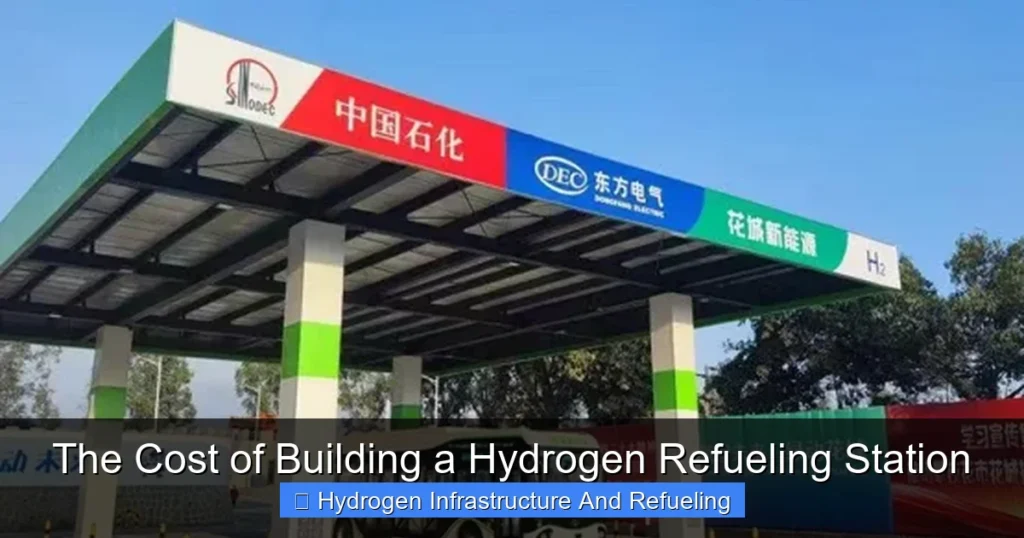
Building a hydrogen refueling station is a major investment, with costs ranging from $1 million to over $3 million per station. These expenses depend on production method, size, location, and infrastructure needs. Despite high upfront costs, government incentives and growing demand for clean fuel are making hydrogen stations more viable.
Key Takeaways
- Capital costs dominate: The largest expenses come from hydrogen production, compression, storage, and dispensing equipment.
- On-site vs. delivered hydrogen: Producing hydrogen on-site (via electrolysis or SMR) increases initial costs but reduces long-term fuel delivery expenses.
- Location matters: Urban areas may require more permits and safety measures, increasing costs compared to rural or industrial zones.
- Government incentives available: Tax credits, grants, and subsidies—like the U.S. Inflation Reduction Act—can cover 30–50% of project costs.
- Operational costs add up: Maintenance, electricity, staffing, and safety monitoring contribute to ongoing expenses.
- Scalability impacts pricing: Larger stations serving fleets or multiple vehicles can lower per-unit fuel costs over time.
- Future cost reductions likely: As technology improves and supply chains mature, hydrogen station costs are expected to drop significantly by 2030.
📑 Table of Contents
- Introduction: The Rise of Hydrogen Fuel and the Need for Infrastructure
- Breaking Down the Major Cost Components
- On-Site Production vs. Delivered Hydrogen: A Cost Comparison
- Government Incentives and Funding Opportunities
- Operational Costs and Long-Term Economics
- Real-World Examples and Case Studies
- Future Outlook: Will Costs Come Down?
- Conclusion: A Worthwhile Investment for a Cleaner Future
Introduction: The Rise of Hydrogen Fuel and the Need for Infrastructure
Hydrogen is emerging as a key player in the clean energy transition, especially for heavy-duty transportation like trucks, buses, and industrial equipment. Unlike battery-electric vehicles, hydrogen fuel cell vehicles (FCEVs) can refuel in minutes and offer longer ranges—making them ideal for logistics, public transit, and long-haul freight. But for hydrogen to truly take off, drivers and fleet operators need reliable access to refueling stations. That’s where the challenge—and opportunity—lies.
Building a hydrogen refueling station isn’t like installing a gas pump. It’s a complex engineering project involving high-pressure systems, specialized storage, and strict safety protocols. The cost of building a hydrogen refueling station reflects this complexity. While prices vary widely based on design and location, most new stations require an investment between $1 million and $3 million. Some large-scale or high-capacity stations can even exceed $5 million. These aren’t small numbers, but they’re becoming more manageable thanks to technological advances, supportive policies, and increasing demand.
Breaking Down the Major Cost Components
Visual guide about The Cost of Building a Hydrogen Refueling Station
Image source: images.modhoster.de
To understand the total cost of building a hydrogen refueling station, it helps to look at the main expense categories. These aren’t just one-time costs—some recur annually, while others scale with usage. Let’s walk through the biggest contributors.
Hydrogen Production Equipment
The method used to produce hydrogen has a huge impact on cost. There are two primary approaches: on-site production and delivered hydrogen.
On-site production means generating hydrogen right at the station. The most common methods are steam methane reforming (SMR) and water electrolysis. SMR uses natural gas to extract hydrogen and is currently the cheapest production method, but it emits CO₂ unless paired with carbon capture. Electrolysis splits water into hydrogen and oxygen using electricity—ideally from renewable sources—and is cleaner but more expensive due to high electricity and equipment costs.
An electrolyzer system capable of producing 100–500 kg of hydrogen per day can cost between $500,000 and $1.5 million. Larger systems scale up in price but offer better efficiency. SMR units are generally cheaper upfront but come with higher operational costs and environmental concerns.
Delivered hydrogen, on the other hand, is transported from centralized production facilities via tube trailers or liquid tankers. This avoids the need for on-site production equipment, reducing initial capital costs. However, delivery adds ongoing expenses—transportation, handling, and potential supply chain delays. Over time, delivered hydrogen can become more expensive than on-site production, especially in remote areas.
Compression and Storage Systems
Hydrogen must be compressed to high pressures (typically 350–700 bar) for vehicle refueling. This requires robust compressors designed to handle hydrogen’s low density and high flammability. Compression systems can cost anywhere from $200,000 to $600,000, depending on capacity and technology.
Storage is another critical—and costly—component. Hydrogen is stored in high-pressure tanks made from advanced composites to prevent leaks and embrittlement. A typical station might have multiple storage vessels holding 500 to 2,000 kg of hydrogen. These tanks can cost $100,000 to $300,000, and their number depends on how much fuel the station needs to hold for daily operations.
Safety is paramount here. Hydrogen is highly flammable and can ignite at low concentrations. Storage systems must include pressure relief devices, leak detection sensors, and fire suppression systems—all adding to the overall cost.
Dispensing Units and Safety Systems
The dispenser is what drivers interact with—similar to a gasoline pump but far more complex. Hydrogen dispensers must precisely control flow rate, pressure, and temperature to ensure safe and efficient refueling. They also include communication systems to verify vehicle compatibility and prevent overfilling.
A single hydrogen dispenser can cost between $100,000 and $200,000. Stations typically have one to four dispensers, depending on expected demand. High-traffic stations may need more to avoid long wait times.
Safety systems are non-negotiable. These include gas detectors, emergency shutdown systems, ventilation, and fire barriers. Stations must comply with strict codes like NFPA 2 (National Fire Protection Association Standard for Hydrogen Technologies). Installing these systems can add $100,000 to $300,000 to the project, depending on site conditions and local regulations.
Site Preparation and Civil Works
Before any equipment arrives, the site must be prepared. This includes land acquisition or leasing, grading, paving, fencing, and utility connections. If the station is in an urban area, space may be limited and expensive. In rural areas, land is cheaper but may lack necessary infrastructure.
Utility upgrades are often required. Hydrogen production via electrolysis needs a reliable source of electricity—preferably renewable. If the local grid can’t support the load, transformers or substations may need upgrades, adding tens of thousands to the cost.
Water supply is also important for electrolysis. Stations using this method need a consistent water source and may require filtration or treatment systems.
Civil works—like concrete foundations, stormwater management, and access roads—can cost $100,000 to $400,000, depending on site complexity.
Permitting, Compliance, and Professional Services
Hydrogen refueling stations face rigorous regulatory scrutiny. Getting permits can take months and involve multiple agencies—fire departments, environmental regulators, zoning boards, and utility companies.
Engineering and design services are essential. You’ll need experts in hydrogen systems, safety, and civil engineering to design a compliant and efficient station. These services can cost $100,000 to $300,000.
Legal and consulting fees also add up. Environmental impact assessments, safety audits, and insurance assessments are often required. Insurance premiums for hydrogen facilities are higher than for conventional fuel stations due to perceived risks.
On-Site Production vs. Delivered Hydrogen: A Cost Comparison
One of the biggest decisions in planning a hydrogen station is whether to produce hydrogen on-site or have it delivered. Each option has trade-offs in cost, reliability, and scalability.
On-Site Production: Higher Upfront, Lower Long-Term Costs
Stations with on-site production avoid delivery fees and can operate independently of supply chains. This is especially valuable in remote areas or regions with limited hydrogen infrastructure.
However, the initial investment is steep. An electrolysis-based system producing 500 kg/day might cost $1.2 million for the equipment alone. Add compression, storage, and safety systems, and the total can easily exceed $2.5 million.
The long-term savings come from lower fuel costs. Producing hydrogen on-site can reduce the per-kilogram cost to $8–$12, compared to $13–$16 for delivered hydrogen. Over 10 years, this difference can save hundreds of thousands of dollars—especially for high-volume stations.
Delivered Hydrogen: Lower Initial Cost, Higher Operating Expenses
Stations relying on delivered hydrogen skip the production equipment, cutting initial costs by $500,000 to $1 million. This makes them attractive for early adopters or low-demand locations.
But delivery costs add up. Transporting hydrogen by tube trailer costs about $2–$4 per kg, and liquid hydrogen transport is even more expensive due to cryogenic requirements. If a station uses 300 kg/day, delivery could cost $200,000–$400,000 per year.
Supply reliability is another concern. Delays in delivery can leave stations empty, frustrating customers and damaging reputation.
Hybrid Approaches and Future Trends
Some stations use a hybrid model—producing hydrogen on-site during off-peak hours and supplementing with deliveries during high demand. This balances cost and reliability.
Looking ahead, as hydrogen production scales up, delivered hydrogen may become cheaper. But on-site production is expected to dominate in high-traffic areas, especially with falling electrolyzer costs.
Government Incentives and Funding Opportunities
The high cost of building a hydrogen refueling station is a barrier—but governments are stepping in to help. In the U.S., Europe, and parts of Asia, generous incentives are making hydrogen infrastructure more feasible.
U.S. Federal Incentives
The Inflation Reduction Act (IRA) of 2022 includes a 30% investment tax credit (ITC) for clean hydrogen production and infrastructure. This can cover up to 30–50% of the total project cost, depending on labor and domestic content requirements.
The Bipartisan Infrastructure Law allocates $8 billion for hydrogen hubs—regional networks of production, storage, and refueling. Stations located within these hubs may qualify for grants covering 50–80% of costs.
State-level programs also exist. California’s Clean Transportation Program has funded over 100 hydrogen stations, offering up to $2 million per station. Similar programs operate in New York, Texas, and the Northeast.
International Support
The European Union’s Green Deal includes funding for hydrogen infrastructure through the Connecting Europe Facility and national recovery plans. Countries like Germany and the Netherlands offer grants covering 40–60% of station costs.
In Japan and South Korea, government-backed initiatives have led to dense hydrogen refueling networks. Japan’s Ministry of Economy, Trade and Industry (METI) has supported over 160 stations, with subsidies covering up to 50% of capital costs.
How to Access Funding
To qualify for incentives, projects must meet specific criteria—such as using renewable energy, creating jobs, or serving disadvantaged communities. Working with experienced consultants and applying early is key. Many programs have competitive application processes with limited funding.
Operational Costs and Long-Term Economics
While the upfront cost of building a hydrogen refueling station is high, ongoing expenses also matter. A station must be economically sustainable to survive.
Electricity and Water Costs
For electrolysis-based stations, electricity is the largest operating cost. Producing 1 kg of hydrogen requires about 50–55 kWh of electricity. At $0.10/kWh, that’s $5–$5.50 per kg—just for power.
Water usage is minimal (about 9 liters per kg of hydrogen), but treatment and disposal can add small costs.
Maintenance and Staffing
Hydrogen systems require regular maintenance due to high pressures and corrosive environments. Compressors, sensors, and seals need inspection and replacement. Annual maintenance can cost $50,000 to $150,000.
Staffing depends on station size. A small station might need one part-time operator, while larger ones require full-time technicians. Labor costs vary by region but can add $50,000–$100,000 per year.
Revenue and Break-Even Analysis
Revenue comes from fuel sales. Current hydrogen prices range from $10 to $16 per kg. A station selling 500 kg/day at $12/kg generates about $2.2 million annually.
Break-even depends on volume. A $2.5 million station with $300,000 in annual operating costs needs to sell about 230 kg/day to break even in 5 years. Higher volumes improve profitability.
Real-World Examples and Case Studies
Let’s look at actual stations to see how costs play out in practice.
Example 1: AC Transit Hydrogen Station (California)
AC Transit’s station in Oakland serves a fleet of hydrogen buses. It uses on-site electrolysis powered by renewable energy. Total cost: $3.2 million. The project received $2.1 million in state and federal grants, reducing the net cost to $1.1 million. The station produces 600 kg/day and has been operational since 2020.
Example 2: Hylane Station (Germany)
Hylane operates a network of hydrogen stations for logistics companies. Their station in Cologne uses delivered hydrogen and cost €1.8 million ($1.95 million). It serves 20 trucks daily and breaks even in 4 years due to high utilization and government support.
Example 3: Nikola HYLA Station (Arizona)
Nikola’s pilot station in Phoenix uses on-site SMR and cost $2.7 million. It dispenses 1,000 kg/day and supports long-haul trucks. The company plans to build 60 stations by 2026, leveraging economies of scale.
Future Outlook: Will Costs Come Down?
The cost of building a hydrogen refueling station is expected to drop significantly in the coming decade. Several factors will drive this trend.
Technology Improvements
Electrolyzer efficiency is improving, and manufacturing is scaling up. Costs have already fallen 60% since 2010 and are projected to drop another 50% by 2030. Compressors and storage tanks are also becoming cheaper and more reliable.
Economies of Scale
As more stations are built, supply chains will mature, and installation expertise will grow. Standardized designs and modular systems will reduce engineering and construction costs.
Policy and Market Growth
Government mandates for zero-emission trucks and buses will increase demand. As FCEV adoption grows, station utilization will rise, improving economics.
Experts predict that by 2030, the cost of building a hydrogen refueling station could fall to $800,000–$1.5 million—making hydrogen competitive with diesel for many applications.
Conclusion: A Worthwhile Investment for a Cleaner Future
The cost of building a hydrogen refueling station is substantial, but it’s not insurmountable. With careful planning, smart technology choices, and access to incentives, these stations can be viable and profitable. They’re a critical piece of the clean transportation puzzle—especially for heavy-duty vehicles that can’t rely on batteries alone.
While upfront costs remain high, the long-term benefits—reduced emissions, energy independence, and job creation—make hydrogen infrastructure a smart investment. As technology advances and markets grow, the economics will only improve. For forward-thinking businesses, governments, and communities, now is the time to explore hydrogen refueling.
Frequently Asked Questions
How much does it cost to build a hydrogen refueling station?
The cost of building a hydrogen refueling station typically ranges from $1 million to $3 million, depending on size, production method, and location. High-capacity or on-site production stations can exceed $5 million.
Is it cheaper to produce hydrogen on-site or have it delivered?
On-site production has higher upfront costs but lower long-term fuel expenses. Delivered hydrogen reduces initial investment but increases operating costs due to transportation fees.
Are there government grants for hydrogen stations?
Yes. In the U.S., the Inflation Reduction Act offers tax credits covering 30–50% of project costs. State programs like California’s provide direct grants of up to $2 million per station.
How long does it take to build a hydrogen refueling station?
Construction typically takes 6 to 18 months, depending on permitting, site preparation, and equipment availability. Delays can occur due to regulatory reviews or supply chain issues.
What safety measures are required at a hydrogen station?
Stations must include gas detectors, emergency shutdown systems, fire suppression, ventilation, and compliance with NFPA 2 standards. Regular inspections and staff training are also required.
Can a hydrogen station be profitable?
Yes, especially in high-demand areas like ports, freight corridors, or public transit hubs. Profitability depends on fuel volume, pricing, operating costs, and utilization rates.