Hydrogen fuel cell cars emit only water vapor, offering a clean alternative to gasoline vehicles. However, their environmental benefits depend heavily on how the hydrogen is produced—green, gray, or blue. This article explores the full lifecycle impact, infrastructure needs, and future potential of this promising technology.
Key Takeaways
- Zero tailpipe emissions: Hydrogen fuel cell cars produce only water vapor, making them ideal for reducing urban air pollution.
- Hydrogen production matters: The environmental impact varies widely—green hydrogen (from renewables) is clean, while gray (from natural gas) emits CO₂.
- Energy-intensive process: Producing, compressing, and transporting hydrogen requires significant energy, affecting overall efficiency.
- Lower well-to-wheel efficiency: Compared to battery electric vehicles, hydrogen cars use more energy from source to wheel.
- Infrastructure challenges: Limited refueling stations and high costs hinder widespread adoption.
- Potential for decarbonization: With renewable-powered production, hydrogen cars could play a key role in a zero-emission future.
- Complementary to EVs: Hydrogen may be best suited for heavy transport and long-range applications where batteries fall short.
📑 Table of Contents
Introduction: The Promise of Clean Driving
Imagine driving a car that emits nothing but water vapor—no smog, no carbon dioxide, just pure, clean air coming out of the tailpipe. That’s the promise of hydrogen fuel cell cars. These vehicles run on hydrogen gas, which reacts with oxygen in a fuel cell to produce electricity, powering the motor and leaving only H₂O in its wake. It sounds almost too good to be true, and in many ways, it is—but not for the reasons you might think.
Hydrogen fuel cell technology has been around for decades, first used in space missions and now making its way into passenger vehicles. Companies like Toyota, Hyundai, and Honda have launched models such as the Mirai, NEXO, and Clarity, showcasing the potential of this clean energy alternative. But while the idea of a zero-emission car is appealing, the full environmental impact of hydrogen fuel cell cars is more complex than it first appears. It’s not just about what comes out of the tailpipe—it’s about where the hydrogen comes from, how it’s made, and how efficiently it’s used.
How Hydrogen Fuel Cell Cars Work
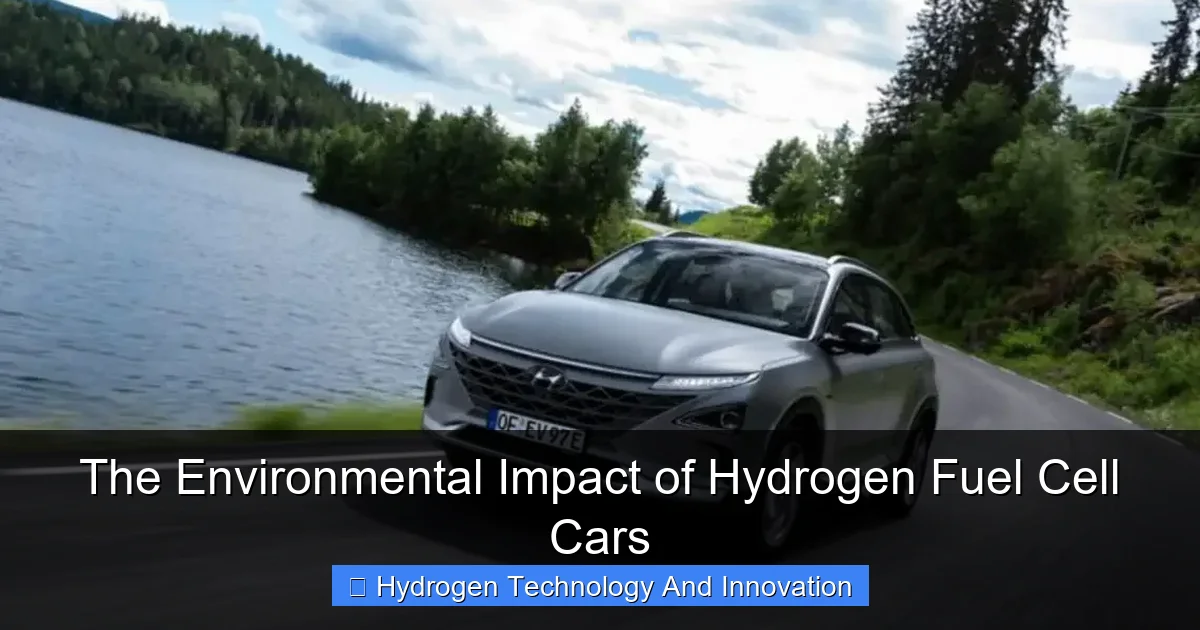
Visual guide about The Environmental Impact of Hydrogen Fuel Cell Cars
Image source: hydrogenfuelnews.com
To understand the environmental impact, we first need to know how these cars actually function. Unlike battery electric vehicles (BEVs) that store electricity in large batteries, hydrogen fuel cell cars generate their own power on board. Here’s a simple breakdown of the process:
The heart of the system is the fuel cell stack. This is where hydrogen gas (H₂) from the car’s tank meets oxygen (O₂) from the air. Inside the fuel cell, a catalyst—usually platinum—splits the hydrogen atoms into protons and electrons. The protons pass through a membrane, while the electrons are forced to travel through an external circuit, creating an electric current. This electricity powers the car’s motor. When the protons and electrons reunite on the other side of the membrane, they combine with oxygen to form water—hence the “water vapor only” emission claim.
The Role of the Fuel Cell Stack
The fuel cell stack is the engine of a hydrogen car. Modern stacks are compact and efficient, capable of producing enough power for a full-sized sedan. They operate silently and with high reliability, making them ideal for everyday driving. However, they are also expensive to manufacture due to the use of rare materials like platinum. Researchers are working on reducing or replacing these materials to lower costs and environmental impact.
Hydrogen Storage: A Technical Challenge
Storing hydrogen safely and efficiently is one of the biggest engineering hurdles. Hydrogen is the lightest element and highly flammable, so it must be compressed to extremely high pressures—typically 5,000 to 10,000 psi—or cooled to liquid form at -253°C. Most passenger vehicles use compressed gas tanks made of carbon fiber, which are strong but heavy and costly. Liquid hydrogen is more energy-dense but requires cryogenic storage, which is complex and energy-intensive.
Despite these challenges, hydrogen tanks can store enough fuel for a range of 300 to 400 miles, comparable to gasoline cars and far exceeding most battery EVs. Refueling takes just 3 to 5 minutes—another major advantage over electric charging.
The Environmental Impact of Hydrogen Production
Now, here’s where the environmental story gets complicated. While the car itself emits nothing harmful, the process of making hydrogen can be far from clean. Not all hydrogen is created equal. In fact, the color-coding system used in the industry tells us a lot about its environmental footprint.
Gray, Blue, and Green Hydrogen: What’s the Difference?
Most hydrogen today is “gray” hydrogen, produced from natural gas through a process called steam methane reforming (SMR). This method releases significant amounts of carbon dioxide—about 9 to 12 kg of CO₂ per kg of hydrogen. Since over 95% of global hydrogen is currently gray, this means that many hydrogen fuel cell cars are indirectly powered by fossil fuels.
“Blue” hydrogen is similar to gray, but it includes carbon capture and storage (CCS) technology to trap and store the CO₂ emissions. While this reduces the carbon footprint by up to 90%, it’s not zero-emission, and CCS is still an emerging and expensive technology.
The real game-changer is “green” hydrogen, produced by electrolyzing water using electricity from renewable sources like wind, solar, or hydropower. This process splits water (H₂O) into hydrogen and oxygen with no direct emissions. If powered entirely by renewables, green hydrogen is truly clean from start to finish.
The Energy Cost of Making Hydrogen
Even green hydrogen isn’t perfectly efficient. Electrolysis requires a lot of electricity—about 50 to 60 kWh to produce 1 kg of hydrogen. That’s enough to power an average home for two days. When you factor in the energy needed to compress, transport, and convert hydrogen back into electricity in the fuel cell, the total well-to-wheel efficiency drops to around 25–35%. In contrast, battery electric vehicles achieve 70–90% efficiency because they skip the conversion steps.
This means that for every unit of renewable energy used, a hydrogen car gets less usable power than an electric car. So while green hydrogen is clean, it’s also a less efficient use of renewable resources.
Well-to-Wheel Efficiency: How Do Hydrogen Cars Compare?
To truly assess the environmental impact, we need to look at the entire lifecycle—from energy source to motion. This is known as well-to-wheel analysis. It includes everything: producing the fuel, transporting it, converting it to power, and driving the vehicle.
Hydrogen vs. Battery Electric Vehicles
When compared side by side, battery electric vehicles (BEVs) come out ahead in efficiency. A typical BEV uses about 20–25 kWh of electricity per 100 miles. That electricity can come directly from the grid or a home solar panel. Even with grid electricity (which may include fossil fuels), BEVs still produce fewer emissions per mile than most gasoline or hydrogen cars.
Hydrogen fuel cell cars, on the other hand, require more energy input. Let’s walk through a real-world example:
Suppose you have 100 kWh of solar energy. If you use it to charge a BEV, you can drive about 400 miles. If you use it to make green hydrogen, compress it, transport it, and then convert it back to electricity in a fuel cell car, you might only get 100–150 miles of range. That’s a big difference.
This inefficiency is why many experts argue that hydrogen should be reserved for applications where batteries aren’t practical—like long-haul trucking, shipping, or aviation—rather than passenger cars.
Hydrogen vs. Gasoline and Diesel
Still, hydrogen fuel cell cars are far cleaner than internal combustion engines—especially if the hydrogen is green. A gasoline car emits about 2.3 kg of CO₂ per liter burned. Over a lifetime of 200,000 miles, that adds up to over 40 tons of CO₂. A gray hydrogen car might emit 20–30 tons, while a green hydrogen car could be under 5 tons, depending on the energy mix.
So even with current technology, hydrogen cars can significantly reduce greenhouse gas emissions—especially in regions with clean electricity.
Infrastructure and Lifecycle Considerations
Beyond production and efficiency, the environmental impact of hydrogen cars also depends on infrastructure and vehicle manufacturing.
Building a Hydrogen Refueling Network
One of the biggest barriers to adoption is the lack of refueling stations. As of 2024, there are fewer than 150 hydrogen stations in the U.S., mostly in California. Building new stations is expensive—each one can cost $1–2 million—and requires significant space and safety measures.
Transporting hydrogen is another challenge. It can’t be sent through existing natural gas pipelines without major modifications, and trucking it long distances is energy-intensive. Some countries are exploring hydrogen pipelines or converting ammonia (which is easier to transport) back into hydrogen at the point of use.
Vehicle Manufacturing and Materials
Like all cars, hydrogen fuel cell vehicles have an environmental footprint from manufacturing. The production of fuel cells, carbon fiber tanks, and rare catalysts like platinum all require energy and resources. However, studies show that over their lifetime, hydrogen cars can offset this initial impact—especially if they’re powered by green hydrogen.
Recycling is also a concern. While fuel cells and tanks can be recycled, the infrastructure for doing so is still in its infancy. As the market grows, developing closed-loop recycling systems will be essential to minimize waste.
The Role of Hydrogen in a Sustainable Future
Despite the challenges, hydrogen fuel cell technology has a role to play in decarbonizing transportation—particularly in sectors where batteries fall short.
Best Use Cases for Hydrogen Cars
Hydrogen shines in applications that require long range, fast refueling, and heavy payloads. Think delivery trucks, buses, and freight vehicles that need to operate all day without lengthy charging stops. For example, the Toyota Sora bus in Japan runs on hydrogen and serves urban routes with zero emissions.
In cold climates, hydrogen cars also have an advantage. Unlike batteries, which lose efficiency in low temperatures, fuel cells perform well in the cold. This makes them a viable option for regions with harsh winters.
Complementing, Not Replacing, Electric Vehicles
The future of clean transportation isn’t a choice between hydrogen and batteries—it’s likely a mix of both. BEVs are ideal for short- to medium-range driving, city commuting, and light vehicles. Hydrogen is better suited for heavy-duty transport, aviation, and industrial processes.
Governments and companies are investing in both technologies. The European Union, Japan, and South Korea have national hydrogen strategies, while the U.S. has introduced tax credits for clean hydrogen production under the Inflation Reduction Act.
The Path to Green Hydrogen
The key to unlocking hydrogen’s environmental potential is scaling up green hydrogen production. This requires massive investment in renewable energy and electrolyzers. Projects like the HyDeal Ambition initiative in Europe aim to produce green hydrogen at $1.50/kg by 2030—making it competitive with gray hydrogen.
In Australia, the Asian Renewable Energy Hub plans to generate 26 gigawatts of wind and solar power to produce hydrogen for export. If successful, such projects could transform global energy trade.
Conclusion: A Clean Future, But Not Without Challenges
Hydrogen fuel cell cars offer a compelling vision of clean, quiet, and efficient transportation. With zero tailpipe emissions and quick refueling, they address some of the key limitations of battery electric vehicles. However, their environmental benefits are not automatic. The source of hydrogen—gray, blue, or green—makes all the difference.
Currently, most hydrogen is produced from fossil fuels, which undermines its green credentials. But as renewable energy expands and green hydrogen becomes cheaper, the picture will improve. The technology is still evolving, and with the right policies and investments, hydrogen could play a vital role in a sustainable transportation system.
That said, for everyday drivers, battery electric vehicles remain the more efficient and practical choice today. Hydrogen is better reserved for niche applications where its strengths shine. The future isn’t about picking one winner—it’s about using the right tool for the job.
As we move toward a low-carbon world, hydrogen fuel cell cars won’t save the planet on their own. But they could be a valuable part of the solution, especially if we commit to making hydrogen truly clean.
Frequently Asked Questions
Are hydrogen fuel cell cars really zero emission?
Yes, but only at the tailpipe. The car emits only water vapor while driving. However, if the hydrogen is produced from fossil fuels (gray hydrogen), the overall process still generates significant CO₂ emissions.
How does hydrogen production affect the environment?
It depends on the method. Gray hydrogen, made from natural gas, emits large amounts of CO₂. Green hydrogen, produced using renewable energy, has a much lower environmental impact and is the most sustainable option.
Are hydrogen cars more efficient than electric cars?
No. Battery electric vehicles are significantly more efficient, converting 70–90% of energy from source to wheel, compared to 25–35% for hydrogen fuel cell cars due to energy losses in production, compression, and conversion.
Can hydrogen cars help reduce air pollution in cities?
Yes. Since they emit only water vapor, they produce no nitrogen oxides, particulate matter, or other harmful pollutants, making them ideal for improving urban air quality.
Why aren’t hydrogen cars more popular?
High costs, limited refueling infrastructure, and lower efficiency compared to electric vehicles have slowed adoption. Most hydrogen is still produced from fossil fuels, reducing its environmental appeal.
Will hydrogen cars ever be as common as electric cars?
Unlikely for passenger vehicles, but they may become more common in heavy transport, buses, and freight. For everyday driving, battery electric vehicles are currently the more practical and efficient choice.