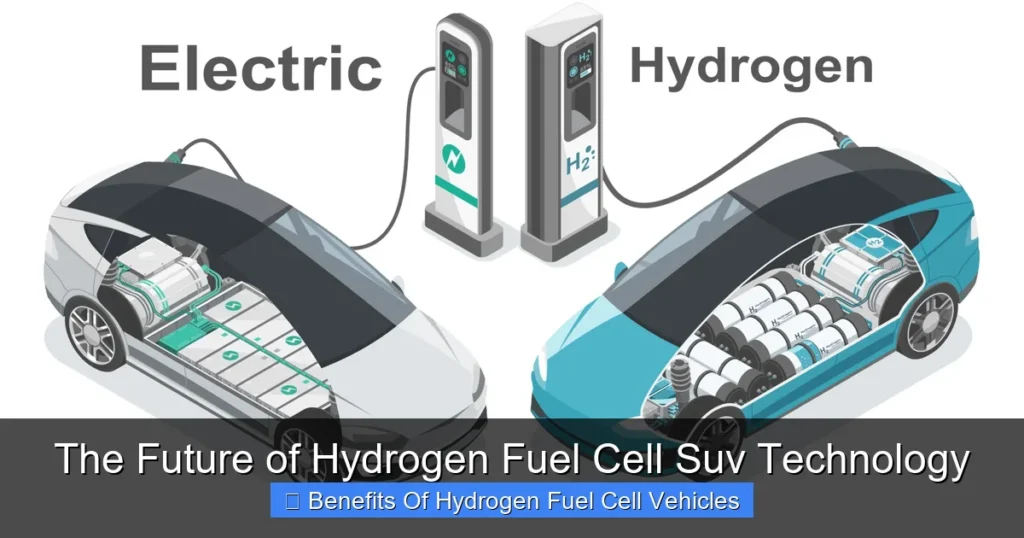
The future of hydrogen fuel cell SUV technology is bright, offering zero-emission driving with long range and fast refueling. As automakers invest in cleaner alternatives, hydrogen-powered SUVs are emerging as a practical, eco-friendly solution for families and adventurers alike.
Key Takeaways
- Zero Emissions: Hydrogen fuel cell SUVs produce only water vapor, making them one of the cleanest vehicles on the road.
- Fast Refueling: Unlike electric vehicles, hydrogen SUVs can be refueled in under 10 minutes—similar to gasoline cars.
- Long Driving Range: Most hydrogen SUVs offer 300–400 miles per tank, ideal for long trips and rural travel.
- Growing Infrastructure: Countries like Japan, South Korea, and Germany are rapidly expanding hydrogen refueling networks.
- High Performance: Fuel cell SUVs deliver smooth, quiet power with strong torque, perfect for towing and off-road use.
- Government Support: Incentives and policies are accelerating hydrogen vehicle adoption worldwide.
- Future-Ready Technology: Advances in storage, efficiency, and production are making hydrogen SUVs more affordable and accessible.
📑 Table of Contents
The Future of Hydrogen Fuel Cell SUV Technology
Imagine driving a spacious, powerful SUV that emits nothing but clean water vapor—no smog, no carbon footprint, and no long waits at charging stations. That’s not science fiction. It’s the promise of hydrogen fuel cell SUV technology, and it’s closer than you might think. As the world races to cut greenhouse gas emissions and combat climate change, automakers and governments are turning to hydrogen as a clean, efficient alternative to gasoline and even battery-electric vehicles.
Hydrogen fuel cell SUVs use a chemical reaction between hydrogen and oxygen to generate electricity, powering an electric motor. The only byproduct? Pure water. This makes them a zero-emission vehicle (ZEV) with the added benefit of quick refueling and long-range capability. While battery-electric SUVs have gained popularity, they still face challenges like long charging times, limited range in cold weather, and strain on electrical grids. Hydrogen fuel cell technology offers a compelling solution—especially for larger vehicles that need more energy and longer range.
The shift toward hydrogen isn’t just about environmental responsibility. It’s about practicality. Families, outdoor enthusiasts, and commercial fleets need vehicles that can go the distance, refuel quickly, and handle tough conditions. Hydrogen SUVs are designed to meet those needs without compromising on performance or comfort. And with major automakers like Toyota, Hyundai, and BMW investing heavily in fuel cell development, the future of hydrogen-powered SUVs is looking brighter every year.
How Hydrogen Fuel Cell SUVs Work
Visual guide about The Future of Hydrogen Fuel Cell Suv Technology
Image source: img.fuelcellsworks.com
To understand why hydrogen fuel cell SUVs are such a game-changer, it helps to know how they work. At the heart of every hydrogen SUV is a fuel cell stack—a series of individual fuel cells that combine hydrogen and oxygen to produce electricity. This process is clean, quiet, and incredibly efficient.
The Science Behind the Power
Inside the fuel cell, hydrogen gas (H₂) from the onboard tank enters the anode side of the cell. There, a catalyst—usually platinum—splits the hydrogen molecules into protons and electrons. The protons pass through a special membrane to the cathode side, while the electrons are forced to travel through an external circuit, creating an electric current. This current powers the SUV’s electric motor, just like in a battery-electric vehicle.
Meanwhile, oxygen from the air enters the cathode side of the fuel cell. There, it combines with the protons and electrons to form water (H₂O), which is released as vapor through the exhaust. No combustion, no pollutants—just clean energy and water.
Key Components of a Hydrogen SUV
A hydrogen fuel cell SUV has several critical parts working together:
– Hydrogen Storage Tanks: Made of lightweight, high-strength carbon fiber, these tanks safely store compressed hydrogen gas at high pressure (typically 700 bar). They’re designed to withstand crashes and extreme conditions.
– Fuel Cell Stack: The “engine” of the vehicle, where hydrogen and oxygen react to generate electricity. Modern stacks are compact and powerful, fitting neatly under the hood or floor.
– Electric Motor: Drives the wheels using electricity from the fuel cell. Many hydrogen SUVs also have a small battery to store excess energy and boost power during acceleration.
– Power Control Unit: Manages the flow of electricity between the fuel cell, battery, and motor for optimal performance and efficiency.
– Thermal Management System: Keeps the fuel cell at the right temperature, ensuring reliable operation in hot or cold climates.
Real-World Example: The Toyota Mirai and Hyundai NEXO
Two of the most advanced hydrogen SUVs on the market today are the Toyota Mirai and the Hyundai NEXO. The Mirai, now in its second generation, offers over 400 miles of range and can be refueled in about five minutes. It’s sleek, luxurious, and packed with tech—proving that green vehicles don’t have to sacrifice style or comfort.
The Hyundai NEXO takes it a step further with advanced driver assistance, solar roof panels, and a sophisticated air purification system that actually cleans the air as you drive. It’s a glimpse into what the future of sustainable SUVs could look like—smart, safe, and environmentally responsible.
Benefits of Hydrogen Fuel Cell SUVs
Hydrogen fuel cell SUVs offer a unique combination of benefits that make them stand out in the growing field of green transportation. While battery-electric vehicles (BEVs) have dominated the conversation, hydrogen-powered SUVs bring several advantages that are hard to ignore.
Zero Tailpipe Emissions
The most obvious benefit is environmental. Hydrogen fuel cell SUVs produce zero harmful emissions. Unlike gasoline or diesel vehicles, they don’t release carbon dioxide (CO₂), nitrogen oxides (NOx), or particulate matter. The only thing that comes out of the tailpipe is water vapor—clean enough to drink.
This makes hydrogen SUVs ideal for cities struggling with air pollution. In places like Los Angeles, Tokyo, or Berlin, where smog and respiratory illnesses are major concerns, hydrogen vehicles can play a key role in improving public health.
Fast Refueling, Long Range
One of the biggest drawbacks of battery-electric SUVs is charging time. Even with fast chargers, it can take 30 minutes to an hour to get an 80% charge. And in rural areas, charging stations can be few and far between.
Hydrogen SUVs solve this problem. Refueling takes just 5 to 10 minutes—about the same as filling up a gas tank. And with ranges of 300 to 400 miles or more, they’re perfect for long road trips, family vacations, or daily commutes without range anxiety.
High Performance and Towing Capacity
Don’t let the “green” label fool you—hydrogen SUVs are powerful. Electric motors deliver instant torque, giving these vehicles quick acceleration and smooth handling. Many models can tow heavy loads, making them great for hauling trailers, boats, or campers.
For example, the Hyundai NEXO has a towing capacity of over 2,000 pounds, while the upcoming BMW iX5 Hydrogen promises performance comparable to its gas-powered counterparts. This makes hydrogen SUVs a practical choice for active families and outdoor adventurers.
Quiet and Comfortable Ride
Because they run on electric motors, hydrogen SUVs are whisper-quiet. There’s no engine noise, no vibrations, and no gear shifts. The result? A smooth, peaceful driving experience that’s perfect for long journeys or relaxing commutes.
Plus, with no internal combustion engine, there’s more space for passengers and cargo. Many hydrogen SUVs feature flat floors, spacious interiors, and innovative storage solutions.
Energy Security and Grid Independence
Hydrogen can be produced from a variety of sources, including renewable energy like wind, solar, and hydroelectric power. This reduces dependence on imported oil and helps countries achieve energy independence.
Unlike battery-electric vehicles, which draw power from the electrical grid (often powered by fossil fuels), hydrogen can be generated locally and stored for later use. This makes it a more flexible and resilient energy solution, especially in remote or off-grid areas.
Challenges and How They’re Being Solved
Despite their many advantages, hydrogen fuel cell SUVs face several challenges that have slowed widespread adoption. But thanks to rapid technological advances and growing investment, many of these hurdles are being overcome.
Limited Refueling Infrastructure
The biggest barrier today is the lack of hydrogen refueling stations. As of 2024, there are fewer than 200 public hydrogen stations in the United States, mostly in California. In Europe and Asia, the network is slightly better, but still limited compared to gas stations or EV chargers.
However, this is changing fast. Governments and private companies are investing billions in hydrogen infrastructure. For example, the European Union’s “Hydrogen Strategy” aims to install 1,000 hydrogen refueling stations by 2030. In Japan, the government supports a network of over 160 stations, with plans to double that number.
High Production and Distribution Costs
Producing hydrogen—especially “green hydrogen” made from renewable energy—is still expensive. Current methods like steam methane reforming (SMR) rely on natural gas and produce CO₂, which undermines the environmental benefits.
But new technologies are emerging. Electrolysis, which splits water into hydrogen and oxygen using electricity, is becoming more efficient and affordable. When powered by solar or wind, it creates truly clean hydrogen. Companies like Nel Hydrogen and Plug Power are scaling up electrolyzer production, driving costs down.
Hydrogen Storage and Safety Concerns
Storing hydrogen safely is a challenge. It’s the smallest and lightest molecule, which makes it prone to leaks. But modern hydrogen tanks are designed with multiple layers of protection, including carbon fiber shells and pressure relief devices. They’re rigorously tested and have an excellent safety record.
In fact, hydrogen is no more dangerous than gasoline or natural gas when handled properly. It’s lighter than air, so it disperses quickly in the event of a leak, reducing the risk of fire or explosion.
Vehicle Cost and Availability
Right now, hydrogen SUVs are expensive. The Toyota Mirai starts around $50,000, and the Hyundai NEXO is even pricier. But as production scales up and technology improves, prices are expected to fall. Automakers are also offering leasing programs and incentives to make these vehicles more accessible.
In California, for example, buyers can get up to $15,000 in state and federal rebates. Similar programs exist in Germany, Japan, and South Korea.
The Role of Government and Industry
The future of hydrogen fuel cell SUV technology depends not just on innovation, but on strong support from governments and industry leaders. Fortunately, momentum is building worldwide.
Government Policies and Incentives
Countries are introducing policies to promote hydrogen as a clean energy solution. The U.S. Inflation Reduction Act includes tax credits for hydrogen production and fuel cell vehicles. The European Green Deal supports hydrogen infrastructure and research. In South Korea, the government has pledged $20 billion to build a hydrogen economy by 2030.
These policies are helping to create a stable market for hydrogen vehicles, encouraging automakers to invest in new models and technologies.
Automaker Commitments
Major car companies are betting big on hydrogen. Toyota has been a pioneer with the Mirai and is developing hydrogen-powered trucks and buses. Hyundai plans to sell 11 hydrogen models by 2030. BMW is testing the iX5 Hydrogen SUV in real-world conditions, with plans for limited production.
Even traditional truck and SUV makers like General Motors and Ford are exploring hydrogen for heavy-duty applications. GM’s Hydrotec fuel cells are being used in military vehicles, delivery trucks, and even locomotives.
Partnerships and Collaborations
The hydrogen economy is being built through partnerships. For example, Shell and Hyundai are working together to expand hydrogen refueling networks in Europe. Air Liquide and Toyota are collaborating on hydrogen production and distribution in North America.
These alliances are essential for scaling up infrastructure and making hydrogen vehicles viable for the mass market.
The Road Ahead: What to Expect in the Next Decade
The next 10 years will be transformative for hydrogen fuel cell SUV technology. As production costs fall, infrastructure expands, and consumer awareness grows, we can expect to see a surge in adoption.
More Models and Greater Affordability
By 2030, we’ll likely see a wide range of hydrogen SUVs from multiple automakers—compact crossovers, full-size family haulers, and even luxury models. Prices will drop as manufacturing scales up and technology improves.
Expansion of Refueling Networks
Hydrogen stations will become more common, especially along major highways and in urban centers. Mobile refueling units and home hydrogen generators could also emerge, offering even greater convenience.
Integration with Renewable Energy
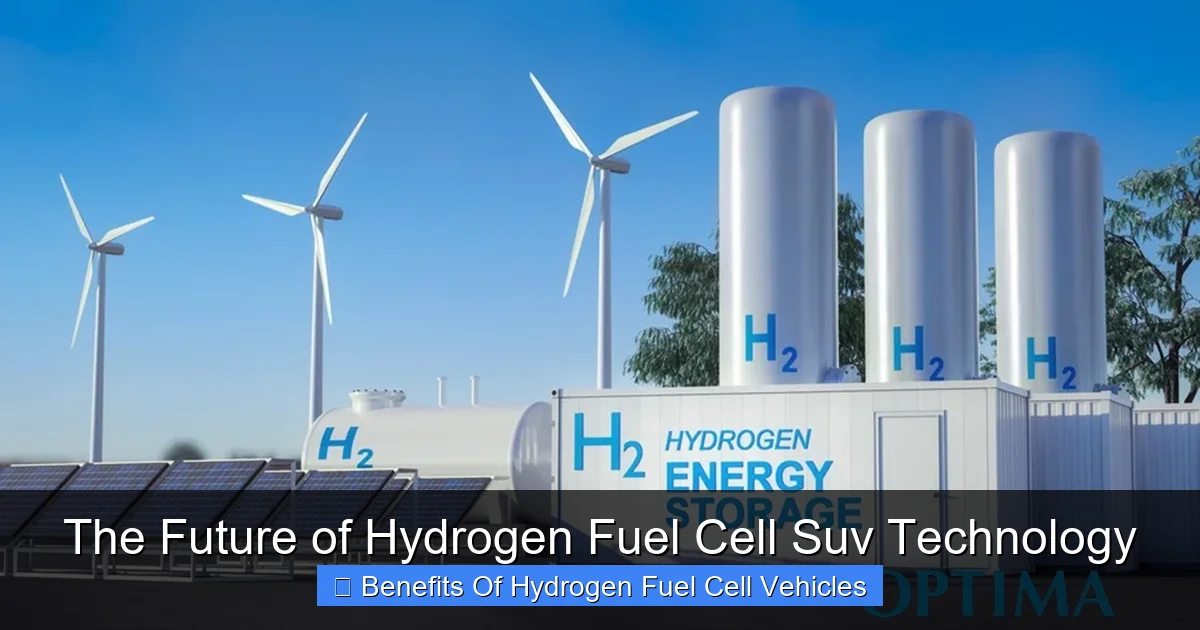
Hydrogen will play a key role in storing excess renewable energy. Solar and wind farms can produce hydrogen during off-peak hours, which can then be used to power vehicles or feed into the grid. This creates a truly sustainable energy loop.
Global Adoption
While hydrogen SUVs are currently concentrated in a few countries, global adoption will grow. Emerging markets in Asia, the Middle East, and Latin America are investing in hydrogen as part of their clean energy strategies.
Conclusion
The future of hydrogen fuel cell SUV technology is not just promising—it’s inevitable. As the world seeks cleaner, more efficient ways to move people and goods, hydrogen offers a powerful solution that combines zero emissions, fast refueling, and long-range capability. While challenges remain, rapid advancements in technology, infrastructure, and policy are paving the way for a hydrogen-powered future.
For families, adventurers, and businesses, hydrogen SUVs represent the best of both worlds: the performance and practicality of traditional vehicles, with the environmental benefits of clean energy. As automakers continue to innovate and governments support the transition, hydrogen fuel cell SUVs will soon become a common sight on roads around the world.
The journey to a sustainable future is underway—and hydrogen is driving it forward.
Frequently Asked Questions
Are hydrogen fuel cell SUVs really zero emission?
Yes, hydrogen fuel cell SUVs produce only water vapor as a byproduct, making them truly zero-emission vehicles. However, the environmental impact depends on how the hydrogen is produced—green hydrogen from renewable sources is the cleanest option.
How long does it take to refuel a hydrogen SUV?
Refueling a hydrogen SUV takes about 5 to 10 minutes, similar to filling up a gasoline vehicle. This is much faster than charging a battery-electric SUV, which can take 30 minutes to several hours.
How far can a hydrogen SUV travel on one tank?
Most hydrogen SUVs offer a range of 300 to 400 miles per tank. For example, the Toyota Mirai can travel over 400 miles, making it ideal for long-distance travel.
Are hydrogen SUVs safe?
Yes, hydrogen SUVs are designed with multiple safety features, including high-strength tanks and leak detection systems. Hydrogen disperses quickly in the air, reducing fire risk compared to gasoline.
Where can I refuel a hydrogen SUV?
Hydrogen refueling stations are currently limited but growing, especially in California, Japan, South Korea, and parts of Europe. Expansion is accelerating due to government and industry investment.
Will hydrogen SUVs be cheaper in the future?
Yes, as production scales up and technology improves, the cost of hydrogen SUVs is expected to decrease. Government incentives and leasing options are also making them more accessible today.