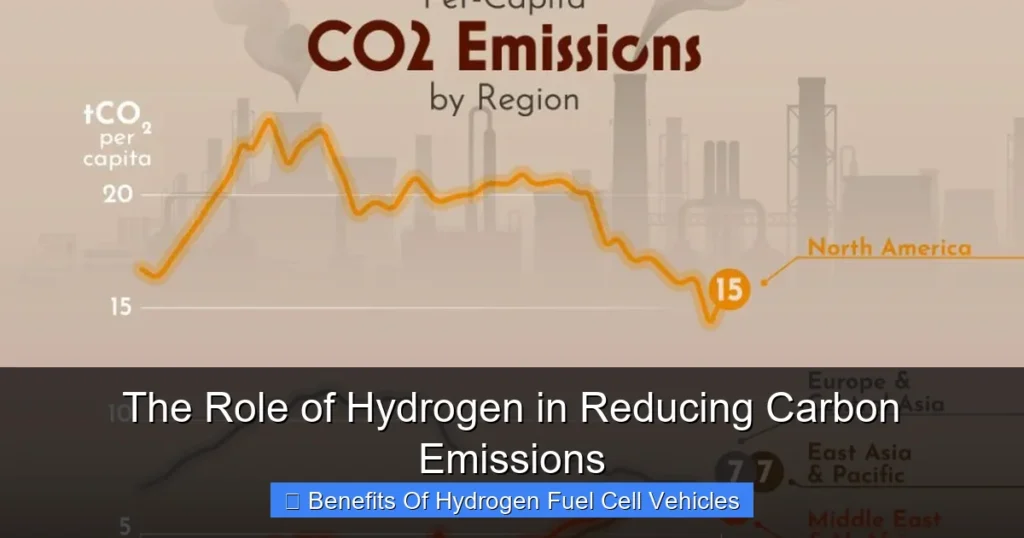
Hydrogen is a game-changer in the fight against climate change, offering zero-emission alternatives for transportation, industry, and energy storage. By replacing fossil fuels with green hydrogen—produced using renewable energy—we can drastically cut carbon emissions while meeting growing energy demands.
This is a comprehensive guide about The role of hydrogen in reducing carbon emissions.
Key Takeaways
- Zero Emissions: Hydrogen fuel cells produce only water vapor as a byproduct, eliminating harmful CO₂ emissions from combustion engines.
- Versatile Applications: Beyond cars, hydrogen powers ships, planes, industrial processes (e.g., steelmaking), and grid-scale energy storage.
- Green Hydrogen Growth: Electrolysis powered by renewables makes “green” hydrogen scalable and sustainable, unlike “gray” hydrogen from natural gas.
- Challenges Remain: High production costs, infrastructure gaps, and energy losses during transport need solutions to accelerate adoption.
- Global Leadership: Countries like Japan, Germany, and the U.S. are investing heavily in hydrogen hubs and policy incentives to drive demand.
- Synergy with EVs: Hydrogen complements electric vehicles (EVs) by enabling heavy-duty transport where batteries fall short.
—
[FEATURED_IMAGE_PLACEHOLDER]
# The Role of Hydrogen in Reducing Carbon Emissions
## Introduction
Imagine a world where your car never emits pollution, factories use clean energy, and even airplanes run on fuel that leaves behind only water. That’s the promise of hydrogen—a light, abundant element poised to redefine our energy future. As global carbon emissions hit record highs, hydrogen emerges as one of the most promising tools to decarbonize hard-to-electrify sectors like shipping, aviation, and heavy industry. But how exactly does it work? And why should you care?
In this article, we’ll break down hydrogen’s role in reducing carbon emissions, explore its diverse applications, and address challenges holding back its full potential. Think of it as a roadmap to understanding how hydrogen could help us meet net-zero goals faster than ever before.
## How Hydrogen Works: From Fuel to Power
### The Science Behind Hydrogen Fuel Cells
At its core, hydrogen power relies on fuel cells, devices that combine hydrogen and oxygen to generate electricity without combustion. Unlike gasoline engines, which burn fuel and emit CO₂, fuel cells:
– Split hydrogen into protons and electrons at an anode.
– Electrons flow through an external circuit (creating usable electricity).
– Protons pass through a membrane, reacting with oxygen at the cathode to form water.
No flames, no smoke—just clean energy.
### Types of Hydrogen Production
Not all hydrogen is created equal. Three main methods dominate production:
1. Gray Hydrogen: Made via steam methane reforming (SMR) using natural gas, emitting 9–12 kg CO₂ per kg H₂.
2. Blue Hydrogen: SMR with carbon capture and storage (CCS), cutting emissions but still reliant on fossil fuels.
3. Green Hydrogen: Produced via electrolysis powered by renewables (wind/solar), with near-zero emissions if the electricity is clean.
Green hydrogen is the holy grail—but scaling it requires massive investment in renewable grids.
## Hydrogen in Transportation: A Cleaner Future for Vehicles
### Why Hydrogen Fuel Cell Electric Vehicles (FCEVs) Matter
Battery-electric vehicles (BEVs) lead the charge toward electrification, but they struggle with range limitations and charging times for heavy trucks, buses, and long-haul logistics. Here’s where FCEVs excel:
– Long Range: FCEVs can travel 400+ miles on a single tank (vs. ~300 miles for BEVs).
– Fast Refueling: Takes minutes to fill up—comparable to gasoline.
– Weight Advantage: Hydrogen’s low weight allows lighter vehicle designs.
Practical Example: Toyota’s Mirai sedan has sold over 25,000 units globally, while Hyundai targets 70,000 FCEVs by 2030. In Europe, cities like London and Munich are testing hydrogen buses to replace diesel fleets.
### Beyond Cars: Hydrogen for Trains and Ships
– Trains: Switzerland’s Stadler FLIRX trains run on hydrogen, cutting emissions by 80% vs. diesel.
– Ships: Maersk’s “Ampa Marine” project aims to retrofit cargo ships with hydrogen fuel cells, targeting 2026 deployment.
Hydrogen fills critical gaps where batteries aren’t practical yet.
## Industrial Decarbonization: Hydrogen’s Hidden Superpower
Steel, cement, and chemicals account for 20% of global CO₂ emissions. Here’s how hydrogen helps:
### Green Steel Revolution
Traditional steelmaking uses coal (blast furnaces), emitting 1.8 tons CO₂ per ton of steel. Hydrogen-based direct reduction (H-DRI) replaces coke with hydrogen, turning iron ore into sponge steel without CO₂:
Example: Sweden’s HYBRIT initiative plans to launch commercial hydrogen steel plants by 2026.
### Ammonia & Fertilizer Production
Nitrogen fertilizers rely on Haber-Bosch process (natural gas-powered). Green hydrogen enables ammonia production with zero emissions, vital for food security.
## Energy Storage and Grid Balance
Renewables like wind and solar are intermittent. Hydrogen acts as a giant battery:
1. Excess renewable electricity powers electrolyzers to split water into hydrogen and oxygen.
2. Stored hydrogen is later converted back to electricity when needed.
This approach stabilizes grids, reduces reliance on fossil peaker plants, and unlocks remote off-grid power (e.g., islands or mining sites).
## Challenges and Solutions
### The Hurdles Ahead
– Cost: Green hydrogen currently costs $4–$6/kg (vs. gray at $1–$2). Scaling electrolyzers and renewables will lower prices.
– Infrastructure: Few hydrogen refueling stations exist (<1,000 globally). Governments must invest in pipelines and distribution networks.
- Energy Losses: Electrolysis is only 60–70% efficient; advanced catalysts and systems are improving this.
### Policy and Investment Drivers
Countries are betting big:
– Germany: Allocates €9 billion for hydrogen projects by 2030.
– U.S.: Inflation Reduction Act offers tax credits for green hydrogen ($3/kg by 2030).
– Japan: Targets 300,000 FCEVs on roads by 2030.
These policies signal a tipping point for hydrogen’s mainstream adoption.
## The Road Ahead: What’s Next for Hydrogen?
By 2050, analysts estimate hydrogen could supply 15–20% of global energy needs, avoiding 1.5 gigatons of CO₂ annually. Key milestones include:
– 2025–2030: Massive electrolyzer manufacturing ramps up (e.g., ITM Power, Nel).
– 2030s: Commercial green steel and hydrogen aircraft trials begin.
– 2040s: Hydrogen becomes competitive with fossil fuels in most sectors.
The transition won’t happen overnight, but every step counts.
—
## Conclusion
Hydrogen isn’t just a backup plan—it’s a frontline weapon against climate change. From powering your next car to building carbon-neutral steel mills, its versatility makes it indispensable for a sustainable future. While challenges remain, rising technology, falling costs, and bold policies are accelerating progress.
The question isn’t *if* hydrogen will reduce emissions—it’s *how fast* we act now. Are you ready to ride the wave of hydrogen’s revolution?
—
### Quick Q&A
Question 1?
How much CO₂ does hydrogen fuel avoid compared to gasoline? Hydrogen fuel cells emit zero tailpipe CO₂. Switching from gasoline saves ~4.3 kg CO₂ per gallon equivalent, plus avoids upstream emissions from refining/distribution.
Question 2?
Can hydrogen be made sustainably? Yes, green hydrogen produced via renewable-powered electrolysis has near-zero lifecycle emissions if the electricity is clean.
Question 3?
Why is hydrogen better for heavy transport than batteries? Batteries add weight (reducing payload capacity), while hydrogen’s high energy density suits trucks, ships, and planes needing long ranges.
Question 4?
How safe is hydrogen? It’s flammable but safer than gasoline—lighter than air so leaks dissipate quickly. Modern tanks and sensors minimize risks.
Question 5?
Will hydrogen replace all fossil fuels? Unlikely, but it’s critical for sectors where batteries aren’t viable (e.g., aviation, steel). It’s part of a broader decarbonization toolkit.
—
### FAQs
What is the difference between gray, blue, and green hydrogen?
Gray hydrogen emits CO₂ via fossil fuels, blue adds CCS, and green uses renewables for electrolysis. Green is the only truly low-carbon option.
How many hydrogen stations exist worldwide?
As of 2023, fewer than 1,000 stations operate globally, mostly in Europe, Japan, and California. Expansion is rapid but lags behind EV charging networks.
Does hydrogen have any environmental drawbacks?
Yes. Large-scale electrolysis consumes vast amounts of water, and some regions face scarcity concerns. Recycling water or using brine (saltwater) mitigates this.
Can hydrogen power homes?
Yes. Hydrogen can fuel microgrids, combined heat/power systems, or fuel cell generators for residential use, especially in off-grid areas.
When will FCEVs become affordable?
Costs are dropping—FCEV prices fell 40% since 2020. With economies of scale, parity with BEVs ($30,000+) is possible by 2030.
How does hydrogen compare to nuclear or geothermal energy?
Nuclear/geothermal provide steady baseload power, while hydrogen acts as an energy carrier (like electricity). They complement each other in a diversified clean energy mix.
Quick Answers to Common Questions
What is The role of hydrogen in reducing carbon emissions?
The role of hydrogen in reducing carbon emissions refers to essential knowledge and techniques.
Frequently Asked Questions
What is The role of hydrogen in reducing carbon emissions?
The role of hydrogen in reducing carbon emissions is an important topic with many practical applications.