Hydrogen is emerging as a key player in the global push to decarbonize transport, offering a clean alternative to fossil fuels. From heavy-duty trucks to maritime shipping, hydrogen-powered vehicles produce only water as a byproduct, making them ideal for sectors hard to electrify with batteries alone.
Key Takeaways
- Hydrogen enables zero-emission transport: When produced using renewable energy, hydrogen fuel cells emit only water vapor, drastically cutting greenhouse gas emissions.
- Ideal for heavy-duty and long-range applications: Unlike batteries, hydrogen offers high energy density and quick refueling, making it suitable for trucks, buses, trains, and ships.
- Complements battery-electric vehicles: Hydrogen doesn’t replace EVs but fills gaps where batteries fall short, especially in weight-sensitive or long-haul transport.
- Infrastructure development is accelerating: Governments and private companies are investing in hydrogen refueling networks, production facilities, and storage solutions.
- Green hydrogen is the sustainable goal: While current hydrogen production relies partly on fossil fuels, the shift to renewable-powered electrolysis is gaining momentum.
- Policy and innovation drive adoption: Supportive regulations, subsidies, and technological advances are lowering costs and increasing efficiency across the hydrogen value chain.
- Global momentum is building: Countries like Germany, Japan, and Australia are leading hydrogen transport initiatives, setting examples for worldwide scalability.
📑 Table of Contents
- Introduction: The Urgent Need for Clean Transport
- Why Hydrogen? Understanding the Basics
- Hydrogen in Road Transport: Trucks, Buses, and Cars
- Beyond Roads: Hydrogen in Aviation, Shipping, and Rail
- Building the Hydrogen Infrastructure
- The Role of Policy and Innovation
- Conclusion: A Hydrogen-Powered Future for Transport
Introduction: The Urgent Need for Clean Transport
Transportation accounts for nearly a quarter of global CO₂ emissions, making it one of the most challenging sectors to decarbonize. While electric vehicles (EVs) have made significant strides in reducing emissions for passenger cars, they aren’t a one-size-fits-all solution. Heavy-duty vehicles, long-haul trucks, aviation, and maritime shipping require energy sources that are both powerful and lightweight—something current battery technology struggles to deliver efficiently.
This is where hydrogen steps in. As a clean energy carrier, hydrogen has the potential to revolutionize transport by offering a zero-emission alternative that doesn’t compromise on performance. When used in fuel cells, hydrogen combines with oxygen to produce electricity, emitting only water vapor. Unlike fossil fuels, it leaves no carbon footprint—provided it’s produced sustainably. With growing climate urgency and stricter emissions regulations, hydrogen is no longer a futuristic concept. It’s becoming a practical, scalable solution for decarbonizing the transport sector.
Why Hydrogen? Understanding the Basics
Hydrogen is the lightest and most abundant element in the universe, but it doesn’t exist freely in nature. It must be extracted from compounds like water (H₂O) or methane (CH₄). The environmental impact of hydrogen depends heavily on how it’s produced. This distinction is crucial in understanding its role in decarbonization.
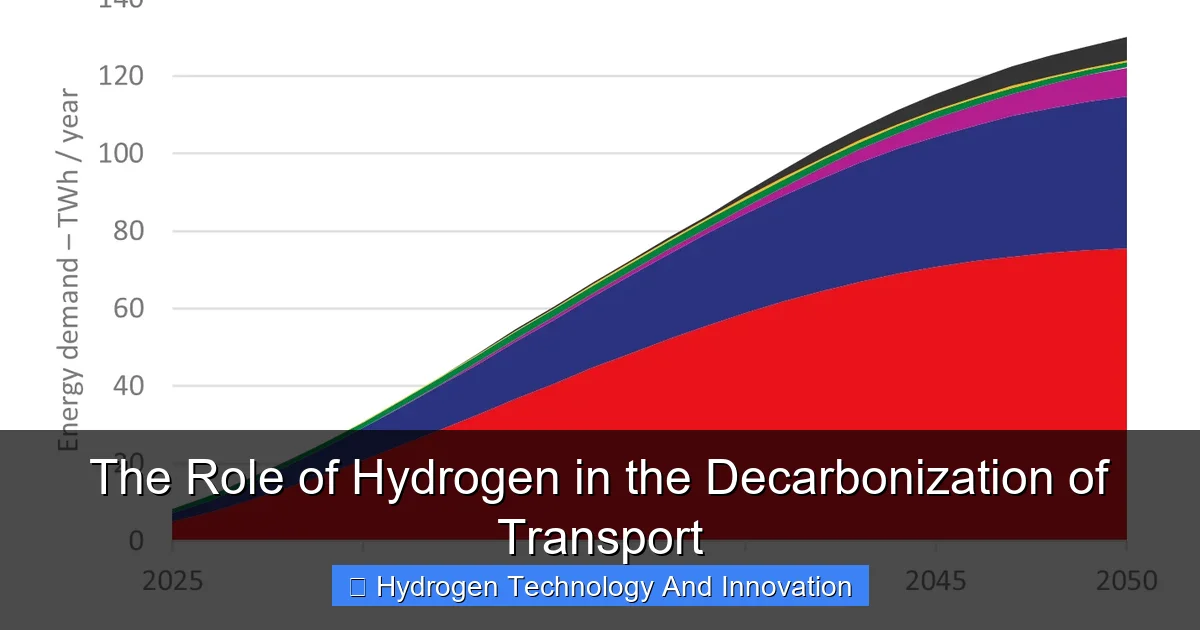
Visual guide about The Role of Hydrogen in the Decarbonization of Transport
Image source: faraday.ac.uk
Types of Hydrogen: Grey, Blue, and Green
Not all hydrogen is created equal. The color-coded system helps differentiate production methods and their carbon footprints:
- Grey hydrogen is produced from natural gas through steam methane reforming (SMR), a process that releases CO₂. It’s the most common and cheapest form today but isn’t sustainable.
- Blue hydrogen also uses natural gas, but the CO₂ emissions are captured and stored (carbon capture and storage, or CCS). This reduces emissions by up to 90%, making it a transitional option.
- Green hydrogen is produced by splitting water into hydrogen and oxygen using electrolysis, powered entirely by renewable energy like wind or solar. This method emits zero greenhouse gases and is the gold standard for clean hydrogen.
For transport decarbonization, green hydrogen is the ultimate goal. While blue hydrogen can serve as a bridge, long-term sustainability depends on scaling up renewable-powered production.
How Hydrogen Powers Vehicles
Hydrogen doesn’t burn like gasoline. Instead, it’s used in fuel cells to generate electricity. A fuel cell combines hydrogen from the tank with oxygen from the air, producing electricity, heat, and water. This electricity powers an electric motor, just like in a battery EV, but the energy source is hydrogen, not a battery.
This process is highly efficient—fuel cells convert 60% of the energy in hydrogen to electricity, compared to about 20–35% for internal combustion engines. Plus, refueling takes just 3–5 minutes, similar to gasoline, and offers a range of 300–500 miles, far exceeding most battery EVs. These advantages make hydrogen especially valuable for applications where downtime and weight are critical.
Hydrogen in Road Transport: Trucks, Buses, and Cars
While battery-electric vehicles dominate the passenger car market, hydrogen is finding its niche in heavier, longer-range transport. Its high energy density and fast refueling make it ideal for vehicles that can’t afford long charging stops or heavy battery packs.
Heavy-Duty Trucks: The Long-Haul Challenge
Long-haul trucking is one of the toughest sectors to decarbonize. A typical semi-truck can carry over 80,000 pounds, and batteries heavy enough to power such loads would reduce cargo capacity and require hours to recharge. Hydrogen fuel cell trucks, on the other hand, can match the range and refueling speed of diesel trucks.
Companies like Nikola, Hyundai, and Volvo are already testing hydrogen-powered trucks. Hyundai’s XCIENT Fuel Cell trucks are operating in Switzerland and California, with plans to expand to other regions. These trucks can travel up to 500 miles on a single fill and refuel in under 20 minutes. For logistics companies looking to cut emissions without sacrificing efficiency, hydrogen offers a compelling solution.
Public Transit: Buses Leading the Way
City buses are another strong use case for hydrogen. They follow fixed routes, return to centralized depots for refueling, and operate in urban areas where air quality is a major concern. Hydrogen buses emit no pollutants, making them ideal for improving urban air quality.
Cities like London, Aberdeen, and Cologne have deployed hydrogen buses as part of their clean transit initiatives. In the U.S., the Federal Transit Administration has funded hydrogen bus projects in California and Ohio. These buses offer longer ranges than battery-electric models and can operate in cold weather—where battery performance drops—without issues.
Passenger Cars: A Niche but Growing Market
Hydrogen-powered passenger cars are less common than EVs, but they’re not absent. Toyota’s Mirai and Hyundai’s NEXO are commercially available and offer ranges over 400 miles. However, limited refueling infrastructure and high costs have slowed adoption.
Still, hydrogen cars could play a role in regions with strong hydrogen infrastructure or for drivers who need long range and quick refueling. In Japan and South Korea, government support and growing refueling networks are helping hydrogen cars gain traction. As technology improves and costs fall, they may become more competitive.
Beyond Roads: Hydrogen in Aviation, Shipping, and Rail
While road transport gets much of the attention, hydrogen’s potential extends far beyond highways. Aviation, maritime shipping, and rail are all exploring hydrogen as a way to cut emissions in sectors where electrification is impractical.
Aviation: The Sky’s the Limit
Air travel is responsible for about 2–3% of global CO₂ emissions, and decarbonizing it is extremely challenging. Batteries are too heavy for long flights, and sustainable aviation fuels (SAFs) are still limited in supply. Hydrogen offers a promising alternative.
Hydrogen can be used in two ways in aviation: burned directly in modified jet engines or used in fuel cells to power electric propulsion. Both approaches are being tested. Airbus has announced plans to develop a hydrogen-powered commercial aircraft by 2035, with its “ZEROe” concept planes. These could carry 100–200 passengers on regional routes, emitting only water vapor.
Smaller hydrogen aircraft are already flying. In 2023, ZeroAvia completed a test flight of a 19-seat plane powered by a hydrogen fuel cell. While long-haul flights may still rely on SAFs for years, hydrogen could dominate regional and short-haul aviation, especially for flights under 1,500 miles.
Maritime Shipping: Powering the Oceans
Shipping carries over 80% of global trade and emits nearly 3% of the world’s CO₂. Most ships run on heavy fuel oil, a highly polluting source. Switching to hydrogen could dramatically reduce emissions.
Hydrogen can power ships in several ways: as a fuel for internal combustion engines, in fuel cells for electric propulsion, or as a feedstock for synthetic fuels like ammonia or methanol. Ammonia, in particular, is gaining interest because it’s easier to store and transport than pure hydrogen.
Companies like Maersk and CMA CGM are investing in hydrogen-based shipping. Norway’s Norled has launched the world’s first hydrogen-powered ferry, the MF Hydra, which operates on liquid hydrogen. These early adopters are paving the way for larger vessels and international routes.
Rail: Quiet, Clean, and Efficient
Trains are already among the most energy-efficient modes of transport, but many still run on diesel, especially in regions without electrified tracks. Hydrogen trains offer a clean alternative.
Alstom’s Coradia iLint is the world’s first hydrogen-powered passenger train, operating in Germany since 2018. It emits only steam and condensed water, and its range of up to 620 miles makes it suitable for regional and commuter lines. Similar projects are underway in the UK, France, and Italy.
Hydrogen trains are particularly useful in areas where electrification is too costly or impractical. They can run on existing rail lines without infrastructure upgrades, making them a cost-effective decarbonization tool.
Building the Hydrogen Infrastructure
For hydrogen to succeed in transport, it needs a robust infrastructure—production facilities, storage systems, pipelines, and refueling stations. This is one of the biggest challenges, but progress is accelerating.
Production and Distribution
Green hydrogen production requires massive amounts of renewable energy and electrolyzers. Countries with abundant solar or wind resources—like Australia, Chile, and Saudi Arabia—are positioning themselves as future hydrogen exporters. Australia’s Asian Renewable Energy Hub, for example, aims to produce green hydrogen for export to Asia.
Distribution can happen via pipelines (like natural gas), tanker trucks, or ships (for liquid hydrogen or ammonia). Pipelines are the most efficient for large volumes, but building new networks is expensive. Repurposing existing gas pipelines is being explored in Europe and North America.
Refueling Stations: The Final Mile
Hydrogen refueling stations are the backbone of hydrogen transport. As of 2023, there are over 1,000 stations worldwide, with the majority in Japan, Germany, and California. These stations compress hydrogen to 700 bar for vehicle storage and dispense it in minutes.
Companies like Air Liquide, Shell, and ITM Power are expanding networks. In California, the state aims to have 200 stations by 2025. Germany’s H2 Mobility initiative plans 100 stations by 2025. These efforts are critical for building consumer and fleet confidence.
Challenges and Costs
Despite progress, hydrogen infrastructure remains costly. Electrolyzers, storage tanks, and compressors are expensive, and scaling up requires significant investment. However, costs are falling. The International Energy Agency (IEA) estimates that green hydrogen could become cost-competitive with grey hydrogen by 2030, especially in regions with cheap renewables.
Government support is key. The U.S. Inflation Reduction Act includes tax credits for clean hydrogen production. The European Union’s REPowerEU plan allocates €3 billion to hydrogen infrastructure. These policies are accelerating deployment and driving down costs.
The Role of Policy and Innovation
Hydrogen’s success depends not just on technology, but on supportive policies, international cooperation, and continuous innovation.
Government Leadership and Incentives
Countries are setting ambitious hydrogen targets. Japan’s Basic Hydrogen Strategy aims to create a hydrogen-based society. Germany’s National Hydrogen Strategy targets 10 GW of electrolysis capacity by 2030. The U.S. Department of Energy’s Hydrogen Shot initiative aims to reduce green hydrogen costs to $1 per kilogram by 2030.
Subsidies, grants, and public-private partnerships are driving investment. South Korea offers tax breaks for hydrogen vehicle purchases. France funds hydrogen refueling stations through its France 2030 plan. These policies reduce financial barriers and encourage early adoption.
Technological Breakthroughs
Innovation is making hydrogen more efficient and affordable. Advances in electrolyzer technology—such as proton exchange membrane (PEM) and solid oxide electrolyzers—are increasing efficiency and durability. Researchers are also exploring new catalysts that reduce the need for rare materials like platinum.
On the vehicle side, fuel cell durability and cold-weather performance are improving. Startups like Hyzon Motors are developing lightweight, high-power fuel cells for trucks. Meanwhile, projects like the European Clean Hydrogen Alliance are fostering collaboration between industry, academia, and governments.
Global Collaboration
Hydrogen is a global opportunity. International partnerships are forming to share knowledge, set standards, and develop supply chains. The Hydrogen Council, a global CEO-led initiative, brings together over 150 companies to accelerate hydrogen deployment.
Cross-border projects are also emerging. The Australia-Japan Hydrogen Supply Chain project is testing the transport of liquid hydrogen from Australia to Japan. Such initiatives demonstrate that hydrogen can be a traded commodity, much like oil or gas—but with a clean footprint.
Conclusion: A Hydrogen-Powered Future for Transport
Hydrogen is not a silver bullet, but it is a vital piece of the decarbonization puzzle. It complements battery-electric vehicles by addressing their limitations in weight, range, and refueling time. From trucks and buses to ships and planes, hydrogen offers a practical path to zero-emission transport in sectors where other solutions fall short.
The journey isn’t without challenges. High costs, infrastructure gaps, and the need for green production remain hurdles. But with strong policy support, technological innovation, and global cooperation, these barriers are being overcome. As renewable energy becomes cheaper and hydrogen technologies mature, the vision of a clean, hydrogen-powered transport system is becoming reality.
The road ahead is long, but the momentum is undeniable. Hydrogen isn’t just a fuel of the future—it’s a fuel of now. And with every new hydrogen bus, truck, and train on the road, we move one step closer to a sustainable, low-carbon world.
Frequently Asked Questions
What is green hydrogen and why is it important for transport?
Green hydrogen is produced by splitting water using renewable electricity, emitting no CO₂. It’s essential for transport decarbonization because it enables truly clean fuel for vehicles, especially in sectors where batteries aren’t practical.
Can hydrogen cars compete with electric vehicles?
Hydrogen cars offer longer range and faster refueling than most EVs, making them suitable for specific uses. However, they face challenges in cost and infrastructure, so they’re more likely to complement EVs than replace them.
How long does it take to refuel a hydrogen vehicle?
Refueling a hydrogen vehicle takes about 3–5 minutes, similar to gasoline. This makes it ideal for commercial fleets and long-haul transport where downtime must be minimized.
Is hydrogen safe for use in vehicles?
Yes, hydrogen is safe when handled properly. It’s lighter than air and disperses quickly if leaked. Modern hydrogen vehicles include multiple safety systems, and real-world use has shown no major safety issues.
What countries are leading in hydrogen transport?
Japan, Germany, South Korea, and the U.S. (especially California) are leading in hydrogen transport. They have strong government support, growing refueling networks, and active deployment of hydrogen buses and trucks.
Will hydrogen replace fossil fuels in all transport sectors?
Hydrogen is unlikely to replace fossil fuels entirely but will play a major role in heavy-duty, long-range, and hard-to-electrify sectors. It will coexist with batteries, biofuels, and other clean technologies in a diversified low-carbon transport system.