Hydrogen fuel cell SUVs are emerging as a powerful alternative to traditional gas and electric vehicles, offering zero emissions, fast refueling, and long-range capabilities. With major automakers investing in this technology, models like the Toyota Mirai and Hyundai Nexo are setting new standards for sustainable driving.
Imagine pulling up to a fueling station, topping off your SUV in under ten minutes, and driving away with nothing but water dripping from the tailpipe. No charging anxiety. No emissions. Just clean, quiet, powerful performance. This isn’t science fiction—it’s the reality of hydrogen fuel cell SUVs. These vehicles are quietly revolutionizing the way we think about sustainable transportation, combining the practicality of an SUV with the environmental benefits of zero-emission technology.
While electric vehicles (EVs) have dominated the green car conversation, hydrogen fuel cell vehicles (FCEVs) offer a compelling alternative—especially for drivers who need range, space, and quick refueling. Instead of storing electricity in heavy batteries, hydrogen SUVs generate power on board by combining hydrogen from the tank with oxygen from the air. The result? Electricity to power the motor, with water vapor as the only byproduct. It’s a clean, efficient process that’s gaining traction among eco-conscious drivers and forward-thinking automakers alike.
The market for hydrogen fuel cell SUVs is still emerging, but it’s growing fast. Major brands like Toyota, Hyundai, and Honda have already launched production models, and others are investing heavily in the technology. These vehicles aren’t just for early adopters—they’re designed for real-world use, offering the cargo space, seating, and performance that families and adventurers expect from an SUV. And as hydrogen infrastructure expands and production costs fall, FCEVs could become a mainstream choice in the coming decade.
Key Takeaways
- Zero Tailpipe Emissions: Hydrogen fuel cell SUVs emit only water vapor, making them one of the cleanest vehicles on the road.
- Fast Refueling: Unlike battery EVs, hydrogen SUVs can be refueled in under 10 minutes, similar to gasoline vehicles.
- Long Driving Range: Most hydrogen SUVs offer 300–400 miles per fill, ideal for long-distance travel.
- Growing Infrastructure: While still limited, hydrogen refueling stations are expanding in key regions like California and parts of Europe.
- High Upfront Cost: These vehicles are currently more expensive than EVs or gas-powered SUVs, but incentives and falling tech costs may help.
- Quiet and Smooth Ride: Hydrogen SUVs deliver instant torque and a whisper-quiet driving experience, enhancing comfort.
- Future-Proof Technology: As green hydrogen production grows, these vehicles could play a major role in decarbonizing transportation.
📑 Table of Contents
How Hydrogen Fuel Cell SUVs Work
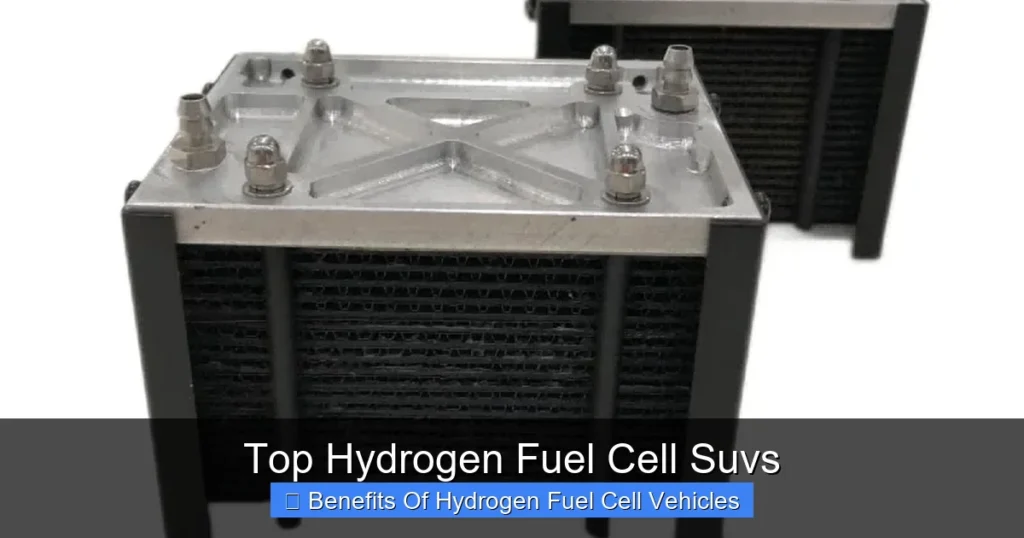
Hydrogen fuel cell SUVs might sound complex, but the core technology is surprisingly elegant. At the heart of every FCEV is the fuel cell stack—a series of thin, layered cells that convert hydrogen and oxygen into electricity through an electrochemical reaction. This process produces no harmful emissions, only water and heat.
The Fuel Cell Stack: Power from Chemistry
The fuel cell stack is where the magic happens. Inside each cell, hydrogen gas (H₂) from the onboard tank is split into protons and electrons. The protons pass through a special membrane, while the electrons are forced to travel through an external circuit, creating an electric current. This electricity powers the SUV’s motor, just like a battery in an EV. Meanwhile, oxygen from the air enters the cell and combines with the protons and electrons to form water (H₂O), which exits as vapor through the exhaust.
This process is silent, efficient, and produces no carbon dioxide or pollutants. Unlike internal combustion engines, there’s no combustion involved—just a clean chemical reaction. The entire system is compact enough to fit under the floor of an SUV, preserving cabin and cargo space.
Hydrogen Storage: Safe and Secure
One of the biggest concerns about hydrogen vehicles is safety. After all, hydrogen is highly flammable. But modern FCEVs store hydrogen in high-strength carbon fiber tanks that are rigorously tested to withstand extreme conditions. These tanks are designed to survive crashes, fires, and even bullet impacts without rupturing.
The hydrogen is stored at high pressure—typically around 700 bar (10,000 psi)—which allows a large amount of fuel to fit in a relatively small space. This enables SUVs like the Hyundai Nexo to achieve a range of over 350 miles on a single fill. And because hydrogen is lighter than air, any leaks quickly dissipate upward, reducing the risk of accumulation.
Refueling: Quick and Convenient
One of the biggest advantages of hydrogen SUVs over battery EVs is refueling time. While charging an EV can take anywhere from 30 minutes (with fast charging) to several hours (with home charging), refueling a hydrogen SUV takes just 5 to 10 minutes—about the same as filling up a gas tank.
At a hydrogen station, a nozzle connects to the vehicle’s fuel port, and compressed hydrogen flows into the tank. The process is automated and user-friendly, similar to using a gas pump. This makes hydrogen SUVs ideal for long road trips or drivers who don’t have time to wait for a charge.
Top Hydrogen Fuel Cell SUVs on the Market
Visual guide about Top Hydrogen Fuel Cell Suvs
Image source: s3.us-east-1.amazonaws.com
While the hydrogen SUV market is still niche, a few standout models are leading the charge. These vehicles combine cutting-edge technology with real-world usability, offering a glimpse into the future of clean transportation.
Toyota Mirai: The Pioneer
The Toyota Mirai is one of the most well-known hydrogen fuel cell vehicles, and for good reason. First launched in 2015, the Mirai has evolved into a sleek, modern sedan—but its SUV sibling, the upcoming Toyota Crown, is expected to bring FCEV technology to the SUV segment.
The current Mirai offers a range of up to 402 miles, making it one of the longest-range FCEVs available. It features a refined interior, smooth ride, and Toyota’s reputation for reliability. While it’s technically a sedan, its spacious cabin and advanced tech make it a practical choice for families. Toyota has also committed to expanding hydrogen infrastructure, partnering with fueling companies to build more stations across the U.S. and Japan.
Hyundai Nexo: The SUV Leader
The Hyundai Nexo is currently the only true hydrogen fuel cell SUV available in the U.S. market. It’s a midsize crossover that blends eco-friendly performance with everyday practicality. With a range of up to 380 miles, the Nexo is perfect for long commutes or weekend getaways.
Inside, the Nexo offers a futuristic cabin with dual 12.3-inch displays, premium materials, and advanced driver-assistance features. It’s also equipped with Hyundai’s SmartSense safety suite, including adaptive cruise control, lane-keeping assist, and automatic emergency braking. The Nexo’s quiet operation and smooth acceleration make it a pleasure to drive, while its zero-emission status appeals to environmentally conscious buyers.
Honda CR-V Fuel Cell (Upcoming)
Honda has announced plans to launch a hydrogen-powered version of its popular CR-V SUV in the near future. While details are still emerging, the vehicle is expected to combine the CR-V’s proven reliability with Honda’s advanced fuel cell technology.
Honda has been a pioneer in hydrogen vehicles since the early 2000s, and its Clarity Fuel Cell sedan was one of the first mass-produced FCEVs. The upcoming CR-V Fuel Cell will likely offer a range of over 300 miles and feature Honda’s latest safety and infotainment systems. It’s also expected to be available in select markets, including California and parts of Europe.
BMW iX5 Hydrogen: The Luxury Option
BMW is entering the hydrogen SUV space with the iX5 Hydrogen, a luxury midsize SUV based on the popular X5 platform. The iX5 Hydrogen features a dual powertrain: a hydrogen fuel cell and a small battery pack for extra performance and range.
With a combined output of over 400 horsepower, the iX5 Hydrogen delivers the kind of power and refinement BMW is known for. It also offers all-wheel drive, adaptive suspension, and a high-end interior with sustainable materials. While it’s not yet available for purchase, BMW is testing the iX5 Hydrogen in real-world conditions and plans to offer it in limited numbers by 2025.
Mercedes-Benz GLC F-CELL: A Plug-In Hybrid FCEV
Mercedes-Benz has taken a unique approach with the GLC F-CELL, a plug-in hybrid hydrogen fuel cell SUV. It combines a hydrogen fuel cell with a rechargeable battery, allowing drivers to plug in for short trips or use hydrogen for longer journeys.
This dual-system design offers flexibility and extended range. The GLC F-CELL can run on battery power alone for up to 31 miles, then switch to hydrogen for up to 310 miles. It’s currently available in select European markets and showcases Mercedes’ commitment to diverse clean energy solutions.
Benefits of Driving a Hydrogen Fuel Cell SUV
Hydrogen fuel cell SUVs offer a unique set of advantages that make them an attractive option for many drivers. From environmental benefits to performance perks, here’s why FCEVs are worth considering.
Zero Emissions, Maximum Impact
The most obvious benefit of hydrogen SUVs is their environmental impact—or lack thereof. Unlike gasoline or diesel vehicles, FCEVs produce no tailpipe emissions. The only thing coming out of the exhaust is water vapor. This makes them ideal for reducing air pollution in cities and helping combat climate change.
Even when considering the full lifecycle—including hydrogen production—FCEVs are significantly cleaner than traditional vehicles. When hydrogen is produced using renewable energy (known as “green hydrogen”), the carbon footprint is nearly zero. As more green hydrogen becomes available, the environmental benefits will only grow.
Fast Refueling for Busy Lifestyles
One of the biggest pain points for EV owners is charging time. Even with fast chargers, it can take 30 minutes or more to get an 80% charge. For drivers on the go, that’s a major inconvenience.
Hydrogen SUVs eliminate this issue. Refueling takes just 5 to 10 minutes, allowing you to get back on the road quickly. This makes FCEVs ideal for road trips, commercial use, or anyone who doesn’t want to plan their day around charging stops.
Long Range Without Compromise
Range anxiety is a real concern for EV drivers, especially in cold weather or on long trips. Hydrogen SUVs offer a solution. Most models provide 300 to 400 miles of range—comparable to many gas-powered SUVs.
This range is consistent across different driving conditions. Unlike batteries, which lose efficiency in cold weather, hydrogen fuel cells perform reliably in all climates. That means you can count on your SUV to get you where you need to go, no matter the season.
Quiet, Smooth, and Powerful Performance
Hydrogen fuel cell SUVs deliver instant torque and a whisper-quiet ride. Without the noise and vibration of an engine, the cabin is peaceful and relaxing. The electric motor provides smooth acceleration, making highway merging and hill climbing effortless.
Many FCEVs also feature regenerative braking, which captures energy during deceleration and feeds it back into the system. This improves efficiency and extends range, while also reducing brake wear.
Reduced Dependence on Rare Materials
Battery EVs rely on lithium, cobalt, and nickel—materials that are expensive, environmentally damaging to mine, and often sourced from regions with poor labor practices. Hydrogen fuel cells, by contrast, use platinum as a catalyst, but in much smaller amounts.
As fuel cell technology advances, manufacturers are reducing or replacing platinum with more abundant materials. This could make FCEVs a more sustainable long-term solution, especially as recycling programs improve.
Challenges and Limitations
Despite their many benefits, hydrogen fuel cell SUVs face several challenges that have slowed widespread adoption. Understanding these limitations is key to making an informed decision.
Limited Refueling Infrastructure
The biggest hurdle for hydrogen SUVs is the lack of fueling stations. As of 2024, there are fewer than 100 hydrogen stations in the U.S., most of which are in California. This makes long-distance travel difficult outside of specific regions.
While countries like Japan, South Korea, and Germany are investing heavily in hydrogen infrastructure, the U.S. lags behind. Until more stations are built, FCEVs remain a niche option for most drivers.
High Upfront Cost
Hydrogen SUVs are currently more expensive than comparable EVs or gas-powered SUVs. The Hyundai Nexo, for example, starts around $60,000—well above the average SUV price.
This high cost is due to the complexity of fuel cell technology and limited production scale. However, as manufacturing ramps up and technology improves, prices are expected to fall. Government incentives and tax credits can also help offset the initial investment.
Hydrogen Production Challenges
Not all hydrogen is created equal. Most hydrogen today is produced from natural gas through a process called steam methane reforming, which emits carbon dioxide. This “gray hydrogen” undermines the environmental benefits of FCEVs.
Green hydrogen, made using renewable energy, is cleaner but still expensive and limited in supply. Widespread adoption of FCEVs will depend on scaling up green hydrogen production and reducing costs.
Energy Efficiency Concerns
Hydrogen fuel cell vehicles are less energy-efficient than battery EVs. It takes more energy to produce, compress, transport, and convert hydrogen into electricity than it does to charge a battery directly.
However, this efficiency gap may narrow as technology improves. And for certain applications—like long-haul trucking or aviation—hydrogen’s high energy density makes it a better fit than batteries.
The Future of Hydrogen SUVs
The future of hydrogen fuel cell SUVs looks promising, driven by technological advances, policy support, and growing consumer interest. As the world moves toward decarbonization, FCEVs could play a key role in the transition.
Expanding Infrastructure
Governments and private companies are investing in hydrogen infrastructure. California plans to have 200 hydrogen stations by 2025, and the European Union has launched the Hydrogen Strategy to build a continent-wide network.
Automakers are also partnering with fueling companies to expand access. Toyota, for example, is working with Shell and other partners to build new stations across the U.S.
Falling Costs and Improved Technology
As production scales up, the cost of fuel cells and hydrogen tanks is expected to drop. Advances in materials science could reduce reliance on expensive catalysts like platinum.
New innovations, such as solid-state hydrogen storage and more efficient fuel cells, could also improve performance and safety. These developments will make FCEVs more accessible and appealing to mainstream buyers.
Integration with Renewable Energy
Hydrogen can be produced using excess renewable energy—like solar or wind power—during off-peak hours. This “power-to-gas” approach helps balance the grid and makes green hydrogen more viable.
As renewable energy becomes cheaper and more widespread, the environmental benefits of FCEVs will grow. In the long term, hydrogen could become a key part of a clean energy ecosystem.
Broader Vehicle Applications
While SUVs are a great starting point, hydrogen technology is being explored for trucks, buses, trains, and even ships. These heavy-duty applications benefit from hydrogen’s high energy density and fast refueling.
As the technology matures, we could see hydrogen-powered fleets transforming transportation across multiple sectors.
Is a Hydrogen Fuel Cell SUV Right for You?
Deciding whether to buy a hydrogen fuel cell SUV depends on your driving needs, location, and values. Here are a few questions to help you decide:
– Do you live in or near a region with hydrogen fueling stations (like California or parts of Europe)?
– Do you frequently take long trips and want to avoid charging delays?
– Are you committed to reducing your carbon footprint and willing to pay a premium for clean technology?
– Do you prefer a quiet, smooth ride with instant acceleration?
If you answered yes to most of these, a hydrogen SUV could be a great fit. But if charging infrastructure is limited in your area or you’re on a tight budget, a battery EV might be more practical—for now.
That said, the landscape is changing fast. With automakers investing billions in hydrogen technology and governments setting ambitious climate goals, FCEVs are poised for growth. Whether you’re an early adopter or a cautious observer, it’s worth keeping an eye on this exciting segment.
In the end, the best vehicle for you is the one that fits your lifestyle and values. Hydrogen fuel cell SUVs offer a unique blend of performance, convenience, and sustainability—one that could redefine what it means to drive green.
Frequently Asked Questions
Are hydrogen fuel cell SUVs really zero emission?
Yes, hydrogen fuel cell SUVs produce zero tailpipe emissions. The only byproduct is water vapor, making them one of the cleanest vehicles on the road. However, the environmental impact depends on how the hydrogen is produced—green hydrogen from renewables is the cleanest option.
How long does it take to refuel a hydrogen SUV?
Refueling a hydrogen SUV takes just 5 to 10 minutes, similar to filling up a gas tank. This is much faster than charging an electric vehicle, making FCEVs ideal for long trips or busy schedules.
How far can a hydrogen fuel cell SUV go on one tank?
Most hydrogen SUVs offer a range of 300 to 400 miles per fill. For example, the Hyundai Nexo can travel up to 380 miles, while the Toyota Mirai reaches over 400 miles—comparable to many gasoline-powered SUVs.
Are hydrogen SUVs safe?
Yes, hydrogen SUVs are designed with safety in mind. Hydrogen tanks are made from high-strength carbon fiber and tested to withstand crashes and extreme conditions. Hydrogen also disperses quickly if leaked, reducing fire risk.
Where can I refuel a hydrogen SUV?
Hydrogen refueling stations are currently limited, with most located in California, parts of Europe, Japan, and South Korea. Infrastructure is expanding, but availability varies by region. Check local station maps before purchasing.
Are hydrogen SUVs more expensive than electric SUVs?
Yes, hydrogen SUVs are generally more expensive than battery electric SUVs due to the cost of fuel cell technology and low production volumes. However, prices are expected to fall as technology improves and production scales up.