Hydrogen fuel cell SUVs offer impressive driving ranges—often exceeding 300 miles per fill—making them a strong contender for long-distance travel without the range anxiety of some electric vehicles. With quick refueling times and zero tailpipe emissions, they combine convenience and sustainability in one powerful package.
Key Takeaways
- Hydrogen fuel cell SUVs typically offer a driving range of 300 to 400 miles on a full tank. This rivals many gasoline-powered SUVs and surpasses most battery-electric SUVs in terms of range per fill-up.
- Refueling takes just 3 to 5 minutes, similar to gasoline vehicles. This is a major advantage over electric vehicles, which can require 30 minutes to several hours to recharge.
- Leading models like the Toyota Mirai, Hyundai NEXO, and Honda Clarity Fuel Cell deliver reliable long-range performance. These vehicles are engineered for efficiency and real-world usability.
- Range can vary based on driving conditions, terrain, speed, and climate. Cold weather may reduce efficiency slightly, but not as drastically as with battery EVs.
- Infrastructure limitations currently restrict widespread adoption. While growing, hydrogen refueling stations are still concentrated in select regions like California and parts of Europe.
- Hydrogen SUVs produce only water vapor as emissions. This makes them an environmentally friendly alternative for drivers seeking cleaner transportation.
- Government incentives and automaker support are helping expand hydrogen vehicle availability. Tax credits and infrastructure investments are making these vehicles more accessible.
📑 Table of Contents
- What Is the Driving Range of Hydrogen Fuel Cell SUVs?
- How Hydrogen Fuel Cell Technology Works
- Real-World Driving Range of Popular Hydrogen SUVs
- Factors That Affect Hydrogen SUV Driving Range
- Comparing Hydrogen SUVs to Gas and Electric SUVs
- The Future of Hydrogen Fuel Cell SUVs
- Is a Hydrogen Fuel Cell SUV Right for You?
- Conclusion
What Is the Driving Range of Hydrogen Fuel Cell SUVs?
Imagine pulling up to a fueling station, filling your SUV in under five minutes, and driving 350 miles—all while emitting nothing but clean water vapor. Sounds like science fiction? It’s not. This is the reality of hydrogen fuel cell SUVs, a cutting-edge technology that’s quietly reshaping the future of clean transportation.
Unlike battery-electric vehicles (BEVs) that rely on large lithium-ion batteries, hydrogen fuel cell SUVs generate electricity on board using hydrogen gas and oxygen from the air. This process powers an electric motor, delivering smooth, quiet, and powerful performance. But one of the biggest questions drivers ask is: How far can these vehicles actually go on a single tank?
The answer is impressive. Most modern hydrogen fuel cell SUVs offer a driving range between 300 and 400 miles, with some models even pushing past 400 miles under optimal conditions. That’s comparable to many traditional gasoline SUVs and significantly better than the average range of electric SUVs, which often fall between 200 and 300 miles. And unlike EVs, refueling a hydrogen SUV takes just a few minutes—no waiting around for a charge.
In this article, we’ll dive deep into the driving range of hydrogen fuel cell SUVs, explore the technology behind them, compare them to other vehicle types, and examine real-world performance. Whether you’re considering a switch to cleaner driving or just curious about the future of transportation, this guide will give you the facts you need.
How Hydrogen Fuel Cell Technology Works
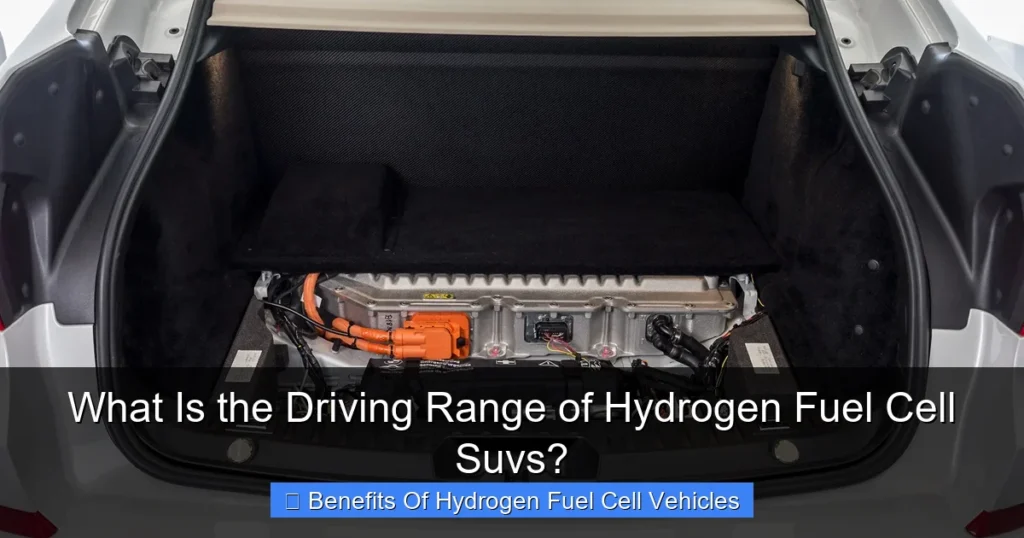
Visual guide about What Is the Driving Range of Hydrogen Fuel Cell Suvs?
Image source: jansatta.com
Before we get into range specifics, it’s important to understand how hydrogen fuel cell SUVs actually work. At first glance, they might seem similar to electric vehicles, but the power generation process is fundamentally different.
The Science Behind the Fuel Cell
A hydrogen fuel cell SUV uses a device called a proton exchange membrane (PEM) fuel cell stack. This stack combines hydrogen gas (stored in high-pressure tanks inside the vehicle) with oxygen from the air. The chemical reaction produces electricity, water, and heat. The electricity powers the electric motor, while the only byproduct released from the tailpipe is pure water vapor.
This process is highly efficient and produces zero harmful emissions. Unlike internal combustion engines, there’s no burning of fossil fuels, no carbon dioxide, and no particulate matter. It’s a clean, quiet, and powerful way to move.
Hydrogen Storage and Safety
One concern people often have is the safety of storing hydrogen on board a vehicle. After all, hydrogen is a flammable gas. But modern hydrogen SUVs are designed with multiple layers of safety. The hydrogen is stored in carbon-fiber-reinforced tanks that can withstand extreme pressure and impact. These tanks are rigorously tested and often located in protected areas of the vehicle, such as under the floor or behind reinforced panels.
In the event of a collision, sensors detect leaks and automatically shut off the hydrogen supply. Additionally, hydrogen is lighter than air, so if it does escape, it disperses quickly into the atmosphere—unlike gasoline fumes, which can pool and create fire hazards.
Refueling Process
Refueling a hydrogen SUV is surprisingly simple. You drive up to a hydrogen dispenser—similar in appearance to a gasoline pump—attach the nozzle, and fill the tank in about 3 to 5 minutes. The process is automated and safe, with built-in checks to prevent overfilling or leaks.
This quick refueling time is one of the biggest advantages over battery-electric vehicles. While fast chargers can add 200 miles of range in 30 minutes, that’s still much slower than a hydrogen fill-up. For long road trips or busy drivers, this convenience is a game-changer.
Real-World Driving Range of Popular Hydrogen SUVs
Now let’s look at the actual driving ranges of the most popular hydrogen fuel cell SUVs on the market today. These figures are based on EPA estimates and real-world testing, giving you a realistic picture of what to expect.
Toyota Mirai
The Toyota Mirai is one of the most well-known hydrogen fuel cell vehicles. The latest generation (2023 and newer) offers an EPA-estimated range of **402 miles** on a full tank. That’s impressive—especially when you consider that it’s a sleek, midsize sedan with SUV-like comfort and space.
In real-world driving, many owners report achieving between 350 and 380 miles, depending on driving style and conditions. The Mirai uses three hydrogen storage tanks and a highly efficient fuel cell system to maximize range. It also features regenerative braking, which captures energy during deceleration and feeds it back into the system.
Hyundai NEXO
The Hyundai NEXO is a dedicated hydrogen SUV designed specifically for fuel cell technology. It comes in two versions: the NEXO Blue and the NEXO Limited. The NEXO Blue has an EPA-estimated range of **380 miles**, while the Limited trim offers slightly less due to added features and weight.
Still, 380 miles is excellent for an SUV. The NEXO features advanced aerodynamics, lightweight materials, and an intelligent energy management system that optimizes fuel consumption. Hyundai also includes a hydrogen refueling credit program in some regions, making it easier for owners to access fuel.
Honda Clarity Fuel Cell
Although Honda has discontinued the Clarity Fuel Cell in the U.S. as of 2022, it remains a benchmark for hydrogen vehicle performance. It offered an EPA-estimated range of **360 miles**, making it one of the longest-range hydrogen vehicles when it was available.
The Clarity combined a spacious interior with smooth, quiet driving dynamics. Its fuel cell system was compact and efficient, allowing for a roomy cabin and trunk space. While new models are no longer sold, used Clarity vehicles can still be found in areas with hydrogen infrastructure.
Future Models and Upcoming SUVs
Several automakers are developing new hydrogen SUVs. For example, BMW has announced plans to launch a hydrogen version of its X5 SUV, expected to offer a range of over 300 miles. Similarly, General Motors is working with Honda on next-generation fuel cell systems that could power larger SUVs and trucks.
These upcoming models are expected to improve efficiency, reduce costs, and expand hydrogen vehicle availability. As technology advances, we can expect even longer ranges and more affordable pricing.
Factors That Affect Hydrogen SUV Driving Range
While hydrogen fuel cell SUVs offer impressive range, several factors can influence how far you can actually drive on a full tank. Understanding these variables can help you maximize efficiency and plan your trips more effectively.
Driving Habits and Speed
Just like with gasoline or electric vehicles, how you drive has a big impact on range. Aggressive acceleration, high speeds, and frequent braking can reduce efficiency. Smooth, steady driving at moderate speeds (around 55–65 mph) will help you get the most miles out of your hydrogen tank.
For example, driving at 75 mph on the highway may reduce your range by 15–20% compared to driving at 60 mph. This is due to increased aerodynamic drag and higher energy demand.
Climate and Weather Conditions
Cold weather can affect the performance of hydrogen fuel cells, though not as severely as it impacts battery-electric vehicles. In freezing temperatures, the fuel cell system may take a few minutes to warm up and reach optimal efficiency. However, once operational, the range reduction is typically modest—around 10–15%.
Heating the cabin in winter does draw power, but hydrogen SUVs often use efficient heat pumps or waste heat from the fuel cell to minimize energy loss. In hot climates, air conditioning use can also reduce range slightly, but again, the impact is less than with EVs.
Terrain and Elevation
Driving uphill requires more energy, which can reduce your range. If you frequently drive in mountainous areas or hilly regions, you may notice a drop in miles per kilogram of hydrogen. Conversely, driving downhill allows for regenerative braking, which can help recover some energy.
Elevation also plays a role. At higher altitudes, the air is thinner, which can slightly reduce the efficiency of the fuel cell. However, this effect is generally minor and unlikely to significantly impact overall range.
Vehicle Load and Cargo
Carrying heavy loads—whether passengers, luggage, or towing a trailer—increases the energy demand on the vehicle. A fully loaded SUV will consume more hydrogen than one driven empty. If you regularly carry heavy cargo, you may see a 10–20% reduction in range.
Towing is particularly demanding. While some hydrogen SUVs are capable of light towing, it’s important to check the manufacturer’s guidelines. Towing a small trailer or boat can cut your range in half, so plan accordingly.
Tire Pressure and Maintenance
Proper tire pressure is essential for maximizing range. Underinflated tires increase rolling resistance, which means the vehicle has to work harder to move. Checking tire pressure monthly and keeping it at the recommended level can improve efficiency by 3–5%.
Regular maintenance—such as air filter checks, software updates, and fuel cell system inspections—also helps ensure optimal performance. A well-maintained vehicle will deliver better range and reliability over time.
Comparing Hydrogen SUVs to Gas and Electric SUVs
To truly understand the value of hydrogen fuel cell SUVs, it’s helpful to compare them to traditional gasoline SUVs and battery-electric SUVs. Each has its strengths and weaknesses, and the best choice depends on your driving needs and lifestyle.
Range Comparison
Let’s start with range. Here’s a quick comparison of average driving ranges:
– **Hydrogen Fuel Cell SUVs:** 300–400 miles
– **Gasoline SUVs:** 300–500 miles (depending on fuel economy and tank size)
– **Battery-Electric SUVs:** 200–350 miles (with some high-end models reaching 400+ miles)
As you can see, hydrogen SUVs are competitive with both gasoline and electric options. While some gas SUVs offer longer range due to large fuel tanks, hydrogen vehicles make up for it with quick refueling. Electric SUVs are catching up in range, but charging time remains a hurdle.
Refueling and Recharging Time
This is where hydrogen SUVs shine. Refueling takes 3–5 minutes—just like gasoline. In contrast, even the fastest EV chargers take 20–30 minutes to add 200 miles of range. For long trips or busy schedules, this time savings is significant.
Imagine a family road trip: with a hydrogen SUV, you stop for a few minutes, stretch your legs, and continue. With an EV, you might spend 45 minutes at a charging station, waiting for the battery to recharge. Over multiple stops, that adds up.
Environmental Impact
All three vehicle types have different environmental footprints:
– **Gasoline SUVs** emit carbon dioxide, nitrogen oxides, and other pollutants. They contribute to climate change and air pollution.
– **Electric SUVs** produce zero tailpipe emissions, but the electricity used to charge them may come from fossil fuels, depending on the grid.
– **Hydrogen SUVs** emit only water vapor, but the environmental benefit depends on how the hydrogen is produced.
Currently, most hydrogen is made from natural gas (a process called steam methane reforming), which still produces CO2. However, “green hydrogen”—produced using renewable energy and electrolysis—is growing in availability. As green hydrogen becomes more common, the environmental advantage of fuel cell vehicles will increase.
Cost of Ownership
Hydrogen SUVs are currently more expensive to buy than comparable gas or electric SUVs. The Toyota Mirai starts around $50,000, while the Hyundai NEXO is similarly priced. In contrast, many electric SUVs start under $40,000, and gas SUVs can be found for even less.
However, operating costs can be lower. Hydrogen fuel prices vary, but in California—where most stations are located—hydrogen costs about $16 per kilogram. A Mirai uses about 0.8 kg per 60 miles, so fueling costs roughly $0.21 per mile. That’s comparable to gasoline and often cheaper than electricity in some regions.
Maintenance is also simpler. Hydrogen SUVs have fewer moving parts than gas vehicles and no battery degradation issues like EVs. Over time, this can lead to lower repair and replacement costs.
Infrastructure and Availability
This is the biggest challenge for hydrogen SUVs. As of 2024, there are fewer than 100 public hydrogen refueling stations in the U.S., with most located in California. In contrast, there are over 150,000 gas stations and more than 50,000 public EV charging ports.
This limited infrastructure makes hydrogen SUVs less practical for drivers outside major metropolitan areas. However, governments and private companies are investing in expansion. Europe and parts of Asia (especially Japan and South Korea) have more developed hydrogen networks.
The Future of Hydrogen Fuel Cell SUVs
Despite current limitations, the future looks bright for hydrogen fuel cell SUVs. Advances in technology, growing environmental awareness, and government support are driving progress.
Technological Improvements
Researchers are working on more efficient fuel cells, lighter storage tanks, and cheaper production methods. Solid-state hydrogen storage, for example, could allow for higher capacity and safer storage without high pressure. New catalysts are also being developed to reduce reliance on expensive platinum.
These innovations could lead to longer ranges, lower costs, and broader adoption. Some experts predict that hydrogen SUVs could achieve 500+ mile ranges within the next decade.
Expansion of Refueling Infrastructure
Governments are investing in hydrogen infrastructure. The U.S. Department of Energy has funded hydrogen hubs in several states, aiming to create regional networks of production, storage, and refueling stations. California’s Hydrogen Highway initiative continues to add new stations, with plans to reach 200 by 2026.
In Europe, countries like Germany, France, and the Netherlands are building hydrogen corridors along major highways. Japan and South Korea have integrated hydrogen into their national energy strategies, with hundreds of stations already in operation.
Automaker Commitment
Major automakers remain committed to hydrogen technology. Toyota, Hyundai, and Honda continue to refine their fuel cell systems. BMW, Mercedes-Benz, and General Motors are also investing in hydrogen platforms, especially for larger vehicles like SUVs and trucks.
Hydrogen is seen as a key solution for heavy-duty transportation, where battery weight and charging time are major limitations. As the technology matures, we can expect more hydrogen SUVs to hit the market.
Environmental and Policy Support
With global efforts to reduce carbon emissions, hydrogen vehicles are gaining policy support. Tax incentives, rebates, and grants are available in several countries to encourage adoption. In the U.S., the Inflation Reduction Act includes provisions for clean hydrogen production and vehicle incentives.
As green hydrogen becomes more widespread, the environmental case for fuel cell SUVs will only grow stronger.
Is a Hydrogen Fuel Cell SUV Right for You?
So, should you consider a hydrogen fuel cell SUV? The answer depends on your priorities.
If you value long range, quick refueling, and zero emissions, a hydrogen SUV could be a great fit—especially if you live in an area with hydrogen stations. They’re ideal for commuters, road trippers, and environmentally conscious drivers.
However, if you frequently travel outside major cities or need the lowest upfront cost, a gasoline or electric SUV might be more practical—for now.
As infrastructure improves and prices come down, hydrogen SUVs are likely to become a more viable option for everyday drivers. They represent a promising middle ground between the convenience of gas vehicles and the sustainability of electric ones.
Conclusion
The driving range of hydrogen fuel cell SUVs is impressive—typically between 300 and 400 miles, with some models exceeding 400 miles. This makes them highly competitive with both gasoline and electric SUVs, especially when you factor in refueling speed and environmental benefits.
While challenges remain—particularly in infrastructure and cost—the technology is advancing rapidly. With support from automakers, governments, and consumers, hydrogen fuel cell SUVs are poised to play a significant role in the future of clean transportation.
Whether you’re ready to make the switch or just exploring your options, understanding the range and capabilities of hydrogen SUVs is a smart move. They offer a compelling blend of performance, convenience, and sustainability—and they might just be the future of driving.
Frequently Asked Questions
How far can a hydrogen fuel cell SUV go on a full tank?
Most hydrogen fuel cell SUVs offer a driving range between 300 and 400 miles on a full tank. For example, the Toyota Mirai can travel up to 402 miles, while the Hyundai NEXO offers around 380 miles.
How long does it take to refuel a hydrogen SUV?
Refueling a hydrogen SUV takes just 3 to 5 minutes, similar to filling up a gasoline vehicle. This is much faster than charging an electric SUV, which can take 30 minutes or more.
Are hydrogen SUVs environmentally friendly?
Yes, hydrogen SUVs produce only water vapor as emissions, making them zero-emission vehicles. However, the environmental impact depends on how the hydrogen is produced—green hydrogen from renewable sources is the cleanest option.
Where can I refuel a hydrogen SUV?
Hydrogen refueling stations are currently limited, with most located in California, parts of Europe, and select areas in Asia. Infrastructure is expanding, but availability varies by region.
Do cold weather conditions affect hydrogen SUV range?
Cold weather can slightly reduce efficiency, but the impact is less severe than with electric vehicles. Most hydrogen SUVs maintain 85–90% of their range in freezing temperatures.
Are hydrogen SUVs safe?
Yes, hydrogen SUVs are designed with multiple safety features, including reinforced storage tanks, leak detection systems, and automatic shut-off valves. They undergo rigorous testing to ensure safety in collisions and everyday use.