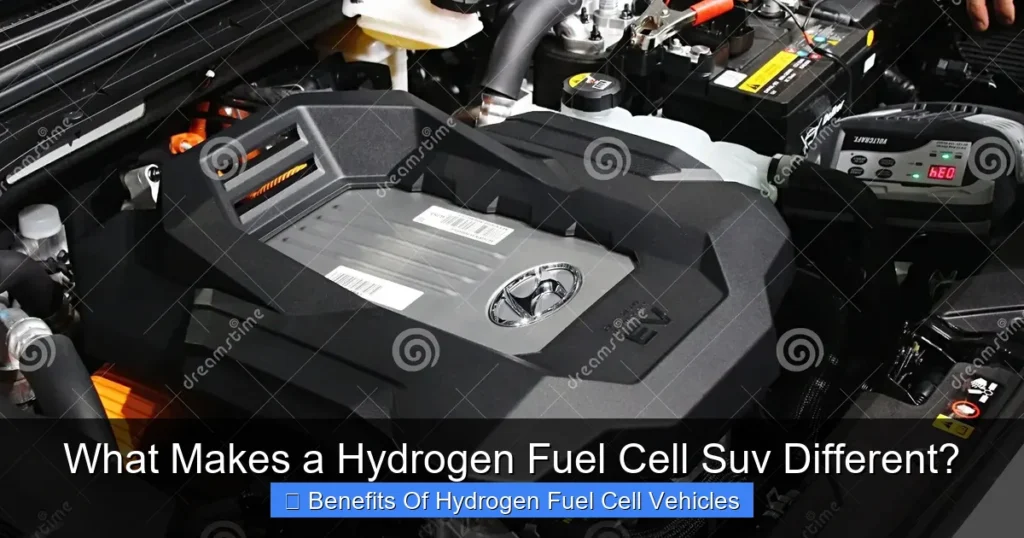
Hydrogen fuel cell SUVs stand out by using clean hydrogen to generate electricity, producing only water as a byproduct. They offer long range, quick refueling, and zero tailpipe emissions—making them a powerful alternative to gas and electric vehicles.
Have you ever wondered what it would be like to drive an SUV that runs on water? Not water you pour into a tank, but water that comes out of the tailpipe. That’s the reality of hydrogen fuel cell SUVs—vehicles that use hydrogen gas to generate electricity and power the wheels, all while emitting nothing but clean water vapor.
At first glance, a hydrogen fuel cell SUV might look just like any other modern SUV. It has the same spacious cabin, rugged design, and advanced tech features. But under the hood—or more accurately, under the floor—lies a revolutionary powertrain that sets it apart from both gasoline-powered SUVs and battery-electric vehicles (EVs). Instead of burning fuel or storing electricity in heavy batteries, it uses a chemical reaction between hydrogen and oxygen to produce power. This process is clean, efficient, and incredibly quiet.
So, what makes a hydrogen fuel cell SUV different? It’s not just about being eco-friendly. It’s about rethinking how we fuel our vehicles. While electric SUVs are gaining popularity, they still face challenges like long charging times and limited range in cold weather. Gas-powered SUVs offer convenience but come with high emissions and fuel costs. Hydrogen fuel cell SUVs aim to bridge that gap—offering the best of both worlds: clean energy and real-world practicality.
Key Takeaways
- Zero Tailpipe Emissions: Hydrogen fuel cell SUVs emit only water vapor, making them one of the cleanest vehicles on the road today.
- Fast Refueling: Unlike battery EVs that take hours to charge, hydrogen SUVs refuel in under 10 minutes—similar to gasoline vehicles.
- Long Driving Range: Most hydrogen SUVs can travel 300–400 miles on a single tank, ideal for long trips and highway driving.
- Quiet and Smooth Ride: With no engine combustion, these SUVs deliver a whisper-quiet, vibration-free driving experience.
- High Energy Density: Hydrogen packs more energy per pound than batteries, allowing for heavier vehicles like SUVs without sacrificing range.
- Reduced Dependence on Rare Minerals: Unlike EVs, hydrogen vehicles don’t rely on lithium, cobalt, or nickel, easing supply chain and ethical concerns.
- Ideal for Cold Climates: Hydrogen fuel cells perform well in low temperatures, unlike some EVs that lose range in winter.
📑 Table of Contents
How Hydrogen Fuel Cell SUVs Work
To truly understand what makes a hydrogen fuel cell SUV different, we need to look under the surface—literally. These vehicles are powered by a technology called a proton exchange membrane (PEM) fuel cell. This might sound like something from a sci-fi movie, but it’s a real, proven technology that’s been used in spacecraft and buses for decades.
Here’s how it works: hydrogen gas is stored in high-pressure tanks, usually located beneath the vehicle. When you press the accelerator, hydrogen flows into the fuel cell stack. Inside the stack, hydrogen molecules are split into protons and electrons. The protons pass through a special membrane, while the electrons are forced to travel through an external circuit, creating an electric current. This electricity powers the electric motor that drives the wheels.
Meanwhile, oxygen from the air enters the fuel cell from the other side. The protons and electrons recombine with oxygen to form water—H₂O—which is then released through the tailpipe. The only byproducts? Heat and water vapor. No carbon dioxide, no smog-forming pollutants, just clean, breathable air.
The Role of the Fuel Cell Stack
The heart of the hydrogen fuel cell SUV is the fuel cell stack. Think of it as the engine of a traditional car, but without any moving parts. It’s made up of hundreds of individual fuel cells layered together, each producing a small amount of electricity. When combined, they generate enough power to move a large SUV.
One of the biggest advantages of this system is its efficiency. While internal combustion engines convert only about 20–30% of fuel energy into motion, fuel cells can reach efficiencies of 60% or higher. That means more of the energy from hydrogen is used to move the vehicle, and less is wasted as heat.
Hydrogen Storage: Safe and Secure
You might be wondering: isn’t hydrogen dangerous? After all, it’s the lightest and most flammable element on the periodic table. But modern hydrogen fuel cell SUVs are designed with safety as a top priority. The hydrogen is stored in carbon-fiber-reinforced tanks that can withstand extreme pressure—up to 10,000 psi—and are rigorously tested for crash safety.
These tanks are located in protected areas of the vehicle, often under the floor or behind the rear seats, away from impact zones. In the event of a collision, multiple safety systems activate instantly. Valves close, pressure is released safely, and sensors alert the driver. In fact, hydrogen is often safer than gasoline because it dissipates quickly into the air if leaked, rather than pooling on the ground like liquid fuel.
Environmental Benefits of Hydrogen Fuel Cell SUVs
Visual guide about What Makes a Hydrogen Fuel Cell Suv Different?
Image source: thumbs.dreamstime.com
When it comes to protecting the planet, hydrogen fuel cell SUVs offer some of the most compelling environmental advantages. The most obvious benefit is zero tailpipe emissions. Unlike gasoline or diesel SUVs that spew carbon dioxide, nitrogen oxides, and particulate matter, hydrogen SUVs emit only water vapor. This makes them a powerful tool in the fight against climate change and air pollution.
But it’s not just about what comes out of the tailpipe. The entire lifecycle of the vehicle matters. While producing hydrogen can have environmental impacts depending on the method used, the trend is moving toward cleaner production. Most hydrogen today is made from natural gas, a process called steam methane reforming, which still emits CO₂. However, “green hydrogen”—produced using renewable energy like wind or solar to split water molecules—is becoming more common. As this clean hydrogen becomes more available, the environmental footprint of fuel cell SUVs will shrink even further.
Comparing Emissions: Hydrogen vs. Gas vs. Electric
Let’s put this into perspective. A typical gasoline-powered SUV emits about 4.6 metric tons of CO₂ per year, assuming 15,000 miles of driving. A battery-electric SUV, while zero-emission at the tailpipe, still has a carbon footprint based on how the electricity used to charge it is generated. In regions where coal dominates the grid, that footprint can be significant.
Hydrogen fuel cell SUVs, especially when powered by green hydrogen, can have a near-zero carbon footprint. Even when using hydrogen from natural gas, their well-to-wheel emissions are often lower than gasoline vehicles and comparable to or better than EVs in many regions.
Reducing Air Pollution in Cities
Another major benefit is the reduction of local air pollution. In urban areas, vehicle emissions contribute to smog, respiratory illnesses, and premature deaths. Hydrogen SUVs eliminate these harmful pollutants at the source. Imagine driving through a busy city with no exhaust fumes, no engine noise, and no contribution to poor air quality. That’s the promise of hydrogen fuel cell technology.
Cities like Los Angeles, Tokyo, and Copenhagen are already investing in hydrogen infrastructure to support cleaner transportation. As more hydrogen SUVs hit the road, we can expect to see measurable improvements in urban air quality.
Performance and Driving Experience
You might think that going green means sacrificing performance—but hydrogen fuel cell SUVs prove otherwise. These vehicles deliver a driving experience that’s not only clean but also powerful and enjoyable.
One of the standout features is instant torque. Like electric vehicles, hydrogen SUVs use electric motors that deliver maximum torque from a standstill. This means quick acceleration and smooth, responsive handling. Whether you’re merging onto a highway or climbing a steep hill, the power is there when you need it.
Quiet and Comfortable Ride
Another difference you’ll notice right away is how quiet these SUVs are. Without a roaring engine or transmission, the cabin is incredibly peaceful. Road and wind noise are minimized, creating a serene environment for passengers. This makes long drives more relaxing and conversations easier—no need to shout over engine noise.
Many hydrogen SUVs also come with advanced suspension systems and noise-canceling technology, further enhancing comfort. It’s the kind of ride you’d expect from a luxury vehicle, but with the added benefit of being environmentally responsible.
All-Weather Reliability
One area where hydrogen fuel cell SUVs shine is in cold weather. Unlike some battery EVs that lose significant range in freezing temperatures, hydrogen vehicles maintain consistent performance. The fuel cell operates efficiently in cold climates, and the hydrogen tanks are designed to function in extreme conditions.
This makes hydrogen SUVs ideal for drivers in northern states or mountainous regions where winter driving is a challenge. No more worrying about your range dropping by 30% when the temperature dips below freezing.
Refueling and Range: The Convenience Factor
One of the biggest concerns for drivers considering alternative fuel vehicles is convenience. How easy is it to refuel? How far can you go? Hydrogen fuel cell SUVs score high marks in both categories.
Fast Refueling: Under 10 Minutes
Let’s talk about refueling. With a hydrogen SUV, you can fill up in about the same time it takes to pump gas—usually between 3 and 10 minutes. This is a game-changer compared to battery EVs, which can take 30 minutes to several hours to recharge, depending on the charger type.
Imagine stopping at a hydrogen station on a road trip, grabbing a coffee, and being back on the road in under 10 minutes. That’s the kind of convenience that makes long-distance travel stress-free. No more planning your route around charging stations or waiting hours at a rest stop.
Long Range: 300–400 Miles on a Tank
Range anxiety is real for many EV drivers, but hydrogen SUVs offer a solution. Most models on the market today can travel between 300 and 400 miles on a single tank of hydrogen. That’s comparable to many gasoline SUVs and significantly better than most EVs, especially in cold weather.
For example, the Toyota Mirai, a hydrogen-powered sedan, offers around 400 miles of range. The Hyundai NEXO, a hydrogen SUV, delivers up to 380 miles. These numbers make hydrogen SUVs ideal for families, commuters, and road trippers who need reliability and freedom.
Growing Infrastructure
One challenge has been the availability of hydrogen refueling stations. Currently, they’re mostly concentrated in California, Japan, and parts of Europe. But the infrastructure is expanding. Governments and private companies are investing billions in building hydrogen networks. In California alone, there are over 50 public hydrogen stations, with plans to reach 200 by 2025.
As demand grows and technology improves, we can expect hydrogen stations to become as common as gas stations. Some experts predict that by 2030, hydrogen refueling could be widely available in major cities and along key highways.
Cost and Ownership Considerations
Of course, no discussion about new vehicle technology is complete without talking about cost. Hydrogen fuel cell SUVs are currently more expensive than their gasoline or electric counterparts, but that’s changing.
Upfront Price vs. Long-Term Savings
The sticker price of a hydrogen SUV can range from $50,000 to $70,000, depending on the model and features. That’s higher than many EVs and significantly more than a standard SUV. However, it’s important to consider the total cost of ownership.
Hydrogen fuel is currently more expensive than gasoline on a per-mile basis, but prices are expected to drop as production scales up. Maintenance costs are generally lower because fuel cell systems have fewer moving parts than internal combustion engines. No oil changes, no spark plugs, no exhaust systems to replace.
Many governments also offer incentives for hydrogen vehicle purchases, including tax credits, rebates, and access to carpool lanes. In California, for example, buyers of hydrogen vehicles can receive up to $5,000 in rebates, plus free hydrogen fuel for up to three years.
Resale Value and Market Trends
As with any emerging technology, resale value can be uncertain. However, as hydrogen infrastructure grows and consumer awareness increases, demand for these vehicles is expected to rise. Early adopters may see strong resale values, especially if they’re well-maintained and in high-demand regions.
Manufacturers are also working to improve durability and longevity. Modern fuel cells are designed to last over 100,000 miles, and some prototypes have exceeded 200,000 miles in testing. With proper care, a hydrogen SUV could serve a family for a decade or more.
The Future of Hydrogen SUVs
The future looks bright for hydrogen fuel cell SUVs. As the world moves toward decarbonization, hydrogen is emerging as a key player in the clean transportation revolution. Major automakers like Toyota, Hyundai, Honda, and BMW are investing heavily in hydrogen technology, with new models and concepts in development.
Advancements in Technology
Researchers are working on making fuel cells smaller, lighter, and more efficient. New materials like graphene and advanced catalysts are being tested to improve performance and reduce costs. Some companies are even exploring solid-state hydrogen storage, which could make tanks safer and more compact.
On the production side, green hydrogen is becoming more viable. Projects like the HyDeal Ambition initiative in Europe aim to produce green hydrogen at scale and at prices competitive with fossil fuels. If successful, this could make hydrogen SUVs truly sustainable from well to wheel.
Integration with Renewable Energy
Another exciting trend is the integration of hydrogen with renewable energy systems. Excess solar or wind power can be used to produce hydrogen during off-peak hours, which is then stored and used to fuel vehicles. This creates a closed-loop system where clean energy powers clean transportation.
Some homes and businesses are even experimenting with on-site hydrogen production, using small electrolyzers to generate fuel from tap water and solar panels. While still in early stages, this could one day allow drivers to “refuel” at home—just like plugging in an EV.
Expanding Beyond Passenger Vehicles
Hydrogen isn’t just for SUVs. The technology is being adapted for trucks, buses, trains, and even ships. Heavy-duty vehicles, which are harder to electrify with batteries, are particularly well-suited for hydrogen power. As the technology matures, we may see hydrogen SUVs become part of a broader clean transportation ecosystem.
Conclusion
So, what makes a hydrogen fuel cell SUV different? It’s more than just a new way to power a vehicle—it’s a shift in how we think about mobility, energy, and sustainability. These SUVs combine the best of electric and gasoline vehicles: zero emissions, fast refueling, long range, and quiet performance.
They’re not perfect—yet. Infrastructure is still limited, and costs remain high. But with rapid advancements in technology and growing support from governments and industries, hydrogen fuel cell SUVs are poised to play a major role in the future of transportation.
If you’re looking for a vehicle that’s powerful, practical, and planet-friendly, a hydrogen SUV might be worth considering. It’s not just a car—it’s a statement. A statement that you care about the environment, value innovation, and want a driving experience that’s as clean as it is capable.
As the world moves toward a cleaner, greener future, hydrogen fuel cell SUVs offer a compelling path forward. They’re not just different—they’re better.
Frequently Asked Questions
How long does it take to refuel a hydrogen fuel cell SUV?
Refueling a hydrogen fuel cell SUV takes about 3 to 10 minutes, similar to filling up a gasoline vehicle. This is much faster than charging most electric SUVs, which can take 30 minutes to several hours.
Are hydrogen fuel cell SUVs safe in a crash?
Yes, hydrogen SUVs are designed with multiple safety features. The hydrogen tanks are made of strong carbon fiber and are located in protected areas. In a crash, safety systems automatically shut off the fuel supply and vent hydrogen safely.
Can hydrogen SUVs drive in cold weather?
Absolutely. Hydrogen fuel cell SUVs perform well in cold climates and don’t lose range in winter like some electric vehicles. The fuel cell operates efficiently even in freezing temperatures.
Where can I refuel a hydrogen SUV?
Hydrogen refueling stations are currently concentrated in California, Japan, and parts of Europe. The network is growing, with plans to expand across the U.S. and other regions in the coming years.
How far can a hydrogen SUV travel on one tank?
Most hydrogen fuel cell SUVs can travel between 300 and 400 miles on a full tank, making them ideal for long trips and daily commuting without frequent refueling.
Is hydrogen fuel expensive?
Currently, hydrogen fuel is more expensive than gasoline, but prices are expected to drop as production scales up and green hydrogen becomes more common. Some regions also offer fuel subsidies for hydrogen vehicle owners.