Hydrogen-powered vehicles are gaining momentum as a clean alternative to fossil fuels and battery-electric cars. With breakthroughs in fuel cell tech, expanding refueling networks, and growing interest from automakers, the future looks promising—but challenges remain.
Key Takeaways
- Hydrogen fuel cell technology is advancing rapidly, with improvements in efficiency, durability, and cost, making hydrogen vehicles more viable for everyday use.
- Major automakers like Toyota, Hyundai, and BMW are investing heavily in hydrogen-powered cars, trucks, and buses, signaling long-term commitment.
- Infrastructure remains a key hurdle, but new hydrogen refueling stations are being built in the U.S., Europe, and Asia, especially in logistics and public transit hubs.
- Green hydrogen—produced using renewable energy—is critical to ensuring hydrogen vehicles deliver true environmental benefits.
- Hydrogen excels in heavy-duty transport, such as long-haul trucks, ships, and trains, where battery weight and charging times are limiting factors.
- Government policies and incentives are accelerating adoption, with countries like Germany, Japan, and South Korea leading the charge.
- Public awareness and consumer confidence are growing, thanks to real-world demonstrations and pilot programs in cities worldwide.
📑 Table of Contents
Introduction: The Rise of Hydrogen on the Road
Imagine a car that emits nothing but water vapor, refuels in minutes, and can travel over 300 miles on a single tank. Sounds like science fiction, right? But that’s exactly what hydrogen-powered vehicles promise—and they’re no longer just a concept. While electric vehicles (EVs) have dominated the clean transportation conversation, hydrogen fuel cell vehicles (FCEVs) are quietly building momentum as a powerful alternative, especially in sectors where batteries fall short.
Hydrogen has been around for decades, but recent technological leaps, environmental urgency, and strategic investments are pushing it into the mainstream. From sleek sedans to massive freight trucks, hydrogen is proving it can go the distance—literally and figuratively. But what’s really happening behind the scenes? And more importantly, what’s next for hydrogen-powered vehicles?
The Science Behind Hydrogen-Powered Vehicles
Visual guide about What’s Next for Hydrogen-powered Vehicles?
Image source: luxuriousmagazine.com
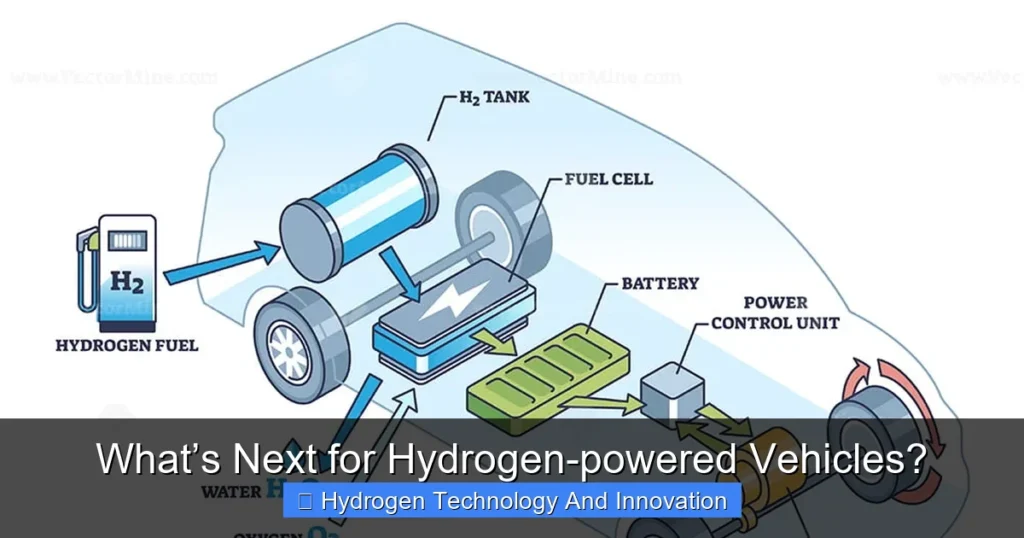
At the heart of every hydrogen-powered vehicle is a fuel cell—a device that converts hydrogen gas into electricity to power an electric motor. Unlike internal combustion engines that burn fuel, fuel cells use a clean electrochemical reaction. Hydrogen from the tank combines with oxygen from the air inside the fuel cell, producing electricity, heat, and water. The electricity then powers the wheels, while the only byproduct drips out as harmless water.
How Fuel Cells Work
Think of a fuel cell like a rechargeable battery that never runs out—as long as it has hydrogen. Inside the cell, hydrogen atoms are split into protons and electrons. The protons pass through a special membrane, while the electrons are forced to travel through an external circuit, creating an electric current. When they reunite with oxygen at the other side, they form water. This process is silent, efficient, and emission-free at the tailpipe.
Modern fuel cells are more durable and efficient than ever. New materials like advanced proton-exchange membranes (PEMs) allow them to operate at lower temperatures and last longer—some now exceed 200,000 miles of use. Plus, they’re getting smaller and lighter, making them easier to integrate into different vehicle types.
Hydrogen vs. Battery Electric: A Complementary Future
It’s easy to see hydrogen and battery-electric vehicles as rivals, but they’re better viewed as teammates. Each has strengths that suit different needs. Battery EVs shine in city driving, short commutes, and light-duty vehicles—where charging infrastructure is growing fast. But for long-haul trucking, aviation, shipping, and heavy machinery, hydrogen has a clear edge.
Why? Because hydrogen packs a lot of energy by weight. A hydrogen fuel cell truck can carry more cargo than a battery-electric one, since batteries are heavy and take up space. And while charging a large battery can take hours, refueling with hydrogen takes just 10 to 15 minutes—similar to filling up with diesel.
That’s why companies like Nikola, Toyota, and Hyundai are focusing on hydrogen for freight and logistics. In fact, the Port of Los Angeles is testing hydrogen-powered drayage trucks to reduce emissions in one of the busiest shipping hubs in the world.
Current State of Hydrogen Vehicle Adoption
So, how many hydrogen-powered vehicles are actually on the road today? The numbers are still small compared to EVs, but they’re growing. As of 2024, there are over 70,000 FCEVs globally, with the majority in California, South Korea, and Japan. Toyota’s Mirai and Hyundai’s NEXO are the most recognizable models, offering sleek designs, smooth rides, and zero emissions.
Passenger Cars: Niche but Growing
In the passenger car market, hydrogen vehicles are still a niche. The Mirai, for example, has sold around 25,000 units worldwide since its launch in 2014. That’s modest compared to Tesla’s millions, but it’s a start. The NEXO, Hyundai’s flagship FCEV, has also gained traction, especially in South Korea, where government support is strong.
One reason for slow adoption is cost. Hydrogen cars are expensive—often $60,000 or more—due to the high price of fuel cells and hydrogen storage tanks. But prices are dropping as production scales up. Toyota has already reduced the cost of the Mirai’s fuel cell stack by 85% since its first generation, and further cuts are expected.
Another barrier is availability. Only a handful of hydrogen refueling stations exist in most countries. In the U.S., for example, over 90% of the stations are in California. But that’s changing. States like New York, Connecticut, and Hawaii are investing in new stations, and automakers are offering free hydrogen fuel for several years to early adopters.
Commercial and Public Transit: Where Hydrogen Shines
While passenger cars are still finding their footing, hydrogen is making real progress in commercial and public transit. Buses, in particular, are a perfect fit. They follow fixed routes, return to central depots for refueling, and carry many passengers—making the environmental impact significant.
Cities like London, Berlin, and Tokyo are deploying hydrogen buses in their fleets. In Aberdeen, Scotland, over 20 hydrogen buses have been running since 2015, reducing CO₂ emissions by thousands of tons annually. These buses can travel up to 300 miles on a single tank and refuel in under 10 minutes.
Trucks are another major opportunity. Companies like Kenworth, Daimler, and Volvo are testing hydrogen-powered semis for long-haul freight. The U.S. Department of Energy’s “H2@Scale” initiative is funding pilot projects to demonstrate hydrogen trucks in real-world conditions. One such project involves a fleet of hydrogen trucks hauling goods between California and Nevada.
Even trains are getting in on the action. Alstom’s Coradia iLint, a hydrogen-powered train, is already operating in Germany, carrying passengers on non-electrified rail lines. It’s quiet, clean, and can travel up to 600 miles on a single tank—making it a game-changer for regional rail.
Challenges Facing Hydrogen Vehicles
Despite the promise, hydrogen-powered vehicles face several hurdles. The biggest? Infrastructure. Without a reliable network of hydrogen refueling stations, consumers and fleet operators won’t adopt the technology, no matter how advanced it is.
The Infrastructure Gap
Building a hydrogen refueling network is expensive and complex. Unlike gasoline stations, hydrogen stations require specialized equipment to compress, store, and dispense high-pressure gas. They also need a steady supply of hydrogen, which often comes from centralized production facilities.
Currently, most hydrogen is produced from natural gas in a process called steam methane reforming (SMR). While this is cost-effective, it releases CO₂—undermining the environmental benefits. That’s why the push for “green hydrogen”—made using renewable energy to split water molecules—is so important.
Green hydrogen is cleaner but more expensive. Electrolyzers, the machines that produce it, are still costly and energy-intensive. However, prices are falling as renewable energy gets cheaper and electrolyzer technology improves. The International Energy Agency (IEA) predicts green hydrogen could become cost-competitive with fossil-based hydrogen by 2030 in many regions.
Cost and Scalability
Another challenge is cost—both for vehicles and fuel. Fuel cells rely on platinum, a rare and expensive metal, though researchers are developing alternatives like iron-nitrogen-carbon catalysts. Meanwhile, hydrogen fuel can cost $12–$16 per kilogram in the U.S., which is equivalent to about $6–$8 per gallon of gasoline. That’s higher than gasoline or electricity, though it’s expected to drop as production scales up.
Scalability is also an issue. To make a real impact, we need millions of hydrogen vehicles and thousands of refueling stations. That requires massive investment—not just from governments, but from private companies too. So far, the pace has been slow, but momentum is building.
Safety and Public Perception
Some people worry about hydrogen safety, given its flammability. But in reality, hydrogen is no more dangerous than gasoline or natural gas—and in some ways, it’s safer. It’s lighter than air, so it disperses quickly if leaked, reducing the risk of explosion. Modern hydrogen tanks are also incredibly strong, designed to withstand crashes, fires, and even gunfire.
Still, public education is needed. Many consumers don’t understand how hydrogen vehicles work or why they’re safe. Automakers and governments must do more to build trust through transparency, demonstrations, and outreach.
What’s Next: Innovations and Trends
The future of hydrogen-powered vehicles is bright, thanks to rapid innovation and growing support. Here’s what to watch in the coming years.
Breakthroughs in Fuel Cell Technology
Researchers are making strides in fuel cell efficiency, durability, and cost. One promising area is solid oxide fuel cells (SOFCs), which operate at high temperatures and can use a variety of fuels, including hydrogen, natural gas, and ammonia. While not yet ready for passenger cars, SOFCs could power ships, data centers, and remote communities.
Another trend is the development of “bipolar plates”—key components that distribute gases and conduct electricity in fuel cells. New materials like coated stainless steel and graphite composites are reducing weight and cost while improving performance.
Green Hydrogen Expansion
The shift to green hydrogen is accelerating. Countries like Australia, Saudi Arabia, and Chile are investing billions in renewable-powered electrolysis plants. The European Union’s “Hydrogen Strategy” aims to install 40 gigawatts of electrolyzers by 2030. In the U.S., the Inflation Reduction Act includes tax credits for clean hydrogen production, making it more competitive.
This shift will make hydrogen vehicles truly sustainable. When powered by wind, solar, or hydropower, FCEVs can achieve near-zero lifecycle emissions—outperforming even battery EVs in some cases, especially where electricity grids are still fossil-fuel-heavy.
Hydrogen in Aviation and Shipping
While road vehicles get most of the attention, hydrogen is also making waves in aviation and maritime transport. Airbus has unveiled plans for hydrogen-powered aircraft by 2035, with concepts like the “ZEROe” plane using liquid hydrogen as fuel. Similarly, companies like Maersk and CMA CGM are exploring hydrogen and ammonia-powered ships to cut emissions in global shipping.
These sectors are harder to decarbonize with batteries due to weight and energy density constraints. Hydrogen offers a viable path forward, especially for long-distance travel.
Policy and Investment Momentum
Governments are stepping up. Japan’s “Basic Hydrogen Strategy” aims to create a hydrogen society by 2050. Germany is building a national hydrogen network with over 100 refueling stations. California’s Zero-Emission Vehicle (ZEV) program includes hydrogen vehicles and mandates increasing sales over time.
Private investment is also surging. Companies like Amazon, Walmart, and UPS are testing hydrogen delivery trucks. Energy giants like Shell, BP, and TotalEnergies are investing in hydrogen production and refueling infrastructure.
The Road Ahead: A Hydrogen-Powered Future?
So, what’s the bottom line? Hydrogen-powered vehicles are not a silver bullet, but they are a vital piece of the clean transportation puzzle. They won’t replace battery EVs—especially for everyday cars—but they will play a crucial role in decarbonizing heavy transport, public transit, and industrial applications.
The next decade will be decisive. If infrastructure expands, costs fall, and green hydrogen becomes mainstream, hydrogen vehicles could go from niche to normal. But it will take collaboration—between automakers, governments, energy companies, and consumers—to make it happen.
One thing is clear: the future of transportation isn’t one-size-fits-all. It’s electric, it’s hydrogen, it’s sustainable fuels, and it’s innovation. And hydrogen-powered vehicles are finally ready to take their place on the road.
Conclusion: Driving Toward a Cleaner Tomorrow
Hydrogen-powered vehicles have come a long way from the lab to the highway. With cleaner technology, growing infrastructure, and strong support from industry and government, they’re poised for a breakthrough. While challenges remain—especially around cost and green hydrogen production—the momentum is undeniable.
As we look ahead, hydrogen won’t just be about cars. It’s about transforming how we move goods, people, and energy across the globe. From bustling city buses to silent freight trucks, hydrogen is proving it can deliver power, performance, and planet-friendly progress.
The road to a hydrogen future isn’t straight or simple, but it’s one worth traveling. And with every mile driven on hydrogen, we get closer to a cleaner, quieter, and more sustainable world.
Frequently Asked Questions
Are hydrogen-powered vehicles really zero-emission?
Yes, hydrogen fuel cell vehicles emit only water vapor from the tailpipe. However, the overall environmental impact depends on how the hydrogen is produced. If it’s made from fossil fuels, emissions occur upstream. But if it’s green hydrogen—produced with renewable energy—the entire lifecycle can be nearly emission-free.
How long does it take to refuel a hydrogen car?
Refueling a hydrogen-powered vehicle takes about 3 to 10 minutes, similar to filling up a gasoline car. This is much faster than charging a battery-electric vehicle, especially for long trips or heavy-duty applications.
Are hydrogen cars safe in a crash?
Yes, hydrogen cars are designed with multiple safety features. Hydrogen tanks are made of strong composite materials and undergo rigorous testing. Hydrogen also disperses quickly in the air, reducing fire risk compared to liquid fuels.
Can I install a hydrogen refueling station at home?
Currently, home hydrogen refueling is not practical or widely available. Most hydrogen is dispensed at public or fleet stations. However, some companies are exploring home electrolyzers that use tap water and electricity to produce small amounts of hydrogen, though this is still in early development.
Which countries are leading in hydrogen vehicle adoption?
South Korea, Japan, and Germany are global leaders in hydrogen vehicle deployment and infrastructure. California in the U.S. also has a strong hydrogen network, with over 50 public refueling stations and growing support for FCEVs.
Will hydrogen cars ever be as common as electric cars?
Hydrogen cars are unlikely to match the volume of battery-electric vehicles for everyday use due to cost and infrastructure limits. However, they will likely become common in specific sectors like trucking, buses, and industrial transport, where their advantages in range and refueling time are critical.