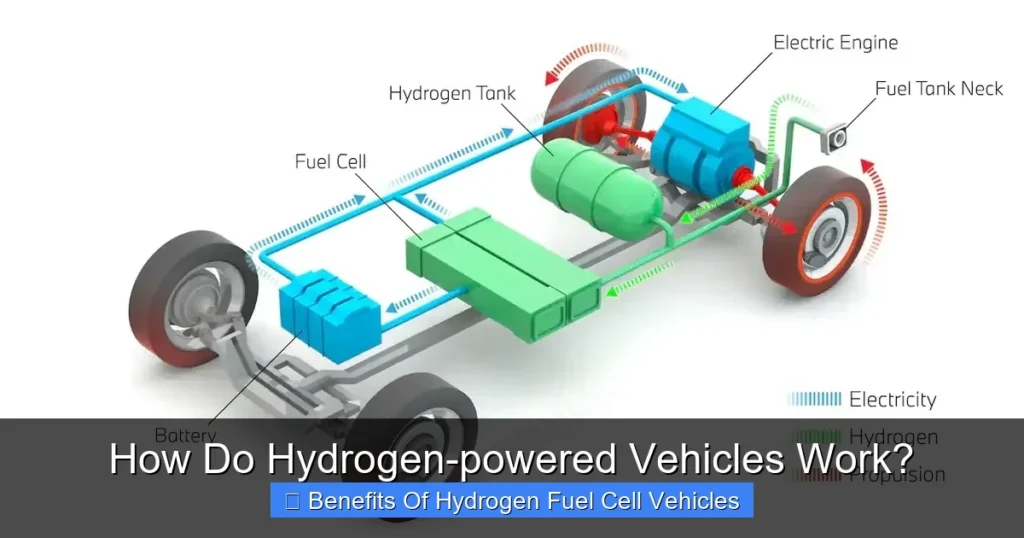
Hydrogen-powered vehicles (H2Vs) use fuel cells to convert hydrogen gas into electricity, powering an electric motor with zero emissions. Unlike traditional cars, H2Vs only emit water vapor, making them a clean alternative to fossil fuels. The process combines hydrogen with oxygen in a fuel cell stack, creating energy while reducing environmental impact.
This is a comprehensive guide about How do hydrogen-powered vehicles work?.
Key Takeaways
- Zero Emissions: Hydrogen fuel cells produce only water vapor as a byproduct, eliminating harmful pollutants like CO2.
- Fuel Efficiency: H2Vs can refuel in minutes, similar to gasoline cars, but with longer range (~300–400 miles per tank).
- Energy Storage: Hydrogen is stored under high pressure, requiring specialized tanks that are lightweight yet durable.
- Scalability: Fuel cells can be integrated into various vehicles—cars, buses, trucks, even airplanes.
- Cost Challenges: High production costs for hydrogen and fuel cells remain barriers, though prices are dropping.
- Infrastructure Growth: Hydrogen refueling stations are expanding globally, especially in regions with green hydrogen initiatives.
—
[FEATURED_IMAGE_PLACEHOLDER]
How Do Hydrogen-Powered Vehicles Work?
Introduction: The Clean Future of Transportation
Imagine driving a car that never spits out smoke or greenhouse gases—just pure, quiet motion. That’s the promise of hydrogen-powered vehicles (H2Vs). These cutting-edge cars rely on hydrogen fuel cells, which generate electricity without burning fuel. Instead, they combine hydrogen (H₂) and oxygen (O₂) to create energy, releasing only water vapor. It’s a simple yet revolutionary technology that could redefine how we move sustainably.
Why should you care? As climate change accelerates, governments and automakers are pushing for cleaner transport solutions. H2Vs offer a viable alternative to electric batteries (EVs) and fossil fuels, addressing key pain points: long refueling times, heavy battery weight, and limited charging infrastructure. Let’s break down how these vehicles work and why they matter.
The Science Behind Hydrogen Fuel Cells
What Is a Fuel Cell?
At its core, a fuel cell is like a tiny battery that generates electricity through a chemical reaction—no combustion involved. In H2Vs, this reaction happens inside a fuel cell stack, which consists of multiple individual cells stacked together. Each cell uses two layers separated by an electrolyte membrane:
- Anode: Hydrogen gas enters here, where it splits into protons (H⁺) and electrons (e⁻).
- Cathode: Oxygen from the air combines with protons and electrons to form water (H₂O) and release energy as electricity.
- Electrolyte Membrane: Allows protons to pass but blocks electrons, forcing them to flow through an external circuit (powering the vehicle).
Simplified Reaction
The overall chemical equation for a fuel cell is:
2 H₂ + O₂ → 2 H₂O + Electricity
No carbon dioxide means no tailpipe pollution—just water and heat.
Practical Example: Toyota Mirai
The Toyota Mirai, one of the first mass-produced H2Vs, showcases this tech in action. Its fuel cell stack produces up to 128 kW of power, enough to drive comfortably at highway speeds. The hydrogen tank holds roughly 5 kg of gas, yielding ~600 km of range—far exceeding many EVs’ daily needs.
How Hydrogen Powers the Vehicle
Step 1: Hydrogen Storage
Hydrogen must be stored safely due to its low density. H2Vs use composite tanks made of carbon fiber wrapped around polymer layers, pressurized to 700 bar (about 10,000 psi). These tanks are compact yet sturdy, fitting under the vehicle’s hood or trunk.
Step 2: Fuel Cell Stack Activation
When you press the gas pedal:
- H₂ flows into the anode, where platinum catalysts split it into protons and electrons.
- Protons cross the membrane to the cathode, while electrons travel via wiring to the motor.
- O₂ enters the cathode, combining with protons and electrons to form water.
Step 3: Electricity Generation & Motor Control
The fuel cell’s output voltage is regulated by the vehicle’s power electronics, ensuring smooth acceleration. The electricity drives an electric motor (like in EVs), with regenerative braking capturing energy for later use.
Advantages Over Traditional Vehicles
1. Zero Emissions
Unlike gasoline or diesel engines, H2Vs don’t burn fuel. Their only byproduct is water—ideal for cities aiming to reduce air pollution. For example, in California, hydrogen buses have cut NOx emissions by 99% compared to older models.
2. Fast Refueling
Filling up takes 3–5 minutes (vs. 40+ hours for battery swapping in some EVs). This convenience appeals to drivers who dislike waiting.
3. Long Range
With a full tank, most H2Vs offer 300–400 miles—comparable to gasoline cars. This reduces range anxiety, a common EV drawback.
4. Energy Independence
Hydrogen can be produced locally using renewable energy (via electrolysis), reducing reliance on imported oil. Countries like Germany are investing in green hydrogen hubs.
Challenges & Limitations
1. Infrastructure Costs
Building refueling stations is expensive ($1M–$2M each). Currently, there are only ~1,200 globally (as of 2023), mostly in Europe and Japan.
2. Hydrogen Production
Most hydrogen today comes from natural gas reforming, which emits CO₂. “Green hydrogen” (made via renewables) is cleaner but pricier ($3–$6/kg vs. $1–$2/kg for gray hydrogen).
3. Weight & Safety
High-pressure tanks add weight, and leaks require strict safety protocols. Automakers use sensors to detect and mitigate risks.
4. Consumer Awareness
Many people aren’t familiar with H2Vs. Education campaigns (like Hyundai’s Nexo ads) aim to shift perceptions.
The Future of Hydrogen Vehicles
Growing Adoption
Major automakers—Toyota, Honda, BMW, and Hyundai—are rolling out new models. The global market could hit $100 billion by 2030 (BloombergNEF projection).
Policy Support
Governments incentivize adoption through subsidies (e.g., U.S. Inflation Reduction Act tax credits) and mandates (EU’s Fit for 55 plan).
Technological Innovations
Research focuses on:
- Cheaper Catalysts: Replacing platinum with cheaper materials like iron-nickel alloys.
- Lightweight Tanks: Using advanced composites to reduce weight.
- Waste-to-Hydrogen: Converting industrial waste (e.g., methane) into H₂.
Potential Beyond Cars
H2Vs aren’t just for passenger vehicles. Hydrogen powers:
- Buses (London’s fleet includes 260 H2 buses)
- Trucks (Nikola Tre aims for 1,200-mile range)
- Ferries (Norway’s Havila Havila uses hydrogen propulsion)
—
Conclusion: A Sustainable Shift
Hydrogen-powered vehicles represent more than a technological upgrade—they’re a blueprint for decarbonizing transport. While challenges remain, advancements in production, infrastructure, and cost are accelerating adoption. For environmentally conscious drivers, H2Vs offer a practical choice with zero emissions, fast refueling, and unmatched range. The road ahead is bright, and the journey toward greener mobility has already begun.
Quick Q&A
Question 1?
Do hydrogen cars need charging like EVs? No! They use hydrogen refueling stations, similar to gas pumps. Charging isn’t required unless the battery backup (for auxiliary systems) needs power.
Question 2?
Is hydrogen flammable? Yes, but H2Vs have multiple safety measures: leak detection, pressure relief valves, and fire-resistant materials.
Question 3?
How much does a hydrogen car cost? Prices vary; Toyota Mirai starts at ~$55,000, but economies of scale may lower costs over time.
Question 4?
Can hydrogen be made at home? Not yet. Large-scale plants are needed for efficient production, though small electrolyzers are emerging for niche applications.
Question 5?
Are hydrogen cars better than EVs? Depends on priorities: EVs excel in urban areas with chargers, while H2Vs suit long trips with fewer charging stops.
FAQs
How do hydrogen cars compare to EVs?
H2Vs refuel faster and have longer ranges than most EVs, while EVs benefit from wider charging networks. Both technologies complement each other in the transition to clean energy.
What’s the lifespan of a hydrogen fuel cell?
Modern fuel cells last 10–20 years (or 300,000–600,000 miles), depending on maintenance. Toyota claims 15-year warranties for its stacks.
Where are hydrogen stations located?
Concentrated in Europe (Germany, France), Asia (Japan, South Korea), and the U.S. (California, Washington). Expansion is ongoing.
Can hydrogen power airplanes?
Yes! Airbus’s ZEROe project aims for hydrogen-fueled commercial jets by 2035, targeting 1,300-mile flights.
Are hydrogen cars safer than gasoline cars?
Yes! Hydrogen burns cleanly (producing only water) and disperses quickly if leaked. Gasoline vapors are heavier than air, posing explosion risks.
Will hydrogen replace batteries entirely?
No. Both will coexist: batteries suit short-range urban use, while hydrogen excels in heavy-duty and long-haul applications.
Quick Answers to Common Questions
What is How do hydrogen-powered vehicles work??
How do hydrogen-powered vehicles work? refers to essential knowledge and techniques.
Frequently Asked Questions
What is How do hydrogen-powered vehicles work??
How do hydrogen-powered vehicles work? is an important topic with many practical applications.