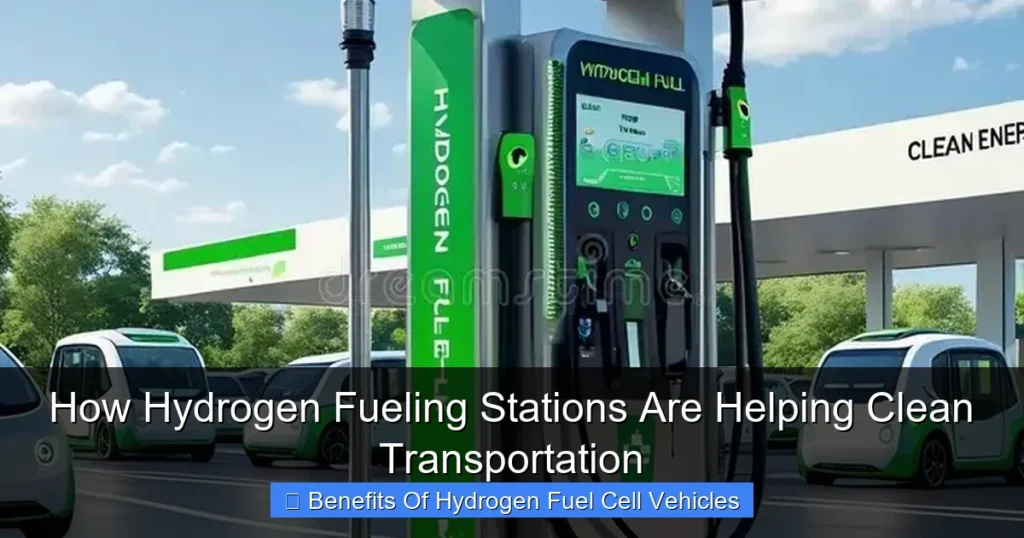
Hydrogen fueling stations are pivotal in advancing clean transportation by enabling hydrogen fuel cell vehicles (HFCVs) to operate with zero tailpipe emissions. These stations support sustainable mobility, reduce reliance on fossil fuels, and align with global climate goals, offering a scalable solution for decarbonizing heavy-duty transport like trucks and buses.
Key Takeaways
- Zero Emissions: HFCVs produce only water vapor when powered by hydrogen, eliminating harmful pollutants.
- Fueling Speed: Refueling takes minutes, similar to gasoline cars, making it practical for daily use.
- Sustainability Potential: Green hydrogen (from renewable sources) ensures a truly carbon-neutral lifecycle.
- Diverse Applications: Ideal for heavy-duty transport, where batteries struggle with range and weight.
- Growing Infrastructure: Investments worldwide aim to expand hydrogen stations, reducing “range anxiety.”
- Cost Efficiency: Long-term operational costs may rival or undercut EVs for certain applications.
- Policy Support: Governments incentivize adoption through subsidies and regulations.
[FEATURED_IMAGE_PLACEHOLDER]
The Rise of Hydrogen Fuel Cell Vehicles (HFCVs)
Hydrogen fuel cell vehicles (HFCVs) are gaining traction as a viable alternative to internal combustion engine (ICE) vehicles and battery-electric vehicles (BEVs). Unlike BEVs, which rely on electricity from grids that may still depend on coal, HFCVs generate electricity onboard via an electrochemical reaction between hydrogen and oxygen, emitting only water vapor. This makes them inherently cleaner—especially when hydrogen is produced using renewable energy (green hydrogen). Countries like Japan, Germany, and California have already seen successful deployments of HFCVs in public transit, freight, and even passenger cars.
Why HFCVs Stand Out
- Range & Refueling: HFCVs typically offer 300–400 miles per tank and can be refueled in under 10 minutes, addressing two major pain points of EVs: long charging times and limited range for heavy-duty applications.
- Energy Density: Hydrogen’s high energy density by volume suits large vehicles like trucks and ships, which would require impractical battery sizes.
- Grid Independence: Unlike BEVs, HFCVs don’t strain local power grids during peak demand, as they refuel independently.
How Hydrogen Fueling Stations Work
Hydrogen fueling stations compress gaseous hydrogen (or liquid hydrogen) and deliver it to the vehicle’s fuel cell at pressures up to 700 bar (10,000 psi). The process involves:
- Hydrogen Supply: Produced via electrolysis (using renewables), steam methane reforming (with carbon capture), or imported pipelines.
- Compression & Storage: Stored in high-pressure tanks at the station.
- Dispensing: A quick transfer fills the vehicle’s onboard tank, ready for use.
For example, Honda Clarity Fuel Cell models can be filled in just 5 minutes, comparable to gasoline cars. Stations like California’s network now exceed 100 locations, with plans to reach 1,000+ by 2030.
Types of Hydrogen Fueling Stations
- Centralized Stations: Large-scale facilities supplying multiple fleets (e.g., Toyota Mirai for taxis).
- Decentralized Stations: Smaller units serving local communities, often co-located with gas stations.
- On-Site Production: Companies like Nikola Motors build hydrogen hubs at ports or logistics hubs.
The Environmental Impact of Hydrogen Stations
While HFCVs themselves are clean, their full environmental benefit depends on how hydrogen is produced.
Green vs. Grey Hydrogen
- Green Hydrogen: Made via electrolysis powered by wind/solar, producing zero CO₂. Ideal for long-term sustainability.
- Grey Hydrogen: Derived from natural gas without carbon capture, contributing ~9 kg CO₂ per kg of H₂. A short-term bridge technology.
- Blue Hydrogen: Combines gas reforming with carbon capture, reducing emissions but not eliminating them.
Example: In Norway, Statkraft’s hydrogen plant uses hydropower to produce green hydrogen for heavy-duty transport, cutting fleet emissions by 80% compared to diesel.
Carbon Footprint Comparison
| Vehicle Type | Well-to-Wheel Emissions (gCO₂/km) |
|---|---|
| Gasoline ICE | 150–200 |
| Battery-Electric (grid-dependent) | 50–150* (*varies by grid mix) |
| Hydrogen FCV (grey H₂) | 60–100 |
| Hydrogen FCV (green H₂) | 5–20 |
*Note: BEVs excel in regions with clean grids; HFCVs win in areas with high grid emissions (e.g., China, India).
Challenges and Solutions for Hydrogen Adoption
Despite progress, hurdles remain:
High Costs
- Station Construction: Each station costs $2M–$5M, deterring rapid rollout.
- Solution: Government grants (e.g., U.S. DOE’s $1.2B funding) and private partnerships lower barriers.
Supply Chain Gaps
- Limited Pipelines: Most hydrogen is trucked, raising costs.
- Solution: Projects like Europe’s HyTransPipeline aim to connect production hubs to demand centers.
Public Awareness
- Misconceptions: Fear of explosions (hydrogen ignites faster than gasoline but requires precise conditions).
- Education: Initiatives like Japan’s “Hydrogen Society” campaigns demystify safety.
Practical Examples: Hydrogen in Action
Heavy-Duty Transport
- Nikola Tre: A Class 8 hydrogen truck capable of 1,200 miles per fill, targeting drayage and long-haul routes.
- Hyundai XCIENT: Deployed in Switzerland and Australia, replacing diesel trucks in mining and agriculture.
Public Transit
- Germany’s H2Bus: Over 100 hydrogen buses operate in cities like Berlin, cutting NOx emissions by 90%.
- California’s Transit Fleets: 20+ bus agencies adopted HFCVs, saving $1M+/year in fuel costs versus diesel.
Marine Shipping
- Yara Birkeland: The world’s first autonomous, emission-free cargo ship uses ammonia-based fuel cells, with hydrogen refueling planned.
The Future: Scaling Up Hydrogen Infrastructure
Global investments are skyrocketing:
- Europe: Targeting 400+ hydrogen stations by 2030 under the European Green Deal.
- China: Plans to produce 1 million tons of green hydrogen annually by 2030.
- U.S.: The Inflation Reduction Act allocates $9B for hydrogen hubs, including projects in Texas and the Midwest.
Pro Tip: Businesses leasing HFCVs should negotiate refueling discounts with station operators—many offer bulk rates for fleets.
Conclusion: Why Hydrogen Matters for Clean Transportation
Hydrogen fueling stations are more than just infrastructure—they’re a linchpin for decarbonizing sectors where batteries fall short. From heavy trucks to marine vessels, HFCVs paired with green hydrogen offer a versatile, scalable path to net-zero emissions. With falling costs and policy backing, the tipping point for widespread adoption is closer than ever. By embracing hydrogen today, we’re not just buying a car or fueling a station; we’re paving the way for a cleaner, greener tomorrow.
Quick Q&A
Question 1?
Answer: Yes! Hydrogen is lighter than air and disperses quickly if leaked, posing minimal explosion risk compared to compressed natural gas (CNG).
Question 2?
Answer: Green hydrogen (from renewables) is essential for true sustainability, but grey hydrogen bridges gaps until infrastructure scales.
Question 3?
Answer: HFCVs excel in long-haul trucking, shipping, and aviation, where batteries lack energy density.
Question 4?
Answer: Expect prices to drop as economies of scale take effect. Some analysts predict parity with gasoline by 2030.
Question 5?
Answer: Yes! Many governments offer tax credits, grants, and low-interest loans for HFCV adoption.
Frequently Asked Questions
Are hydrogen cars safe?
Absolutely. Hydrogen’s flammability is mitigated by strict safety protocols, such as leak detection systems and pressure-resistant materials. No HFCV fires have been reported since commercialization began in 2003.
Can I charge a hydrogen car at home?
No, hydrogen stations are standalone. However, some companies (like Nikola) plan to install small stations near industrial sites for fleet use.
How much does hydrogen fuel cost?
Prices vary: grey hydrogen averages $4–$6/kg, while green hydrogen is $6–$12/kg (projected to fall below $3/kg by 2030). This equates to $0.03–$0.10 per mile for HFCVs.
Do hydrogen cars have a limited range?
No. Most HFCVs achieve 300–400 miles per tank, rivaling gasoline cars, with options for larger tanks (up to 800 miles).
What’s the lifespan of a hydrogen fuel cell?
Modern fuel cells last over 200,000 miles, with warranties covering 10 years or 200,000 miles—similar to traditional engines.
Will hydrogen replace electric cars?
Unlikely. Both technologies will coexist: EVs dominate urban commuting, while hydrogen powers trucks, buses, and industries needing ultra-long range.
This is a comprehensive guide about How hydrogen fueling stations are helping clean transportation.
Key Takeaways
- Understanding How hydrogen fueling stations are helping clean transportation: Provides essential knowledge
Quick Answers to Common Questions
What is How hydrogen fueling stations are helping clean transportation?
How hydrogen fueling stations are helping clean transportation refers to essential knowledge and techniques.
Frequently Asked Questions
What is How hydrogen fueling stations are helping clean transportation?
How hydrogen fueling stations are helping clean transportation is an important topic with many practical applications.