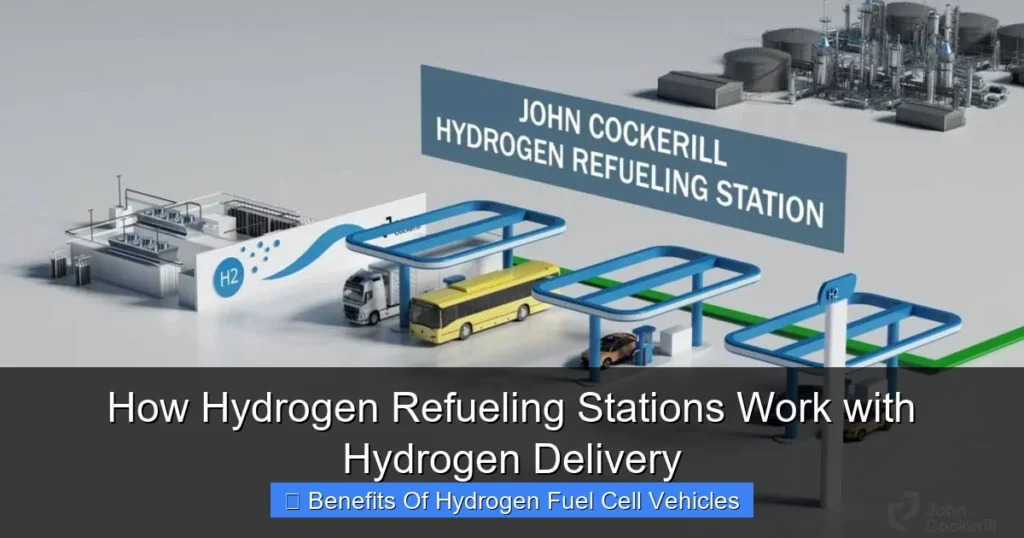
Hydrogen refueling stations are critical for hydrogen fuel cell vehicles (FCVs), delivering clean energy through a complex yet efficient process. These stations rely on hydrogen supply chains that transport compressed or liquid hydrogen from production plants to filling points, ensuring fast, safe, and sustainable refueling. Understanding their operation reveals why FCVs are a key player in the green mobility revolution.
This is a comprehensive guide about How hydrogen refueling stations work with hydrogen delivery.
Key Takeaways
- Hydrogen Production: Stations source hydrogen via electrolysis (renewable) or steam methane reforming (fossil fuels), with green hydrogen becoming more viable.
- Delivery Methods: Compressed gas (700 bar) is standard; liquid hydrogen offers higher density but requires cryogenic handling.
- Fueling Process: FCVs refuel in 3-5 minutes, similar to gasoline cars, thanks to high-pressure pumps.
- Infrastructure Challenges: Limited global stations (over 1,000 worldwide, mostly in Europe/Japan) hinder widespread adoption.
- Sustainability Focus: Future stations will prioritize renewable hydrogen to cut emissions from production/delivery.
—
[FEATURED_IMAGE_PLACEHOLDER]
Introduction: Why Hydrogen Refueling Matters
Imagine driving a car that emits only water vapor—no tailpipe pollution, no greenhouse gases. That’s the promise of hydrogen fuel cell vehicles (FCVs), but their success hinges on one thing: reliable refueling stations. Unlike electric vehicles (EVs) that need hours of charging, FCVs can be refueled in minutes. But how do these stations get hydrogen delivered? Let’s break down the entire process—from production to pump—and explore why it’s pivotal for zero-emission transport.
The rise of FCVs has sparked infrastructure investments globally. Countries like Japan and Germany lead with over 100 stations each, while the U.S. aims for thousands by 2030. Yet, challenges remain in scaling up hydrogen supply chains. This article demystifies the tech behind refueling stations, covering production, storage, transportation, and fueling—plus tips for drivers and policymakers.
1. How Hydrogen Is Produced for Refueling
Production Methods: Green vs. Gray Hydrogen
Hydrogen isn’t “made” in isolation; its production method determines its environmental impact. The two primary pathways are:
- Electrolysis (Green Hydrogen): Splitting water into hydrogen and oxygen using electricity from renewables (wind/solar). This produces zero CO₂ emissions if powered by clean energy.
- Steam Methane Reforming (Gray Hydrogen): Extracting hydrogen from natural gas, which releases CO₂ as a byproduct. Less common for FCVs due to emissions, but still used today.
Practical Example: In California, projects like the Carbon Free Hydrogen Program prioritize green electrolysis, aiming for 100% renewable hydrogen by 2045.
Why Green Hydrogen Is the Future
While gray hydrogen dominates now, green hydrogen is gaining traction due to falling costs of renewable energy. For instance:
- Australia’s HyGateway project plans 20 GW of electrolysis capacity by 2030.
- EU subsidies under REPowerEU accelerate green hydrogen adoption.
Transitioning to green hydrogen ensures FCVs truly deliver on sustainability promises.
2. Hydrogen Delivery: From Plant to Station
Transportation Methods
Once produced, hydrogen must reach stations efficiently. Two main methods dominate:
- Compressed Gas Pipeline: Most common in regions with existing gas networks (e.g., Japan). Pipelines transport hydrogen at ~35-700 bar pressures.
- Liquid Hydrogen Tanker: Cryogenic (-253°C) trucks store liquefied hydrogen (LH₂), offering higher density for long-haul transport.
Tip for Readers: If you live near a station, check its hydrogen sourcing—some disclose whether it uses pipelines or tankers.
Challenges in Delivery
Scaling hydrogen logistics requires solving:
- Pressure Losses: Pumping high-pressure hydrogen over long distances demands energy-efficient compressors.
- Cryogenic Risks: LH₂ requires specialized insulation to prevent boil-off during transit.
- Grid Integration: Renewable-powered electrolysis needs flexible energy grids to match demand.
3. Inside a Hydrogen Refueling Station
Core Components
A typical station includes:
- Storage Tanks: Hold compressed hydrogen (700 bar) or LH₂, sized for 3-5 daily refuels.
- Dosing Systems: Precisely mix hydrogen with air for FCVs (avoiding excess fuel).
- Pumps & Valves: Deliver 700-bar pressure in seconds (like a gasoline pump).
Safety Measures
Hydrogen’s flammability necessitates rigorous safety protocols:
- Leak Detection: Sensors trigger alarms and shutoff valves.
- Ventilation: Excess gas disperses safely outdoors.
- Fire Suppression: Specialized systems handle hydrogen fires (difficult to extinguish with water).
Example: A Day in the Life
By morning, a station’s tanks are filled via pipeline. Drivers arrive, insert their key, and watch the fuel meter drop in minutes. Meanwhile, operators monitor real-time pressure levels and maintenance alerts—all automated in modern stations.
4. Refueling Process: What Happens Under the Hood?
Step-by-Step Refueling
- Park & Connect: Driver parks, aligns the nozzle, and presses start.
- Pressure Boost: Station’s compressor raises hydrogen pressure to 700 bar.
- Flow Control: Sensors adjust flow rate based on remaining tank capacity.
- Completion: Pump stops automatically when full; driver exits.
Fun Fact: Toyota Mirai refueling takes just 3 minutes—comparable to filling a gas tank!
Charging vs. Hydrogen Refueling
Unlike EVs, FCVs don’t need slow charging because:
- Hydrogen’s energy density is 3x higher than batteries per volume.
- No thermal management delays (batteries warm/cool for optimal charging).
This makes FCVs ideal for fleets and drivers needing frequent trips.
5. The Road Ahead: Scaling Up Infrastructure
Governments & Private Sector Roles
Accelerating station rollout requires collaboration:
- Policymakers: Subsidies (e.g., U.S. Bipartisan Infrastructure Law) fund pilot projects.
- Companies: Shell, BP, and Toyota build shared-station networks.
- Research: Innovations like metal hydrides could simplify storage.
Cost Trends
Station costs have dropped from $2M-$6M in 2010 to ~$1.5M today (McKinsey). Economies of scale and modular designs will push prices further down, making FCVs accessible.
Conclusion: The Promise of Hydrogen Fueling
Hydrogen refueling stations are more than pumps—they’re linchpins of a decarbonized transportation system. While challenges like production scalability and infrastructure gaps persist, advancements in green hydrogen, delivery tech, and safety standards are paving the way. For drivers, the future looks bright: fast, clean refueling without range anxiety. For policymakers, investing in hydrogen now means securing jobs and cutting emissions tomorrow.
As the world races toward net-zero goals, hydrogen’s role grows clearer. By understanding how refueling stations work, we appreciate not just the science, but the collective effort needed to make hydrogen mobility mainstream.
—
Quick Answers to Common Questions
Question 1?
How long does hydrogen refueling take? Typically 3-5 minutes, matching gasoline cars, thanks to high-pressure pumps.
Question 2?
Is hydrogen always eco-friendly? No—gray hydrogen (from natural gas) emits CO₂. Green hydrogen (from renewables) is the cleanest option.
Question 3?
Can hydrogen stations use existing gas pipelines? Yes, many repurpose natural gas lines for hydrogen, though modifications are needed for safety.
Question 4?
What’s the cost difference between green and gray hydrogen? Green is currently 2-3x pricier due to renewable energy costs, but prices are falling.
Question 5?
Are there safety risks with hydrogen stations? Yes, but strict protocols (sensors, ventilation) mitigate hazards better than public perception suggests.
—
Frequently Asked Questions
What is the difference between green and gray hydrogen?
Green hydrogen is made via electrolysis using renewable energy, producing zero emissions. Gray hydrogen relies on fossil fuels (natural gas) and emits CO₂. Green is the preferred choice for FCVs.
How far can you drive on one tank of hydrogen?
Most FCVs offer 300-400 miles on a single tank, similar to mid-size gasoline cars. Range varies by model and conditions.
Where are hydrogen stations located today?
Leading markets include Japan (~160 stations), Germany (~130), South Korea (~110), and the U.S. (~45). Europe targets 1,000+ by 2030.
Can hydrogen stations serve multiple vehicle types?
Yes! Many stations support both heavy-duty trucks and passenger cars, with adaptable pressure systems (350/700 bar).
How much does a hydrogen refueling station cost?
Costs range from $1.5M to $6M, depending on size and technology. Shared stations reduce per-vehicle expenses.