Hydrogen fuel cell vehicles (FCVs) are poised to transform transportation by offering zero-emission driving, rapid refueling, and competitive performance compared to electric cars. As infrastructure expands and costs drop, FCVs could become a cornerstone of sustainable mobility, especially for heavy-duty and long-distance travel.
This is a comprehensive guide about Hydrogen fuel cell vehicles and the future of transportation.
Key Takeaways
- Zero Emissions: FCVs only emit water vapor, eliminating tailpipe pollutants like CO2.
- Faster Refueling: Fill up in minutes vs. hours for battery-electric vehicles (BEVs).
- Longer Range: Up to 400+ miles on a single tank, ideal for commercial fleets.
- Energy Diversification: Hydrogen can be produced from renewables, nuclear, or even waste.
- Cost Reductions: Production costs are falling as technology scales (e.g., Toyota Mirai now ~$50K).
- Infrastructure Challenges: Limited H2 stations (but growing rapidly in Japan, Europe, and California).
—
[FEATURED_IMAGE_PLACEHOLDER]
Hydrogen Fuel Cell Vehicles and the Future of Transportation
Imagine a world where your car never runs out of gas, never needs hours to charge, and doesn’t harm the planet—all while cruising at highway speeds. That’s the promise of hydrogen fuel cell vehicles (FCVs), an emerging technology that could redefine how we move people and goods. Unlike battery-electric cars, which rely on grid electricity, FCVs generate power through chemical reactions between hydrogen and oxygen, producing only water. This makes them a compelling alternative for sectors where batteries fall short: long-haul trucking, aviation, and shipping. But is this the “killer app” for green transport? Let’s break it down.
The good news? FCVs aren’t just theoretical. Companies like Toyota, Hyundai, and Honda have already sold thousands of FCVs worldwide, and governments are pouring billions into infrastructure. Yet challenges remain—costs, storage, and distribution hurdles. In this guide, we’ll explore why FCVs matter, their current state, and what the future holds for hydrogen-powered mobility.
—
Why Hydrogen Fuel Cell Vehicles Matter
Pollution-Free Driving
Unlike gasoline or diesel engines, FCVs produce no harmful emissions during operation. The only byproduct is water vapor, making them a near-perfect solution for reducing air pollution in cities. For example, the Toyota Mirai emits less than 1 gram of CO2/mile—far below the average passenger car (~400 grams/mile). This aligns with global climate goals to cut transportation emissions by 50% by 2030.
Battery Electric Limitations
Battery EVs face trade-offs: weight limits, charging times, and rare mineral dependencies (like lithium). FCVs sidestep these issues:
- Weight: Hydrogen tanks are lighter than large batteries for equivalent energy density.
- Refueling Time: A full tank takes 3–5 minutes vs. 30+ minutes for fast-charging BEVs.
- Versatility: Hydrogen can be stored as liquid or gas, enabling diverse applications (cars, trains, ships).
Example: Heavy-Duty Transport
Semi-trucks and buses struggle with BEV range and charging speed. FCVs excel here:
– Daimler’s GenH2 prototype achieves 800 miles on a single fill.
– Nissan’s hydrogen bus operates in London since 2022, cutting emissions by 99%.
This makes FCVs a game-changer for logistics and public transit.
—
How Hydrogen Fuel Cells Work (Simplified)
Core Technology Explained
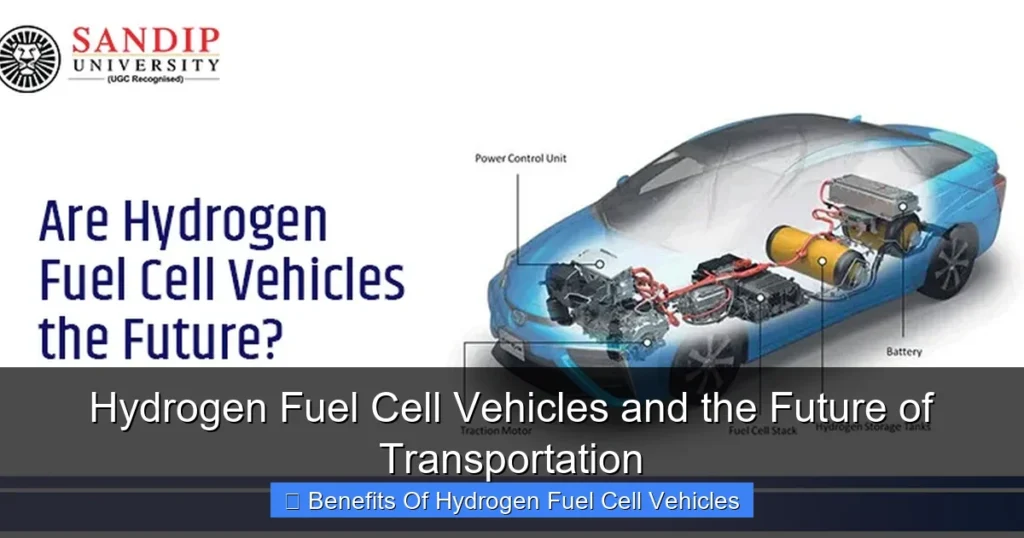
An FCV’s heart is a fuel cell stack: a network of cells combining hydrogen (from a tank) and oxygen (from air) via an electrochemical reaction. Here’s the breakdown:
- H2 Supply: Gas flows into the anode, splitting into protons and electrons.
- Electron Flow: Electrons create electricity (powering the motor), while protons pass through a membrane.
- Oxygen Reaction: At the cathode, electrons and protons combine with O2 to form water.
No combustion means no pollution! Byproducts are only heat and water vapor. The system’s efficiency is 60%, comparable to internal combustion engines but without emissions.
Challenges Overcome
- Storage: Hydrogen must be compressed to 700 bar (≈10,000 psi) for compact tanks—a feat achieved via advanced materials.
- Durability: Modern stacks last 20,000+ hours (vs. 5,000 hours in early models).
—
The Hydrogen Economy: Infrastructure & Costs
Building H2 Stations
Today, there are ~1,200 FCVs globally but only ~600 hydrogen stations (per Global CCS). Regions leading adoption include:
- Japan: Targets 1,000 stations by 2030; over 100 exist today.
- California: Plans 200 stations by 2025 to support 250,000 FCVs.
- Europe: Receives $7B funding under the EU Green Deal.
Cost Breakdown
| Component | 2020 Cost | Projected 2030 Cost |
|---|---|---|
| Hydrogen production | $6–10/kg | $2–4/kg (green H2) |
| FCV stack | $130/kW | $50/kW |
Note: “Green hydrogen” uses renewables, avoiding fossil fuels.
Government Incentives
Governments are accelerating adoption via subsidies:
– U.S. Inflation Reduction Act: $750M for H2 hubs.
– Germany: $1B for industrial H2 projects.
—
Comparing FCVs to Battery-Electric Vehicles
Pros of FCVs
- Range: No “range anxiety” (most FCVs exceed 300 miles).
- Refueling: Ideal for drivers who dislike charging waits.
- Grid Independence: H2 can come from diverse sources (wind, solar, waste).
Cons of FCVs
- Higher Upfront Cost: FCVs cost 20–30% more than BEVs (Mirai vs. Tesla Model Y).
- Infrastructure Gaps: Few stations outside select regions.
- Energy Losses: H2 production loses ~30% energy during electrolysis.
Which One Wins?
For most urban commuters, BEVs win due to lower operating costs ($0.03/mile vs. $0.10/mile for FCVs). But for trucks, planes, or fleets needing rapid refueling, FCVs dominate.
—
The Road Ahead: What’s Next for FCVs?
Technological Leaps
- Solid Oxide Fuel Cells (SOFCs): Higher efficiency (up to 60%) and tolerance for biogas.
- Metal-Air Batteries: Could merge best-of-both worlds (fast charging + long range).
Policy Shifts
Governments are mandating H2 use in hard-to-electrify sectors:
– EU: Requires all new trucks to be zero-emission by 2035.
– China: Plans 10,000 FCVs on roads by 2030.
Consumer Tips
If considering an FCV:
1. Check local station availability (e.g., AFDC tool).
2. Look for tax credits (many nations offer $1,000–$7,500 incentives).
3. Test-drive a model like the Hyundai Nexo or Toyota Mirai.
—
Conclusion: Is Hydrogen the Future?
Hydrogen fuel cell vehicles aren’t just a niche option—they’re a critical piece of the decarbonization puzzle. While battery electrification dominates passenger cars, FCVs will likely lead in heavy transport, aviation, and industrial use. With falling costs and policy support, expect 1 million+ FCVs on roads by 2030. The key challenge? Scaling infrastructure. But if governments and automakers act decisively, hydrogen could power not just cars, but entire cities.
For now, FCVs offer a glimpse of a cleaner, more flexible future. Who knows? Maybe your next ride will run on water!
—
Quick Answers to Common Questions
Question 1?
Do FCVs require special maintenance? Regular checks are similar to BEVs, but hydrogen systems need occasional tank inspections due to high-pressure storage.
Question 2?
Is hydrogen dangerous? Yes, but modern FCVs use leak-proof tanks and fail-safes. H2 is lighter than air, so any leaks disperse quickly.
Question 3?
Can FCVs work with renewable energy? Absolutely! Green hydrogen from wind/solar power makes FCVs fully emission-free.
Question 4?
Are FCVs cheaper to operate than BEVs? FCVs have higher upfront costs but lower fuel prices ($12/gal equiv. vs. $0.10/kWh for BEVs).
Question 5?
What’s the biggest barrier to FCV adoption? Infrastructure gaps—building enough stations and factories to meet demand.
Frequently Asked Questions
Question?
How does hydrogen production affect emissions? Green H2 (from renewables) has minimal impact, but gray H2 (from natural gas) still releases CO2. The industry is shifting toward blue H2 (with carbon capture).
Question?
Can FCVs be charged at home? Not directly. You’d need a home H2 station, which isn’t yet common. Most FCVs use public stations.
Question?
Will FCVs replace BEVs entirely? Unlikely. Each suits different niches: BEVs for light-duty, FCVs for heavy-duty and long-range.
Question?
How much does a FCV cost? Prices start around $50K (Toyota Mirai) but may drop as production scales.
Question?
Are hydrogen stations expensive? Building one costs ~$2M–$4M, but economies of scale will reduce this.
Question?
What’s the lifespan of an FCV stack? Modern stacks last 15–20 years, similar to a car’s lifetime.